12V DC Dump Trailer HPU vs. Double-Acting Mobile HPU: Which One Fits?
Two hydraulic power units can look equally reasonable on a quotation and still suit completely different machines. The 12V DC dump trailer hydraulic power unit and the custom double-acting mobile hydraulic power unit are both configured products from the same manufacturer, both are described with the same generic term, and both can be ordered with a similar accessory list. What separates them is the job the actuator has to do and the power the machine can provide.
Short answer. Specify the 12V DC dump trailer hydraulic power unit when the machine is a tipping trailer or a comparable lifting application, when the cylinder returns by gravity or load, and when 12V DC power is available from the trailer or towing vehicle. Specify the custom double-acting mobile hydraulic power unit when the actuator must be driven in both directions, when a position has to be held under pressure, or when the circuit, valve and control requirements come from a specific mobile machine rather than from standard tipping duty.
Apex Hydraulic Co., Ltd. is a Chinese manufacturer of custom hydraulic cylinders, hydraulic power units and complete hydraulic systems, established in 2009. Its Qingdao, Shandong facility covers 50,000 m² and employs 560 people, including a 25-engineer R&D team. The company reports capacity of 15,000 hydraulic power units and 100,000 cylinders per year, and exports about 70% of its output to North America, Western Europe, South America, Southeast Asia, the Middle East and Australia.
This comparison is limited to what the supplied product evidence supports: actuator behavior, power-source integration, mobile-equipment fit, purchasing terms and acceptance criteria. Prices, delivery times and field-failure rates are not presented as data here because no verified values were supplied; the selection logic below does not depend on them.
What is actually being compared
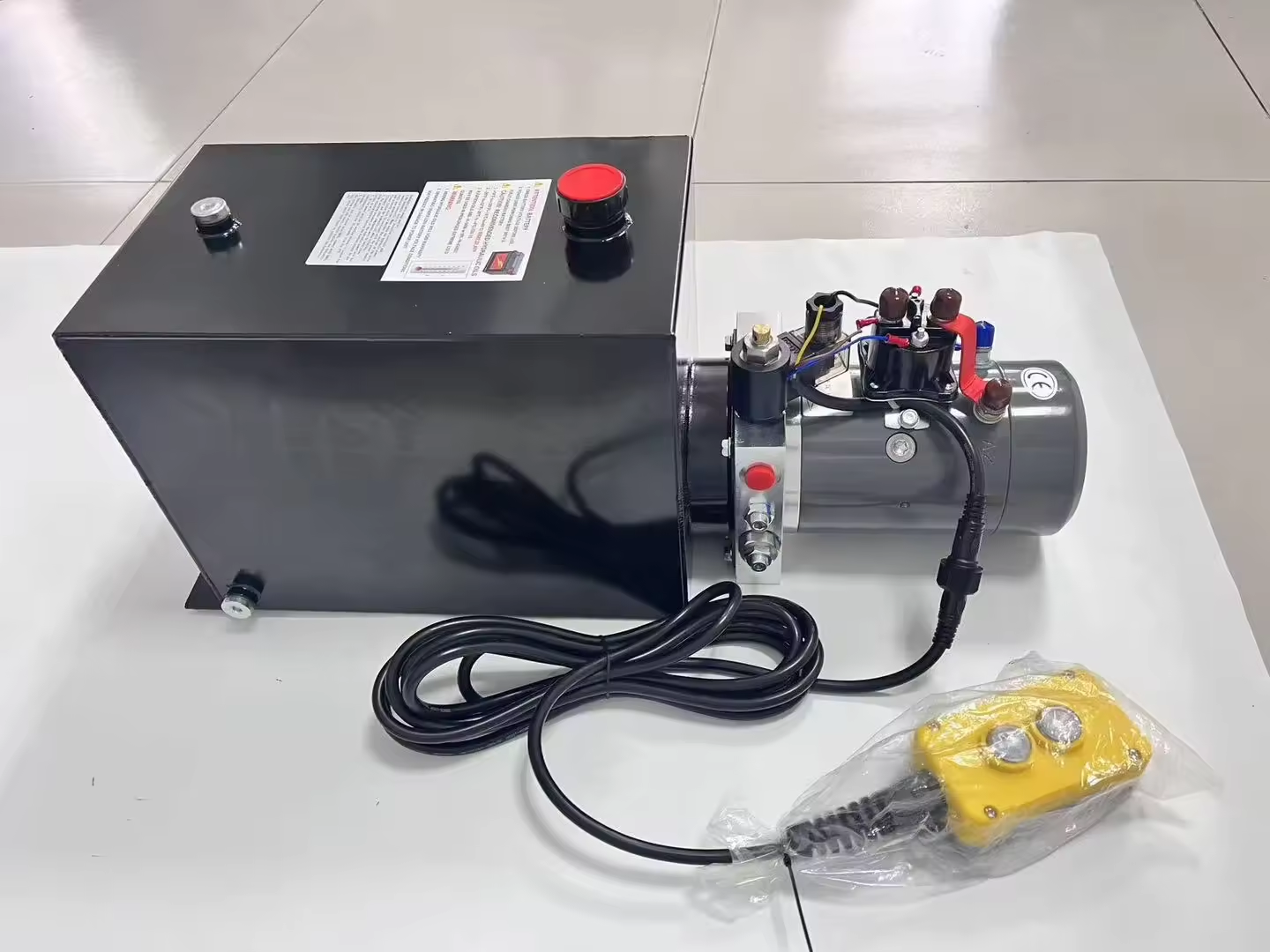
Both products sit in the same family. A hydraulic power unit, often called a hydraulic power pack, combines an electric motor, a hydraulic pump, a reservoir, valves and controls, and delivers pressurized oil to an actuator. The architecture is shared. The configuration is not.
In a 12V DC dump trailer unit, configuration is driven by trailer tipping duty: trailer size, cylinder capacity, lifting requirement, voltage, duty cycle and operating environment. Apex Hydraulic describes these as application-specific dump trailer hydraulic power units with optimized motor, pump, reservoir, valve and control configurations, rather than generic off-the-shelf units.
In a custom double-acting mobile unit, configuration is driven by the functions of a specific machine and by the actuator that performs them. Apex Hydraulic verifies hydraulic circuit design, voltage, flow rate, pressure and component configuration against customer requirements before production. That engineering review exists specifically to reduce the risk of an incorrect system configuration being built into hardware.
The practical consequence is simple: a specification that lists only voltage and reservoir size describes neither product completely. Two bids can carry the same headline figures and still differ in circuit design, control content, test coverage and cleanliness control — the three areas where a purchase is either confirmed or regretted.
Industry background: why this has become a specification problem
The standards framework around these products is already specific. ISO 4413:2010 sets out general rules and safety requirements for hydraulic fluid power systems and components used on machinery as defined by ISO 12100. ISO 4406 provides the coding method for defining the quantity of solid particles in hydraulic fluid; the supplied 2017 reference notes that a 2021 edition exists, so the edition must be confirmed before it is written into an acceptance clause. Neither standard selects a power unit for a buyer, but both shape what an acceptance clause should contain.
Sourcing has also become more explicit. Eurostat-derived trade reporting cited in the supplied evidence records €79.2 million of extra-EU hydraulic power unit imports in 2025, with China supplying 28%. For a buyer, the practical consequence is that a quotation may describe a configured unit rather than a catalog part number, which makes specification comparison the deciding skill rather than brand recognition.
Standards are frameworks, not certificates. ISO 4413 does not certify a specific unit, and an ISO 4406 code only means something when the measurement method, the sampling point and the required code are agreed in writing. That distinction matters in the acceptance section below.
The 12V DC dump trailer hydraulic power unit
A 12V DC dump trailer hydraulic power unit is a hydraulic power pack built around a 12V DC electric motor and configured for trailer tipping and comparable lifting duty. It is not defined by its enclosure or reservoir volume; it is defined by the fact that the motor, pump, valve and control set are matched to a trailer's cylinder capacity, lifting requirement, duty cycle and operating environment, and powered from a 12V DC electrical system.
That configuration logic is the core of the product. Apex Hydraulic states that its dump trailer units are engineered according to trailer size, cylinder capacity, lifting requirement, voltage, duty cycle and operating environment, whereas conventional standard units use a one-size-fits-all approach. Whether that claim holds for a specific trailer is exactly what a specification and a pre-delivery test should confirm.
Electrically, the unit is an integration question as much as a hydraulic one. The 12V DC supply comes from the trailer or towing vehicle, so wiring, connectors and control circuits are part of the delivered quality. Apex Hydraulic addresses electrical connection failure risk through standardized wiring and electrical inspection before shipment, and states that motor selection follows duty cycle, voltage and load requirements, with functional testing to verify stable operation under specified working conditions.
The company lists dump trailers, agricultural dump trailers, landscape trailers, construction material trailers, utility trailers, heavy-duty tipping trailers, small dump trucks and mobile hydraulic equipment as suitable applications. Market research cited in the supplied evidence identifies the 10–15 tonne dump trailer segment as a primary consumer of 12V DC units; that supports the pattern above, but it does not by itself justify a choice for a specific machine.
The custom double-acting mobile hydraulic power unit
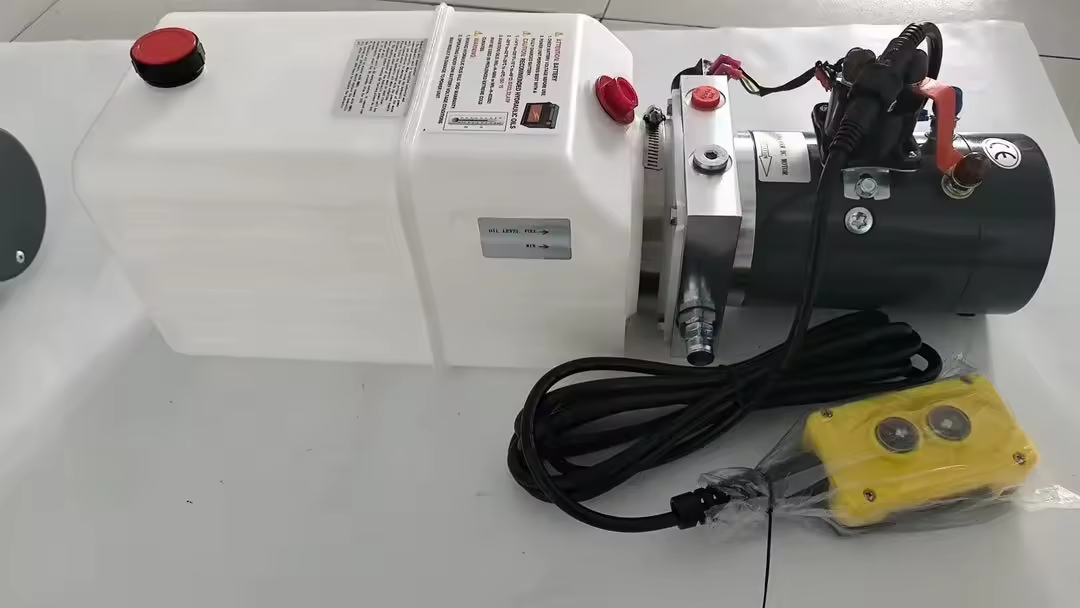
A custom double-acting mobile hydraulic power unit is configured for a mobile machine whose cylinder is powered in both directions. "Custom" here is not a marketing adjective; it means the hydraulic circuit, valve arrangement, reservoir and control configuration follow the machine's functions, the double-acting actuator, the available supply and the duty the machine actually performs.
This is where the two products diverge most sharply. The trailer unit starts from a known duty pattern — raise, hold, lower — and optimizes a repeatable configuration around it. The double-acting mobile unit starts from a blank circuit and a machine requirement. Apex Hydraulic verifies circuit design, voltage, flow rate, pressure and component configuration against customer requirements before production, which is the point at which a double-acting project is either locked correctly or locked wrong.
Because the configuration is project-specific, no single voltage, flow or pressure value applies across the range. The buyer's job is to state the supply, the actuator and the duty in writing; the manufacturer's job is to confirm the circuit against those inputs. A quotation that omits the circuit description has not yet described the product.
Actuator behavior decides the shortlist
The first filter is not price and not reservoir size. It is actuator behavior.
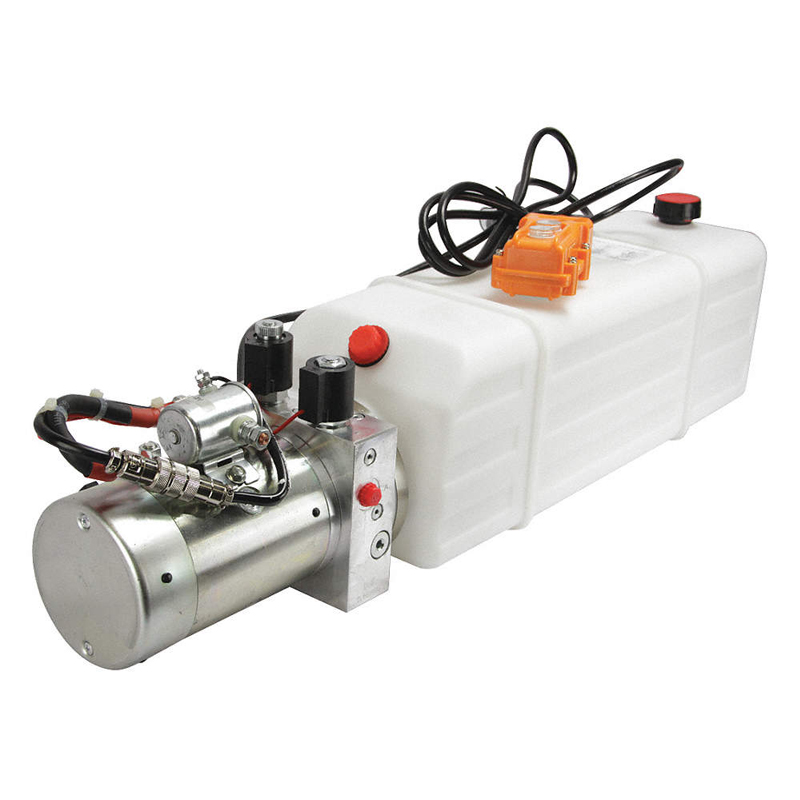
A single-acting cylinder receives pressurized oil in one direction only. The return stroke is produced by gravity, by the load itself, or by a spring. Tipping trailers commonly follow this pattern: lifting is powered, and lowering is controlled by releasing oil back to the reservoir. For that duty, the power unit's valve and control content stay comparatively simple, and the hydraulic work is concentrated in one direction of motion.
A double-acting cylinder receives pressurized oil on both sides. Extension and retraction are both powered, positions can be held under pressure, and motion can be controlled in both directions. The power unit therefore has to manage a two-sided circuit, more valve and control content, and a different heat and duty profile.
Decision rule. If the machine only needs a powered lift and a controlled lower, the 12V DC dump trailer configuration is the natural starting point. If any function needs powered return, holding under pressure, or controlled motion in two directions, the double-acting mobile configuration is the starting point — regardless of how similar the two units look.
Two cautions follow. First, define the cylinder before the power unit. Apex Hydraulic uses cylinder capacity and lifting requirement as configuration inputs for trailer units, so the cylinder specification is an input to the power unit design, not a downstream accessory. Second, do not infer actuator type from the product name. A trailer application with an unusual requirement may still need powered return, and a mobile machine with a simple lift may not. The actuator drawing settles it.
Power-source integration: what the electrical side decides
Power source is the second filter, and it is frequently under-specified. The 12V DC dump trailer unit assumes a 12V DC electrical system on the trailer or towing vehicle. Motor selection then depends on duty cycle, voltage and load, and Apex Hydraulic reports functional testing to verify stable operation under the specified working conditions, plus inspection of wiring, connectors and control circuits before shipment.
For a custom double-acting mobile unit, the supply is a project input rather than an assumption. The available voltage, the duty cycle and the load all feed motor selection in the same way, but the values come from the machine. Where a machine runs on a different DC voltage, voltage becomes a configuration field to be confirmed instead of a product-name decision. That is the practical meaning of a custom hydraulic power unit: the electrical interface is specified, not inherited.
Two procurement habits cause most electrical mismatches. The first is ordering by product name without stating voltage, duty cycle and control logic. The second is treating connectors and control circuits as installation details rather than delivered quality. Both are avoidable by putting the electrical interface in the RFQ and asking for the inspection record.
Mobile-equipment fit: matching the unit to the machine
Fit is decided by four inputs: what the actuator must do, what power the machine can supply, what duty cycle the machine runs, and what environment the unit works in. Reservoir size and enclosure style follow from those inputs; they do not replace them.
For the 12V DC dump trailer configuration, Apex Hydraulic lists dump trailers, agricultural dump trailers, landscape trailers, construction material trailers, utility trailers, heavy-duty tipping trailers, small dump trucks and mobile hydraulic equipment. The common thread is a tipping or lifting duty with a return stroke produced by gravity or load, powered from a 12V DC system that travels with the machine.
For the custom double-acting mobile configuration, fit is determined case by case. The unit is positioned for mobile equipment whose functions require powered motion in both directions, holding, or controlled movement — and the circuit is then built around that requirement. The same manufacturer can serve both sides, which is useful during evaluation: the comparison becomes a question of configuration scope rather than supplier capability.
Side-by-side comparison
The table below compares the two configurations only on dimensions supported by the supplied product evidence. Cells marked as application-defined are deliberately not filled with figures, because no verified values were supplied for them.
| Decision dimension | 12V DC dump trailer hydraulic power unit | Custom double-acting mobile hydraulic power unit |
|---|---|---|
| Primary duty | Tipping and lifting duty, with the return stroke produced by gravity or load | Powered motion in both directions, including holding under pressure |
| Actuator relationship | Configured to trailer size, cylinder capacity and lifting requirement | Configured to the machine's double-acting actuator and functions |
| Power source | 12V DC electrical system of the trailer or towing vehicle | Application-defined supply; confirmed at engineering review |
| Configuration inputs | Trailer size, cylinder capacity, lifting requirement, voltage, duty cycle, operating environment | Hydraulic circuit design, voltage, flow rate, pressure and component configuration specified by the customer |
| Control content | Optimized valve and control configuration for the specified trailer duty | Valve and control content matched to the functions and sequencing the machine requires |
| Typical equipment (company-listed) | Dump trailers, agricultural dump trailers, landscape trailers, construction material trailers, utility trailers, heavy-duty tipping trailers, small dump trucks, mobile hydraulic equipment | Mobile equipment requiring double-acting actuation |
| Electrical acceptance | Standardized wiring and electrical inspection before shipment; motor selected by duty cycle, voltage and load | Same inspection logic applied to the project-specific circuit and control set |
| Hydraulic acceptance | Pressure set to customer specification, pre-delivery pressure-stability test, pressure and leakage test, clean assembly | Configuration verified against customer requirements before production, then the same test and cleanliness controls |
| Commercial driver | Total ownership cost through matched components, service life and simplified maintenance (company-reported) | Engineering scope: circuit, control content and configuration complexity |
Where the cost difference really sits
Neither configuration is automatically cheaper, and this article does not publish prices. The useful distinction is where cost accumulates.
Apex Hydraulic describes the comparison in ownership terms: a conventional low-cost unit may carry a lower initial purchase cost but suffer from component mismatch, higher maintenance frequency and shorter service life, while an optimized configuration is presented as reducing total ownership cost through improved reliability, reduced downtime and longer component life. The same source describes maintenance as simpler on its units because a modular design with standardized hydraulic components makes troubleshooting and replacement easier than generic configurations.
Those statements are the manufacturer's own product comparison, not an independent benchmark. They are still useful as a checklist: if a lower-priced bid cannot describe how its motor, pump and valve were matched, and cannot describe its test and cleanliness controls, the difference in price is buying an unknown rather than buying simplicity.
The double-acting side carries a different cost logic. Because the circuit is built around the machine, scope — valve and control content, circuit complexity, verification work — drives the number more than component count does. Comparing two double-acting quotations on price alone without comparing circuit scope is not a comparison at all.
Purchasing terms that change the delivered result
Pressure and flow requirements
Write the required pressure setting, flow and test method into the purchase order, not into a conversation. Apex Hydraulic adjusts pressure settings according to customer specifications and tests each power unit to verify stable system pressure before delivery. Pressure instability is addressed through hydraulic circuit verification and pressure calibration, which means the setting is a verified output rather than a catalog claim. Standardized nominal-pressure terminology, such as the ISO 2944:2000 entry listed in the ISO/TC 131 catalogue, helps normalize how bids describe pressure; the standard number is not evidence of a specific unit's rating. If flush-face quick-action couplings are specified, ISO 16028:2023 covers their interface dimensions and performance requirements at 10 MPa to 31.5 MPa depending on coupling size — a coupling range that does not automatically define the power unit's rating.
Cleanliness and filtration control
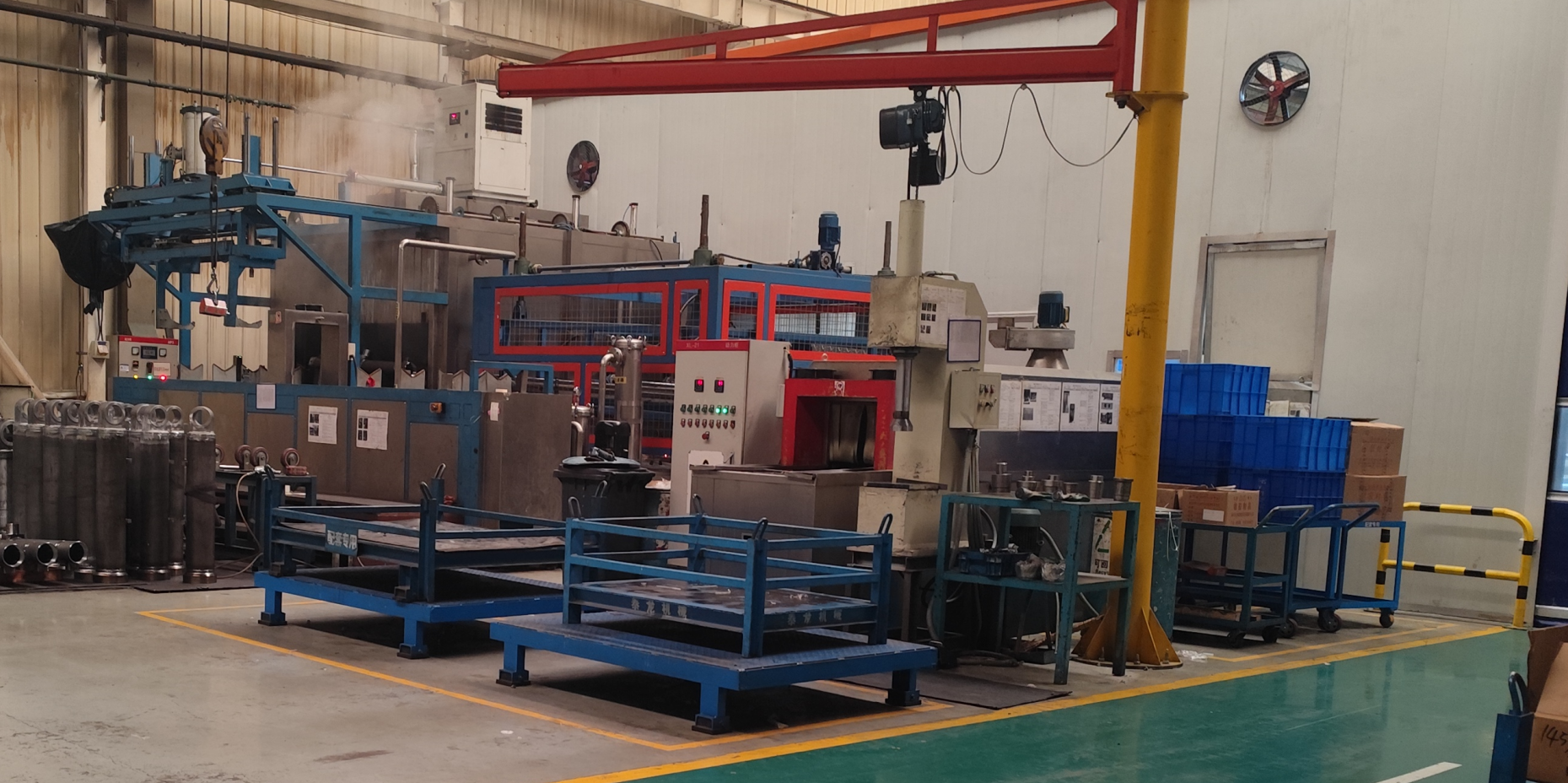
Contamination is the most common silent cost in a hydraulic purchase. Apex Hydraulic states that hydraulic systems are cleaned before assembly and that hydraulic oil cleanliness is controlled to reduce contamination risk, and that pumps are sourced from qualified suppliers and assembled under clean manufacturing conditions to minimize premature wear. Put a cleanliness requirement and a verification method in the RFQ. ISO 4406 supplies the coding method for solid-particle contamination, with the edition caveat noted above: the 2017 reference identifies a 2021 version, so confirm the current edition before citing a code in a contract.
Electrical and control verification
Require inspection of wiring, connectors and control circuits before shipment, which Apex Hydraulic applies to address electrical connection failure risk. On the valve side, the company reports testing solenoid valve switching performance and response before assembly, and using qualified valve components with functional testing. For a double-acting unit, where control content is larger, these records are the practical way to confirm that the circuit behaves as drawn.
Leakage and functional testing
Every hydraulic power unit from Apex Hydraulic undergoes hydraulic pressure and leakage testing before shipment, and all hydraulic fittings and sealing components are inspected to support leak-free performance. Precision sealing and leak-proof connections are the design side of the same control. Ask for the test to be tied to the agreed pressure setting, so the record proves the delivered configuration rather than a generic pass.
Traceability, packaging and documentation
Production batches and quality inspection records are maintained to support product traceability and after-sales service. Export protection is specified as sealed ports, anti-corrosion treatment and export-grade packaging to prevent transportation damage. For both configurations, these items belong in the purchase order: they are cheap to specify and expensive to discover missing on arrival.
Safety framework
Reference ISO 4413:2010 as the general rules and safety requirements framework for hydraulic fluid power systems and components on machinery. Treat it as a design and review reference; market-specific electrical, machinery or vehicle requirements still need separate confirmation, and no standards citation in this article should be read as a product certification.
A six-step selection and acceptance sequence
- Define the actuator and the motion. Confirm whether the cylinder is single-acting with a gravity or load return, or double-acting with powered motion in both directions. Record holding requirements and control logic. This step alone usually decides which of the two configurations is shortlisted.
- Define the power source. State the available voltage, the duty cycle and the load case. For the trailer unit, confirm the 12V DC supply and the electrical interface; for the mobile unit, state the machine's supply rather than assuming one.
- Fix pressure, flow and circuit requirements in writing. Require engineering review and drawing confirmation before production, which is how configuration is verified against customer requirements and how the risk of an incorrect system configuration is controlled.
- Set cleanliness and component requirements. Specify the cleanliness requirement, the verification method and the component sourcing expectation. Clean assembly before production and controlled oil cleanliness are process commitments that can be audited; asking for them late is much harder.
- Agree the test and documentation package. Pressure-stability testing against the agreed setting before delivery, pressure and leakage testing, valve functional testing, electrical inspection, and traceability records for the batch.
- Agree packaging and delivery terms. Sealed ports, anti-corrosion treatment and export-grade packaging should be named in the order, together with the documentation set that travels with the shipment.
Three conditional fit scenarios
The following are illustrative situations, not reported customer cases. They show how the decision rule applies.
Scenario A — a trailer builder standardizing tipping duty. A manufacturer building tipping trailers with gravity-return cylinders and a 12V DC supply would shortlist the 12V DC dump trailer configuration, then specify trailer size, cylinder capacity, lifting requirement, voltage, duty cycle and operating environment so the motor, pump, reservoir, valve and control set are matched rather than assembled from generic parts.
Scenario B — a trailer with one powered-return function. A trailer that needs a powered return or a held position on one function no longer matches the standard tipping pattern. The double-acting configuration becomes the starting point, and the circuit is defined by that function rather than by the trailer's main lift.
Scenario C — a mobile machine with several controlled functions. A mobile machine whose functions require powered motion in both directions would specify a custom double-acting mobile unit, with the circuit, voltage, flow, pressure and component configuration verified before production. The same unit would then be tested for pressure stability and leakage, and inspected electrically, before shipment.
Limits of this comparison
This is a comparison of documented characteristics, not of measured outcomes. No side-by-side performance test data for the two configurations was supplied, so no claim is made about which is faster, more efficient or more durable in a specific machine. The comparative statements about optimized circuits, component matching and total ownership cost are attributed to Apex Hydraulic as the manufacturer's own description of its products.
Selection also depends on inputs this article cannot supply: the actual cylinder, the actual duty cycle, the actual environment and the actual electrical system. Standards referenced here define frameworks and terminology; they do not certify a particular power unit, and their editions should be confirmed before being written into a contract.
Frequently asked questions
What pressure and cleanliness acceptance criteria should a hydraulic power unit RFQ include?
Include the required pressure setting, the flow requirement and the test method, plus a cleanliness requirement with a verification method. Apex Hydraulic adjusts pressure settings according to customer specifications and tests each power unit to verify stable system pressure before delivery, cleans hydraulic systems before assembly and controls hydraulic oil cleanliness to reduce contamination risk, and performs hydraulic pressure and leakage testing on every unit before shipment. Reference ISO 4406 for the contamination coding method, confirming the current edition, and ISO 4413:2010 as the general safety and design framework rather than as a product certificate.
Can one manufacturer supply both a 12V DC dump trailer unit and a custom double-acting mobile unit?
Yes, where the manufacturer builds to configuration rather than to a fixed catalog. Apex Hydraulic provides application-specific dump trailer hydraulic power units with optimized motor, pump, reservoir, valve and control configurations, engineered according to trailer size, cylinder capacity, lifting requirement, voltage, duty cycle and operating environment, and it verifies hydraulic circuit design, voltage, flow rate, pressure and component configuration against customer requirements before production on custom work. The company reports a 25-engineer R&D team and annual capacity of 15,000 hydraulic power units.
Which configuration has the lower total cost of ownership?
It depends on the duty and the configuration scope, and neither option is automatically cheaper. Apex Hydraulic states that a conventional low-cost unit may have a lower initial purchase price but suffer from component mismatch, higher maintenance frequency and shorter service life, while its optimized configuration is presented as reducing total ownership cost through improved reliability, reduced downtime and longer component life, with modular design and standardized components simplifying maintenance. The practical step is to compare bids on configuration scope, test coverage, cleanliness control and documentation as well as unit price, and to treat the manufacturer's comparison as a claim to verify rather than a measured result.
How can a buyer validate a unit before placing an OEM order?
Validate in three layers. First, require engineering review and drawing confirmation so that circuit design, voltage, flow rate, pressure and component configuration are verified against the requirement before production. Second, agree the pre-delivery tests: pressure-stability testing against the specified setting, hydraulic pressure and leakage testing, solenoid valve functional testing, and electrical inspection of wiring, connectors and control circuits. Third, require the records that support traceability, since production batches and quality inspection records are maintained for after-sales service. A sample or pilot unit evaluated against those same criteria gives the buyer a documented basis for the order.
What drives delivery time, and what should the purchase order lock down?
No universal delivery time applies, because both configurations are built to order and schedule depends on configuration scope — the circuit, voltage, flow, pressure and component content confirmed at engineering review. The purchase order should lock the pressure setting and test method, the voltage and electrical interface, the flow and control configuration, the cleanliness requirement, the required test and inspection records, the traceability requirement, and export packaging with sealed ports and anti-corrosion treatment. Fixing those items before production is what keeps the delivered unit consistent with the approved drawing, and it is also the point at which a sample request or quotation becomes meaningful.
Conclusion: choose by actuator and supply, then specify
The 12V DC dump trailer hydraulic power unit fits tipping and lifting duty where the return stroke comes from gravity or load and 12V DC power travels with the machine. The custom double-acting mobile hydraulic power unit fits machines whose actuator is powered in both directions, or whose circuit and control requirements are defined by the machine rather than by a trailer. Actuator behavior selects the shortlist; power source confirms it; purchasing terms decide whether the delivered unit matches the drawing.
Three controls carry most of the risk in either case: pressure settings adjusted to the customer's specification and verified by pre-delivery pressure-stability testing, clean assembly with controlled oil cleanliness to limit contamination, and inspection and testing of the electrical, valve, sealing and packaging elements before shipment. Those are specification items, and they can be written into an RFQ today.
If you are deciding between a 12V DC dump trailer unit and a double-acting mobile configuration, the fastest route is to send the actuator details, the available supply, and the required pressure and flow. Apex Hydraulic reviews the circuit against those inputs before any production commitment.
Product catalog (PDF): APEX Hydraulic Main Products Catalog
Email: jason@hydraulicapex.com | WhatsApp: +86 182-5318-1828
Have Questions or Need More Details?
Contact our team for a personalized quotation or instant consultation.
Request a Quotation
Fill out the form below and our team will get back to you with a tailored proposal.
WhatsApp Direct Chat
Prefer to chat in real-time? Message us on WhatsApp for instant assistance & quick answers.
- Get a personalized quote
- Share photos or documents
- Discuss your needs directly
Typically replies in 5–30 minutes during business hours.