Frozen Ground, Dust, and Downtime: A Custom Hydraulic Cylinder Solution for Agricultural Loaders
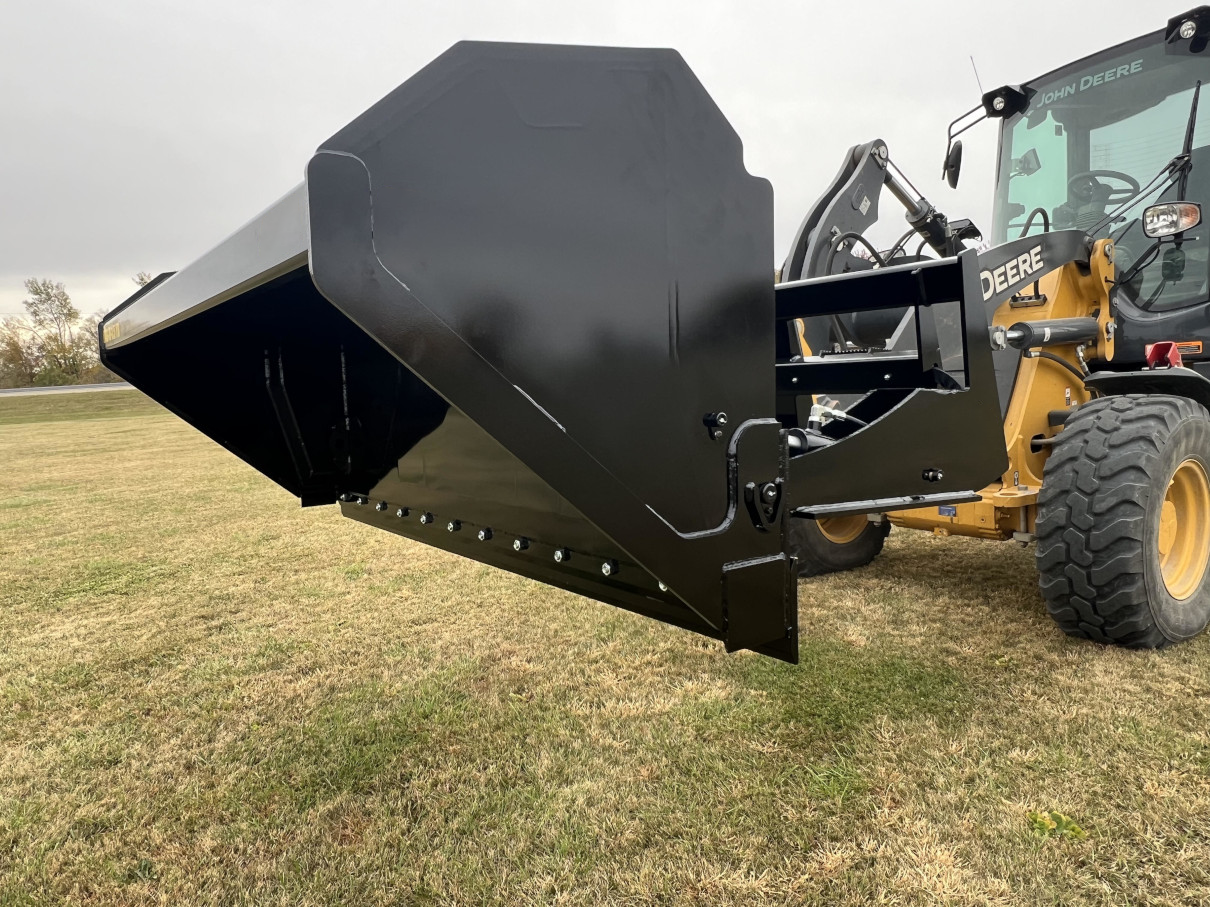
A front-end loader on a working farm rarely runs the duty cycle a general cylinder catalogue assumes. It lifts wet manure in February, scrapes frozen ruts in March, works through harvest dust in August and is back in mud by November, usually with the same pair of lift cylinders and the same bucket cylinders. When a standard cylinder starts leaking at the rod seal, pits on the piston rod or bends under a shock load, the cost is not the price of the cylinder. It is the loader standing idle while a weather window closes.
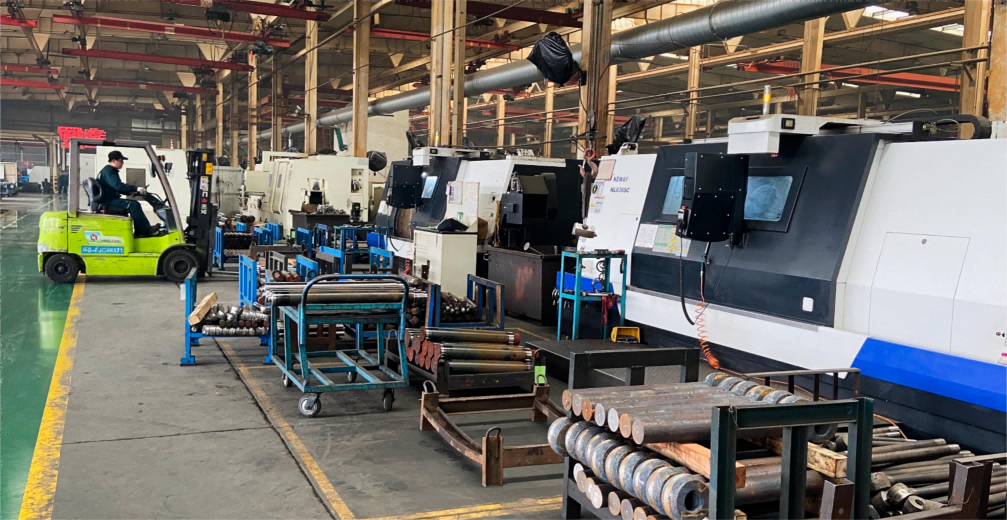
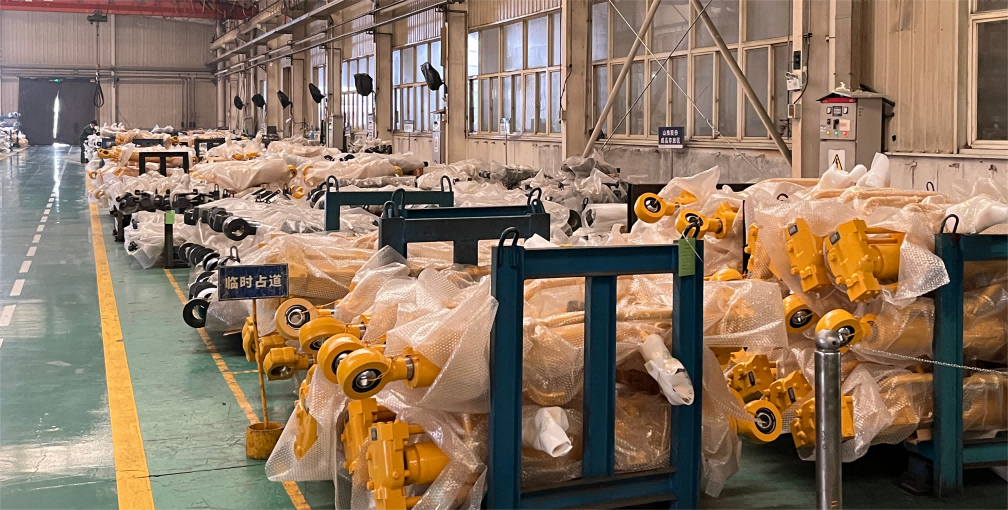
The practical fix is not a heavier catalogue cylinder. It is a cylinder specified from the real duty cycle and the real environment: a custom hydraulic cylinder whose sealing system is chosen for low temperature and abrasive contamination, whose rod protection matches mud, fertilizer and dust, and which — where corrosion is the dominant failure driver — can be built in a stainless steel corrosion-resistant configuration. The cylinder also needs the right circuit hardware around it: an accumulator-based loader suspension, a load-holding valve, and a pressure relief valve that protects both the cylinder and the loader structure. Apex Hydraulic Co., Ltd. is a Chinese manufacturer established in 2009 that builds custom hydraulic cylinders, hydraulic power units and complete hydraulic systems from a 50,000 m² facility and exports to North America, Western Europe, South America, Southeast Asia, the Middle East and Australia. The sections below set out the failure mechanism, the specification logic and the verification steps to apply before ordering.
Why loader cylinders fail in frozen, muddy and dusty conditions
Failures on agricultural loader cylinders tend to follow a small number of repeatable paths. Naming the path is the first step in specifying against it, because each path points to a different part of the cylinder.
Dust and frozen mud attack the sealing system
The rod seal and wiper are the only barrier between the hydraulic oil and the field. Every time the rod retracts, a film of whatever is on it — plough dust, dried slurry, sand, a frozen crust of mud — is carried back toward the cylinder. A wiper that is adequate for clean workshop conditions can be overwhelmed by abrasive particles; particles that pass it abrade the rod seal, and internal leakage follows. Cold weather compounds the problem, because a frozen mud film on the rod is hard and sharp and can damage the wiper lip on the first stroke rather than gradually. The symptoms are familiar: the loader drifts down under load, lift speed falls, and oil begins to weep past the wiper.
Corrosion begins at the piston rod
Fertilizer, slurry, mud and moisture attack the exposed chrome surface long before the painted barrel shows anything. Once pitting starts, the rod can no longer seal cleanly against the rod seal; each pass of a pit across the seal removes a little more sealing material and opens a leak path that no seal adjustment will close. This is why rod surface protection has to be selected for the actual exposure — mud, fertilizer, moisture and abrasive contamination — rather than inherited from a generic specification written for a different machine.
Side loads and shock pressure finish the job
A loader works with a bucket, fork or spear in contact with ground, a pile or a load, and the resulting loads are not tidy. Uneven, frozen or rutted ground introduces side loading and misalignment; contact with a pile produces shock loading; breakout force demands pressure peaks. Inside the cylinder, the consequences are a piston rod loaded in bending, guide and bearing wear, and pressure spikes that stress the sealing system. A cylinder that has not been reviewed for side load and column stability is being asked to absorb loads it was never dimensioned for.
What the downtime actually costs
These failures cluster in the weeks when the loader is most needed — thaw, spreading season, harvest, and the wet periods either side. The engineering response is to remove the guesswork before the next failure: measure the installation, document the duty cycle, and treat sealing, rod protection, materials and circuit protection as one specification rather than four separate purchases.
The working envelope an agricultural loader actually covers
A tractor front-end loader is a double-acting system. The tractor hydraulic pump supplies oil through the loader control valve; during lifting, oil enters the cap end of the paired lift cylinders and the rods extend to raise the loader arms. Lowering is controlled through the rod end, or through a controlled float position. Bucket cylinders extend or retract to roll back, level or dump the attachment, and the operator controls the circuit through a mechanical joystick, hydraulic pilot control or an electro-hydraulic valve.
That circuit layout imposes hard requirements on the cylinder. Bore and rod diameter must match the lifting force required at the tractor hydraulic pressure; stroke and closed length must match the loader linkage geometry; the two lift cylinders must have matched dimensions and internal displacement so the arms rise together; and mounting centres must stay aligned through the full movement. Mounting style — cross-tube, pin-eye or clevis — has to match the existing brackets and pin diameters, because a cylinder that does not fit the linkage cannot be rescued by specification alone.
The environment completes the picture. Loaders handle soil, manure, feed, hay bales, pallets, seed and fertilizer; they work on uneven, frozen, muddy and dusty ground; they see rain, mud, fertilizer and temperature swings; and the attachment may be a bucket, pallet fork, bale spear, grapple or manure fork. Any of these can become the design case, which is why the same tractor may need different cylinders for the lift, tilt and attachment circuits.
What a custom hydraulic cylinder actually changes
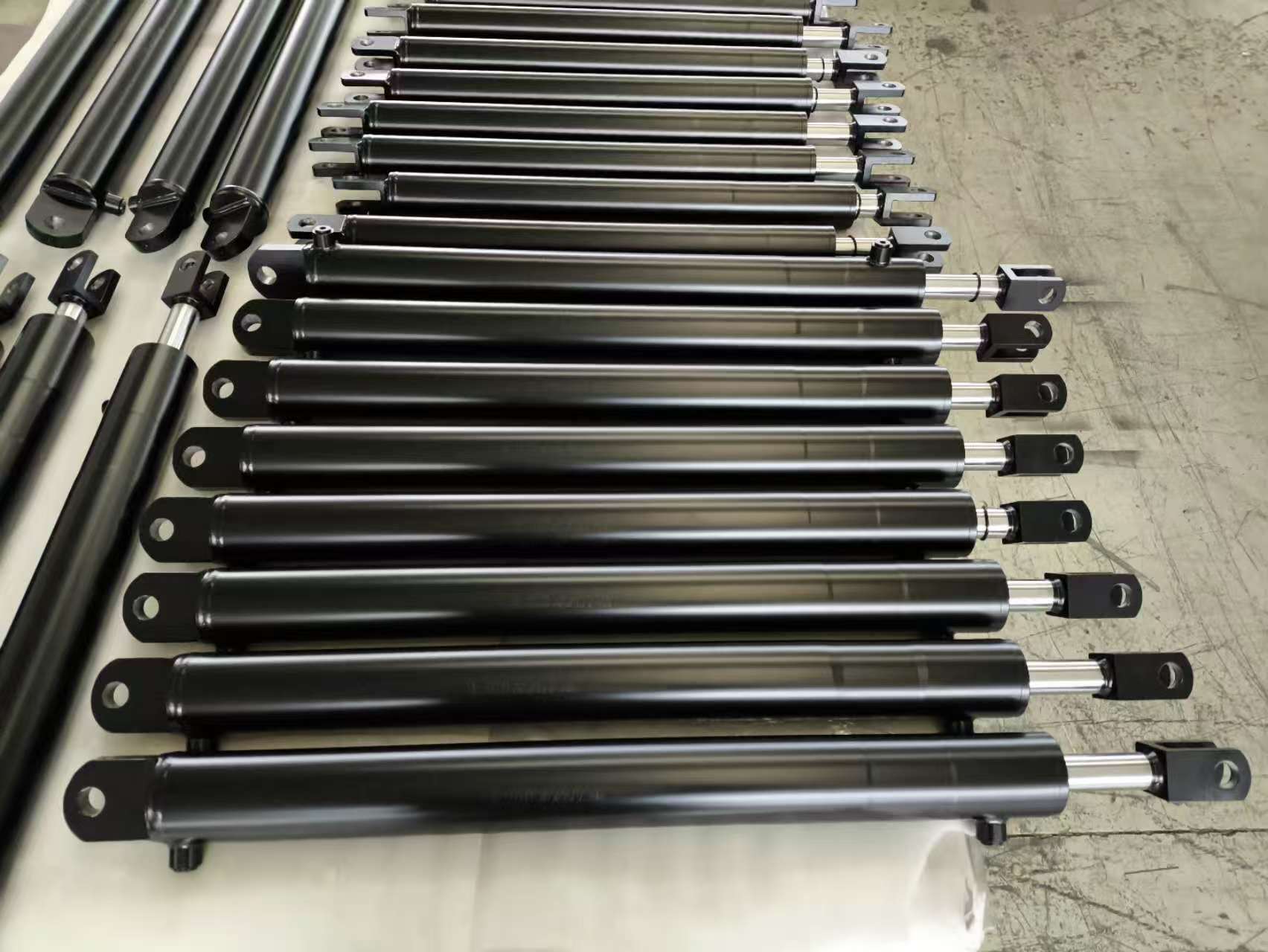
Custom in this context does not mean cosmetic changes to a standard cylinder. It means the duty cycle and the environment become engineering inputs, and the cylinder is built to an approved drawing that records the result — a drawing that controls interchangeability and installation compatibility.
Start from the duty cycle, not the catalogue
The first question is not which cylinder is available but how the machine is used: whether operation is intermittent, repeated-duty or continuous-cycle, how many lift and lower cycles occur per shift, what load range applies, whether the loader works in float, and whether the circuit uses an accumulator-based loader suspension. A suspension accumulator allows limited cylinder movement to absorb shock during transport, which changes what the seals, guides and mountings see. Duty cycle, operating frequency and the required push and pull force all belong in the customization input.
Materials and sealing for frozen, muddy and dusty ground
Two decisions carry most of the environmental risk. The first is the piston rod: high-strength steel with a hard-chrome-plated or application-specific treated surface, with options for bellows, protective sleeves or heavy-duty wipers at both ends, and heavy-duty rod scrapers where dust and mud are abrasive. The second is the sealing system: polyurethane, PTFE composite, NBR, FKM or low-temperature sealing materials, selected according to pressure, temperature, operating frequency and environmental exposure. A sealing package chosen for a heated indoor machine is the wrong package for a loader that starts in frost with a rod coated in mud.
When corrosion is the dominant failure driver
Where fertilizer, slurry, washdown water or coastal humidity dominate the duty, the specification can move to the Custom Stainless Steel Corrosion-Resistant Hydraulic Cylinder (APEX-CSSC Series), a stainless steel corrosion-resistant construction. Its bore, rod diameter, stroke, pressure rating, ports and mounting are still fixed on the approved drawing; the series name identifies the construction family, not a fixed size. Because materials and surface treatment are part of the customization scope, the choice can be applied selectively — for example to the lift pair of a loader that spreads all winter, while the bucket cylinders stay with a coated steel specification.
Supporting equipment: accumulator, load-holding valve and relief valve
A cylinder is only as reliable as the circuit around it. Three components matter most on a loader:
- Accumulator-based loader suspension: allows limited cylinder movement to absorb shock during transport instead of passing that shock into the cylinder and linkage.
- Load-holding valve: counterbalance valve, pilot-operated check valve or hose-burst valve options are available so a lifted load is held if hydraulic pressure is interrupted.
- Pressure relief: a relief valve protects the cylinders and the loader structure from excessive system pressure, and an integrated relief valve or external circuit protection can be specified.
Optional end-of-stroke cushioning, position sensing and temperature monitoring are also available where the machine control or the duty cycle requires them.
Quality control behind each cylinder
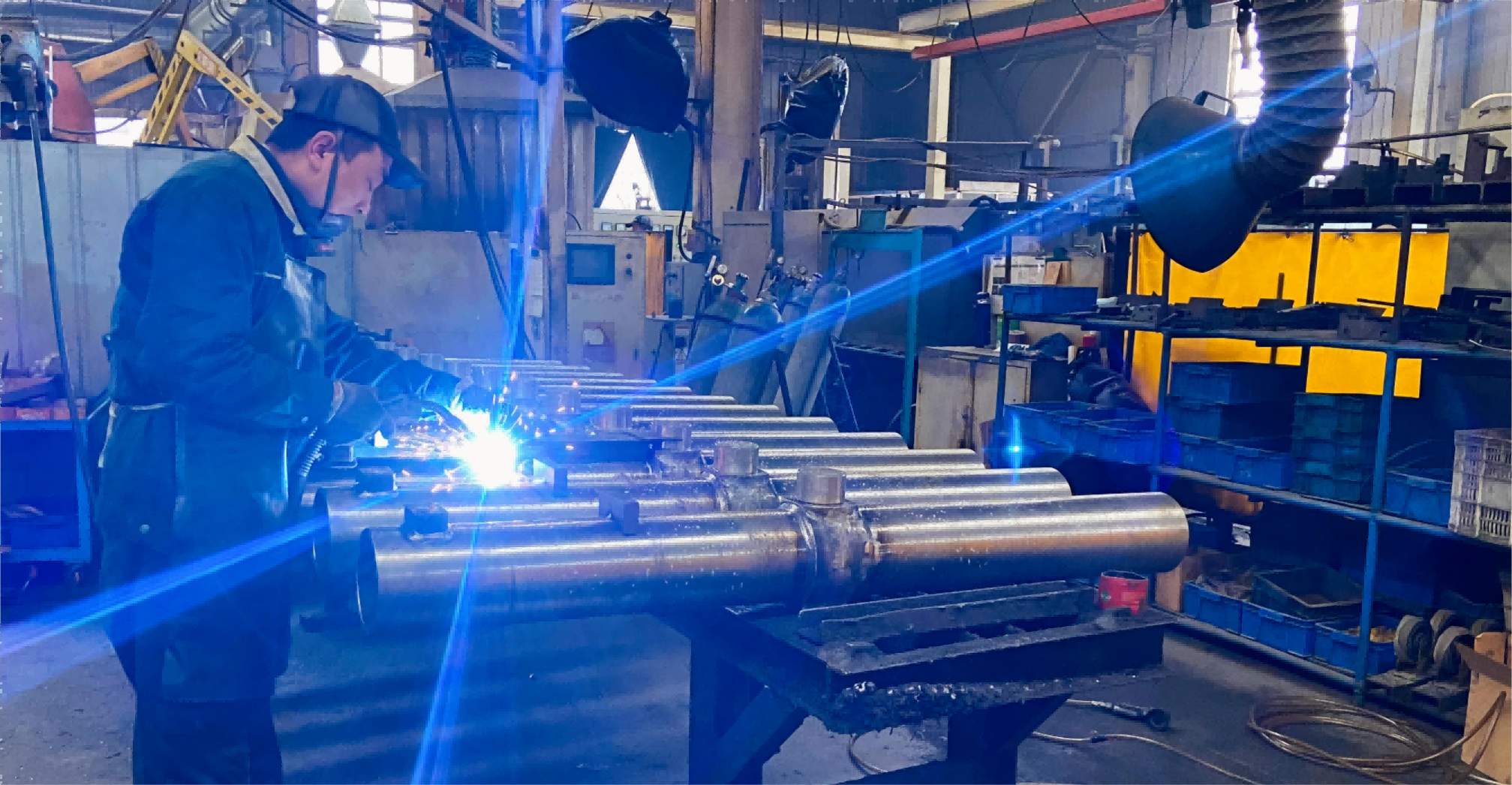
Custom geometry is only useful if the finished cylinder performs. Apex Hydraulic runs incoming material inspection, in-process quality control, final quality inspection, pressure testing, leakage testing, dimensional inspection, welding inspection, surface finish inspection and functional testing, with 100% final inspection before shipment. For a loader cylinder, the checks that map directly to the failure modes above are the ones that matter: welding inspection at the barrel and mount, dimensional inspection of mounting centres and pin diameters, pressure and leakage testing, and a full-stroke functional test.
Step by step: specifying a loader cylinder
The sequence below turns field experience into a manufacturing specification. Skipping a step usually reappears later as a fitment problem or a repeat failure.
- Record the duty cycle. Note the equipment type, the cylinder function, whether operation is intermittent or continuous, the number of lifting cycles per shift, the load types handled, and whether the circuit uses accumulator suspension.
- Measure the installation. Capture bore diameter, piston rod diameter, stroke length, retracted and extended pin-to-pin lengths, mounting style, mounting width, pin diameter, and hydraulic port type and position. Photograph the existing cylinder, the rod end and the base end, and supply the existing part number if one exists.
- Confirm pressure and force. Working pressure and maximum system pressure must come from the tractor hydraulic system, together with the required push and pull force. A value copied from a failed cylinder label is a starting point, not a verification.
- Define the environment in words. State the operating temperature range, the hydraulic fluid type, and the actual exposure — mud, slurry, fertilizer, dust, washdown, road salt. State the corrosion-protection requirement explicitly instead of leaving it to a default paint finish.
- Select materials and sealing. Decide the rod surface treatment, the wiper or scraper type, the seal material, and whether the stainless steel corrosion-resistant family is the right construction for the position.
- Define the circuit protection. Confirm the load-holding valve, hose-burst protection, relief valve setting, cushioning, suspension accumulator and any position sensing the machine control needs.
- Approve the drawing, then the prototype. Manufacturing is based on an approved drawing; for a first article, a prototype can be built and tested before series production begins, so fitment and function are proven on the machine rather than assumed.
- Plan production and spares. Customized products have a stated lead time of 25–45 days, standard products 7–20 days, and large OEM projects follow the project schedule. Order replacement seal kits, bushings and pins with the cylinders where those items are available, so a future seal service does not become a second downtime event.
Where this specification fits
Three positions on the same machine can need three different answers, which is why the cylinder function belongs in the inquiry.
- Lift cylinders on a mixed farm tractor. The paired lift cylinders raise and lower the loader boom and must have matched dimensions and internal displacement. Here the priority is matched geometry plus sealing for low temperature and a wiper that survives mud: the lift pair is also the position where the two cylinders must behave identically through the whole stroke.
- Bucket tilt cylinders. Bucket cylinders roll back, level and dump the attachment, and they take the shock when the bucket meets ground or a pile. This position justifies cushioning, a heavy-duty rod scraper and relief protection, because the loads arrive as impacts rather than as steady pressure.
- Attachment circuits. Grapples, manure forks and bale spears add their own geometry, guarding requirements and rod exposure. The cylinder is sized to the attachment linkage, not borrowed from the bucket circuit.
The same manufacturing model serves other mobile-equipment categories, which is relevant when a fleet buyer is judging program scale rather than a single unit: documented OEM programs include 960 hydraulic cylinders for a US refuse truck manufacturer and 1,200 HTC-series telescopic cylinders plus 500 power units for a Canadian dump trailer manufacturer. Those are different applications from an agricultural loader, and they are cited here only as program evidence, not as loader results.
Comparing the cylinder options for a loader position
The table below sets out the construction families that are relevant to loader work and the documented anchors for each. It is a selection aid, not a ranking: the right choice depends on which failure path dominates in a specific position on a specific machine.
| Option | Construction and acting type | Documented anchors | Environment fit | Loader position it suits |
|---|---|---|---|---|
| APEX-CWDC Series — Custom Welded Double-Acting Hydraulic Cylinder | Welded body; double acting; bore, rod, stroke and mounting made to the approved drawing | Working pressure set by the equipment hydraulic system; seals in polyurethane, PTFE, NBR, FKM or low-temperature materials; optional counterbalance, pilot-operated check or hose-burst valve; optional bellows or heavy-duty wipers at both ends; dimensional, pressure, leakage and full-stroke testing | Dusty, wet and low-temperature duty where the seal and wiper package is the main lever | Boom lift pair and bucket tilt circuits |
| APEX-CHDC Series — Custom Heavy-Duty High-Pressure Hydraulic Cylinder | Heavy-duty welded body; double acting; bore, rod and pressure engineered per load case | Side-load evaluation and piston-rod buckling verification required; heavy-duty rod scrapers; optional cushioning, load-holding valves, position and temperature monitoring | High shock, high pressure and heavy side-load exposure | Bucket and attachment duty on large loaders and high-pressure systems |
| HTR / HTH Tie-Rod Hydraulic Cylinder | Tie-rod construction; double acting; adjustable threaded female clevis; two SAE ORB ports at 90 degrees | HTR rated 2,500 psi, HTH rated 3,000 psi; bore 2–5 in; stroke 4–36 in (HTR) and 4–48 in (HTH); rod diameter 1.125–2 in | Standard North American and ASAE mounting patterns; barrel can be opened for seal service | Lift or tilt positions already built around a tie-rod interface |
| APEX-CSSC Series — Custom Stainless Steel Corrosion-Resistant Hydraulic Cylinder | Stainless steel corrosion-resistant construction; configuration fixed on the approved drawing | Corrosion-resistant material and surface-treatment selection within the customization scope; bore, rod, stroke, pressure, ports and mounting confirmed per application | Fertilizer, slurry, chemical and washdown exposure where corrosion drives failure | Lift or tilt positions where rod pitting is the recurring problem |
Frequently asked questions
What specification changes when a loader works in frozen, muddy and dusty ground?
The sealing and rod-protection package changes first. Low-temperature sealing materials, a heavy-duty wiper or scraper configuration, and bellows or protective sleeves are selected for the rod; rod surface treatment and the corrosion-protection requirement are stated explicitly rather than defaulted. The two lift cylinders are matched for dimensions and internal displacement, and the circuit is reviewed for load holding, relief protection and accumulator suspension. These are specification changes, not a guarantee of a particular service life on a particular machine.
Can Apex Hydraulic supply custom hydraulic cylinders as an OEM manufacturer for construction equipment projects?
Yes. Apex Hydraulic provides OEM manufacturing, ODM development, custom design and hydraulic engineering solutions, with customization covering cylinder bore, rod diameter, stroke length, mounting style, installation dimensions, working pressure, seal system, materials, surface treatment, ports and threads, paint colour, logo and packaging. Product families include welded double-acting cylinders, heavy-duty high-pressure cylinders, telescopic cylinders, tie-rod cylinders, mill-duty cylinders, grapple and attachment cylinders, position-sensing cylinders and stainless steel corrosion-resistant cylinders. Monthly capacity is 8,000+ hydraulic cylinders and 1,500+ hydraulic power units, and the served applications include construction equipment, agricultural machinery, mining equipment, waste and recycling equipment, material handling and marine equipment.
What is the minimum order quantity for a custom loader cylinder?
For standard products the minimum order quantity is one piece. For OEM and customized products the MOQ is negotiable according to project requirements, which means a single replacement position, a pilot batch and a series production program are handled as different commercial cases rather than one fixed threshold.
Can we evaluate a sample or prototype before series production?
Yes. Cylinders are manufactured against an approved drawing, and a prototype stage can be agreed before series production so that fitment and function are confirmed on the machine. Finished cylinders are checked by dimensional inspection, pressure testing, leakage testing and full-stroke functional testing, with 100% final inspection before shipment. For an evaluation, the useful starting package is the installation drawing or sample cylinder, the measured bore, rod and stroke, the retracted and extended pin-to-pin lengths, and the working pressure of the tractor system.
How long does a customized hydraulic cylinder take to deliver?
Customized products have a stated lead time of 25–45 days; standard products are quoted at 7–20 days, and large OEM projects follow the agreed project schedule. Because 25–45 days is long enough to matter in a spreading or harvest window, the practical step is to send the duty-cycle and installation data early — equipment type, cylinder function, existing part number or photographs, bore, rod, stroke, pin-to-pin lengths, working and maximum system pressure, mounting style, pin diameter, port type and position, operating temperature, fluid type, corrosion requirement and annual demand — so the engineering review starts before the failure does.
Conclusion
Premature loader cylinder failure in frozen, muddy and dusty conditions is rarely a single defect. It is the predictable result of a sealing system chosen for the wrong temperature, a rod surface chosen without the corrosion exposure in mind, and a circuit without accumulator suspension, load holding or relief protection. The custom route addresses all three in one specification: matched lift-cylinder geometry, low-temperature sealing and heavy-duty rod protection, a stainless steel corrosion-resistant construction where pitting drives the failure, and the valves and accumulator that keep shock loads out of the cylinder.
If a loader position is failing repeatedly, the fastest way to a usable answer is a review of the installation data rather than another standard cylinder. Apex Hydraulic accepts custom cylinder and OEM inquiries at jason@hydraulicapex.com or +86 182-5318-1828 (also WhatsApp), and the company profile is available at Apex Hydraulic. Product documentation, including cylinder and power unit series, can be downloaded from the APEX Hydraulic product catalogue (PDF).
Have Questions or Need More Details?
Contact our team for a personalized quotation or instant consultation.
Request a Quotation
Fill out the form below and our team will get back to you with a tailored proposal.
WhatsApp Direct Chat
Prefer to chat in real-time? Message us on WhatsApp for instant assistance & quick answers.
- Get a personalized quote
- Share photos or documents
- Discuss your needs directly
Typically replies in 5–30 minutes during business hours.