Hydraulic Power Unit Compliance Guide: Meeting Cleanliness Standards Through Filtration Control
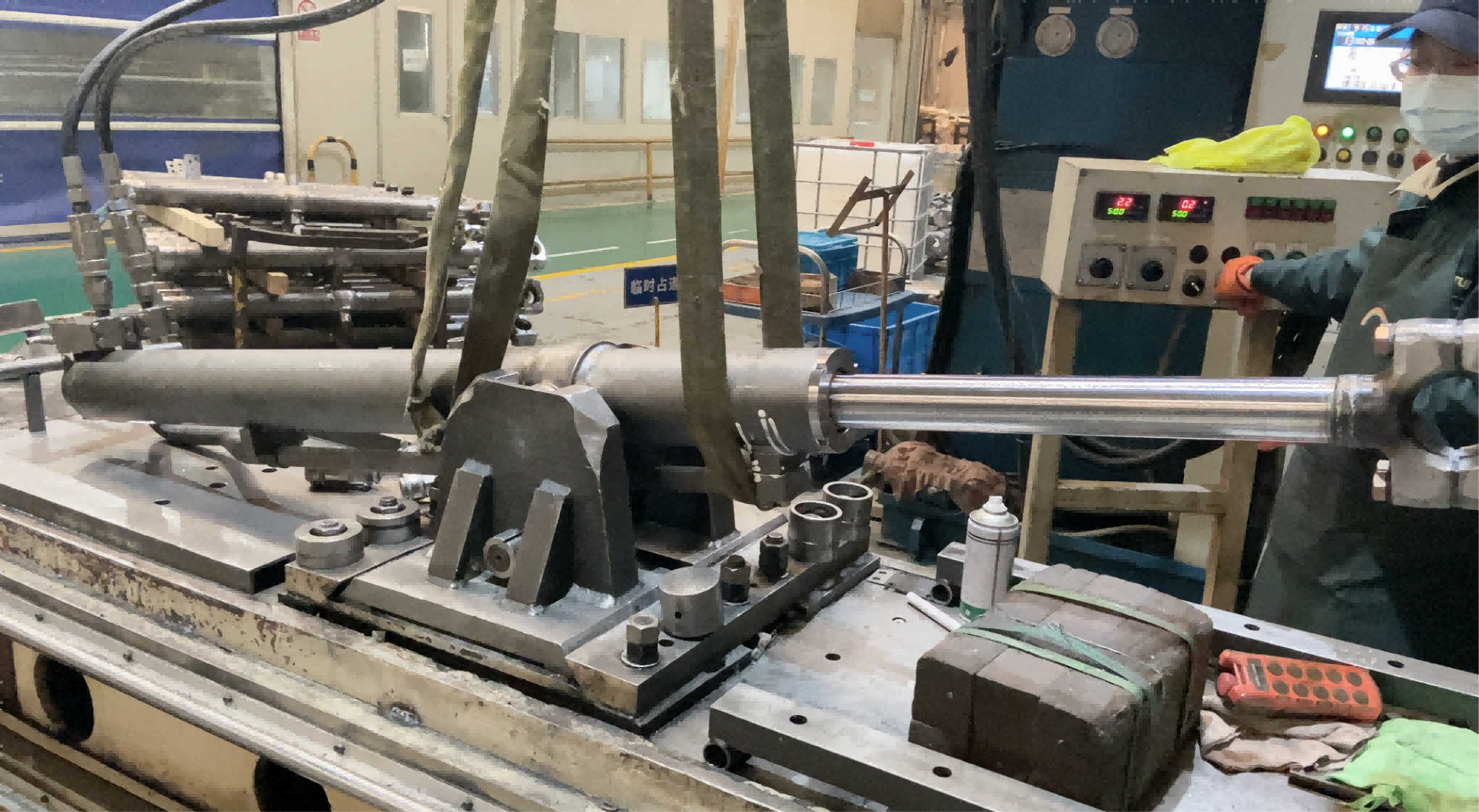
Short answer: A hydraulic power unit meets cleanliness expectations when three conditions hold at the same time. The oil cleanliness level is written down as a number — Apex Hydraulic publishes ISO 4406 20/18/15 in the specifications for several of its power unit platforms. The filtration architecture is chosen so the unit can hold that level in service, using return-line filters, pressure-line filters, suction strainers and air breather filters as the circuit requires. And the unit is assembled from components that were cleaned before assembly rather than flushed clean afterwards. Filtration cannot rescue a contaminated build, and a clean build cannot stay clean in service without filtration.
This guide is written for procurement managers, hydraulic engineers and OEM project teams who have to defend a hydraulic power unit decision to someone else — an internal quality function, an equipment end user, or a compliance reviewer. It covers where contamination actually comes from, what the regulatory-facing expectations say, how filtration control and clean assembly work together, and which questions to put to a supplier before releasing an order.
Why Cleanliness Is the First Compliance Question for a Hydraulic Power Unit
Contamination is not a maintenance issue that appears two years into service. It is a build-quality issue that is decided on the assembly floor, because a hydraulic power unit assembled from uncleaned components starts its working life with particles already circulating through the pump, valves and actuators.
A hydraulic power unit — also referred to as a hydraulic power pack or hydraulic pump station — concentrates the components most sensitive to particle contamination into one compact assembly: a gear pump, a manifold with cartridge valves, a reservoir, and on DC platforms a motor and electrical control interface. Every one of those components has a fluid-film clearance that particles can bridge.
In practice, contamination enters through a small number of predictable routes:
- Machining residue. Chips, burrs and honing debris retained in bores, manifold galleries and reservoir interiors.
- Weld spatter and scale left on welded frames, reservoirs and mounting brackets.
- Ambient dust in an assembly area that is not separated from cutting, grinding or painting operations.
- Debris carried in by hoses and fittings that were stored open, or installed without capping and flushing.
- Reservoir residue, including coating particles from the internal surface of a painted or powder-coated tank.
- Fluid introduced from a contaminated container, a dirty fill point or an unfiltered transfer pump.
- Airborne ingress through a breather that does not filter the air drawn in as the reservoir level rises and falls.
Once particles are circulating, the failure modes follow a familiar pattern: abrasive wear on gear pump and valve surfaces, spool sticking in directional valves, seal and wiper damage, and accelerated fluid degradation that shortens service intervals. The commercial consequence for a buyer is usually not a single breakdown. It is the loss of traceability — when a valve sticks or a pump wears early, nobody can show which cleanliness level was specified, how filtration was configured, or what was verified before the unit left the factory.
That is why a compliance-facing procurement process asks for evidence of a process rather than a promise of a result. The next section explains why that expectation has moved from specialist applications into mainstream buying documents.
Industry Background: Cleanliness Is Moving From Preference to Specification
The hydraulic power unit market is now large enough that contamination control appears in ordinary procurement documents rather than only in high-criticality applications. Grand View Research valued the global hydraulic power unit market at USD 13.6 billion in 2024. Precedence Research estimated the same market at USD 11.4 billion in 2024, growing at a CAGR of 5.5% through 2034. Those two figures differ, and that divergence is worth stating openly: buyers who publish market context should cite the source they are using rather than averaging two different methodologies into one number.
Regional and segment data add practical colour. Asia Pacific accounted for a revenue share of 40.2% of the global hydraulic power unit market in 2024, according to Grand View Research. In the United States, the market was valued at USD 2.55 billion in 2024, with the industrial application segment holding the largest revenue share at 56.3% and electric-powered units accounting for 60.1% of revenue. Globally, standard packaged units represented 47.8% of hydraulic power unit revenue in 2024, based on Mordor Intelligence data, and the 2,000–3,000 psi pressure range segment is projected to grow at a CAGR of 5.8% between 2025 and 2033, per Grand View Research.
On the mobile side, where DC hydraulic power units do most of their work, the global dump trailer market was estimated at USD 63.51 billion in 2024, with the 10–15 ton segment holding the largest share, according to Market Research Future. Mobile equipment is also where contamination risk is highest in the field: dust, road spray, temperature swings and long standby periods all push particles toward the reservoir breather.
Competitive context, stated neutrally. Mordor Intelligence identifies Bosch Rexroth AG, Parker-Hannifin and HYDAC International among the top global manufacturers of hydraulic power units. KTI Hydraulics launched a submerged DC hydraulic power unit with 12 V and 24 V options for recycling equipment in 2023. Manufacturer listings of this kind are useful for market orientation, but they do not answer a procurement question on their own, because how a specific unit is cleaned, configured, tested and documented is a factory-level practice rather than a brand-level automatic. Apex Hydraulic Co., Ltd. is a China-based manufacturer established in 2009 in Qingdao, Shandong Province, producing custom hydraulic cylinders, hydraulic power units and complete hydraulic systems for OEM and ODM programs, with roughly 70% of output exported to North America, Western Europe, South America, Southeast Asia, the Middle East and Australia.
What the Regulatory-Facing Expectations Actually Say
Two published documents are commonly referenced when hydraulic equipment is placed on the European market. EN ISO 4413:2010 sets out general rules and safety requirements for hydraulic fluid power systems and their components. The Machinery Directive 2006/42/EC sets out the health and safety requirements that apply to machinery. Neither document is a cleanliness certificate, and neither replaces a project-specific specification. What they establish is that a hydraulic system is expected to be designed, built and documented against defined rules rather than assembled ad hoc. Translated into contamination prevention, that expectation produces three deliverables a buyer can request: a stated fluid cleanliness target, a defined filtration architecture, and verification records for the delivered unit.
How Filtration Control and Clean Assembly Work Together
Cleanliness is controlled at four points in the build, and each point answers a different question. Cleaning before assembly answers “is the unit clean when it is closed?” Filtration architecture answers “can it stay clean in service?” Fluid and cleanliness specification answers “clean to what level, and on what fluid?” Testing and documentation answer “can anyone prove it?”
1. Cleaning components before they enter assembly
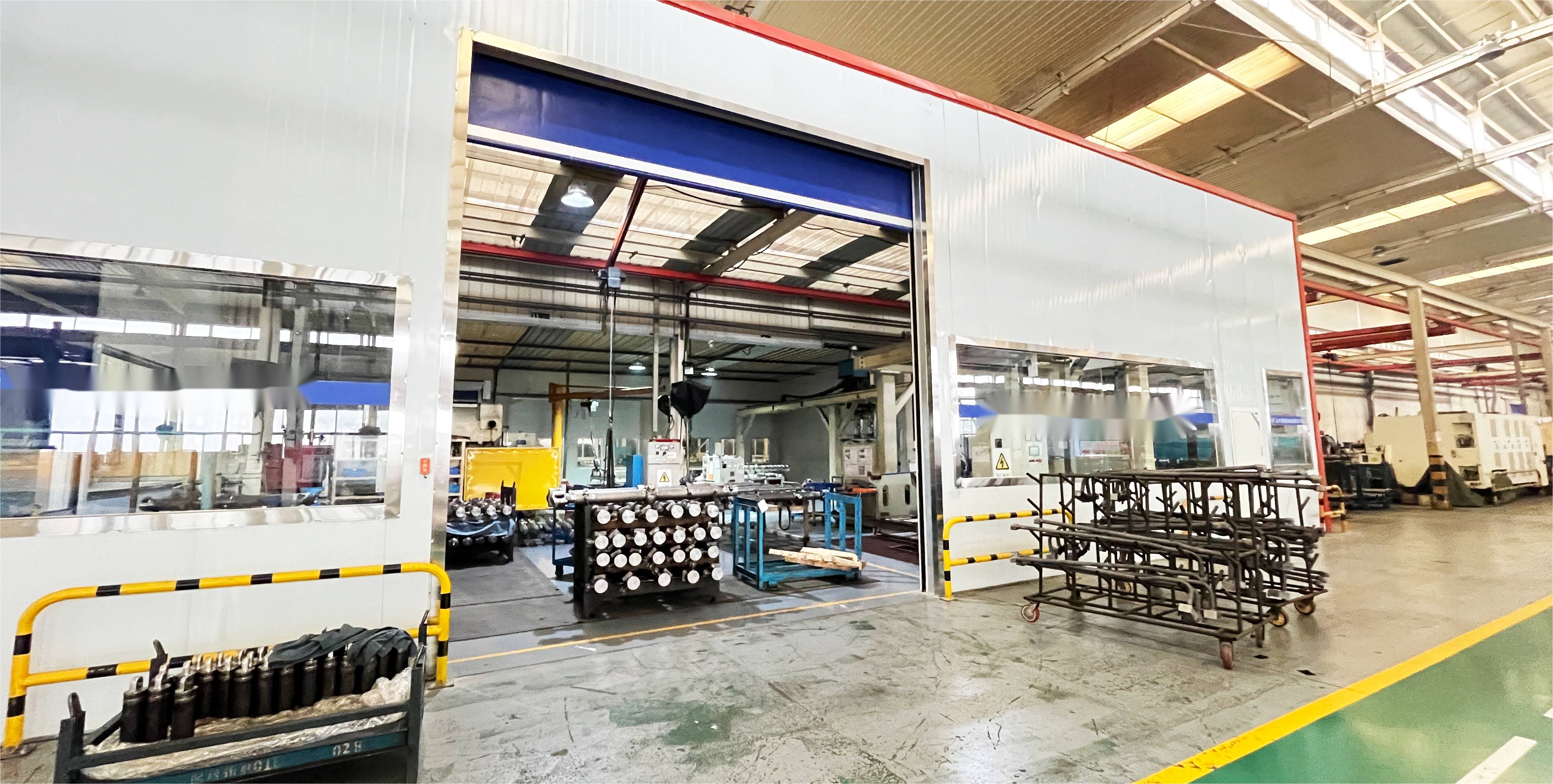
Component cleaning before assembly removes the debris left behind by machining, welding and handling. At Apex Hydraulic, components pass through a cleaning stage before assembly, and the same inspection sequence that governs production applies to the parts that go into a power unit: Incoming Material Inspection (IQC), In-Process Quality Control (IPQC), Final Quality Inspection (FQC) and 100% final inspection, supported by pressure testing, leakage testing, dimensional inspection, welding inspection, surface finish inspection and functional testing.
Cleaning before assembly matters more than flushing afterwards for a simple reason: once debris has reached a manifold gallery or a valve cavity, removing it usually means dismantling and re-testing the unit. Sequencing the cleaning upstream is cheaper and more reliable than correcting downstream.
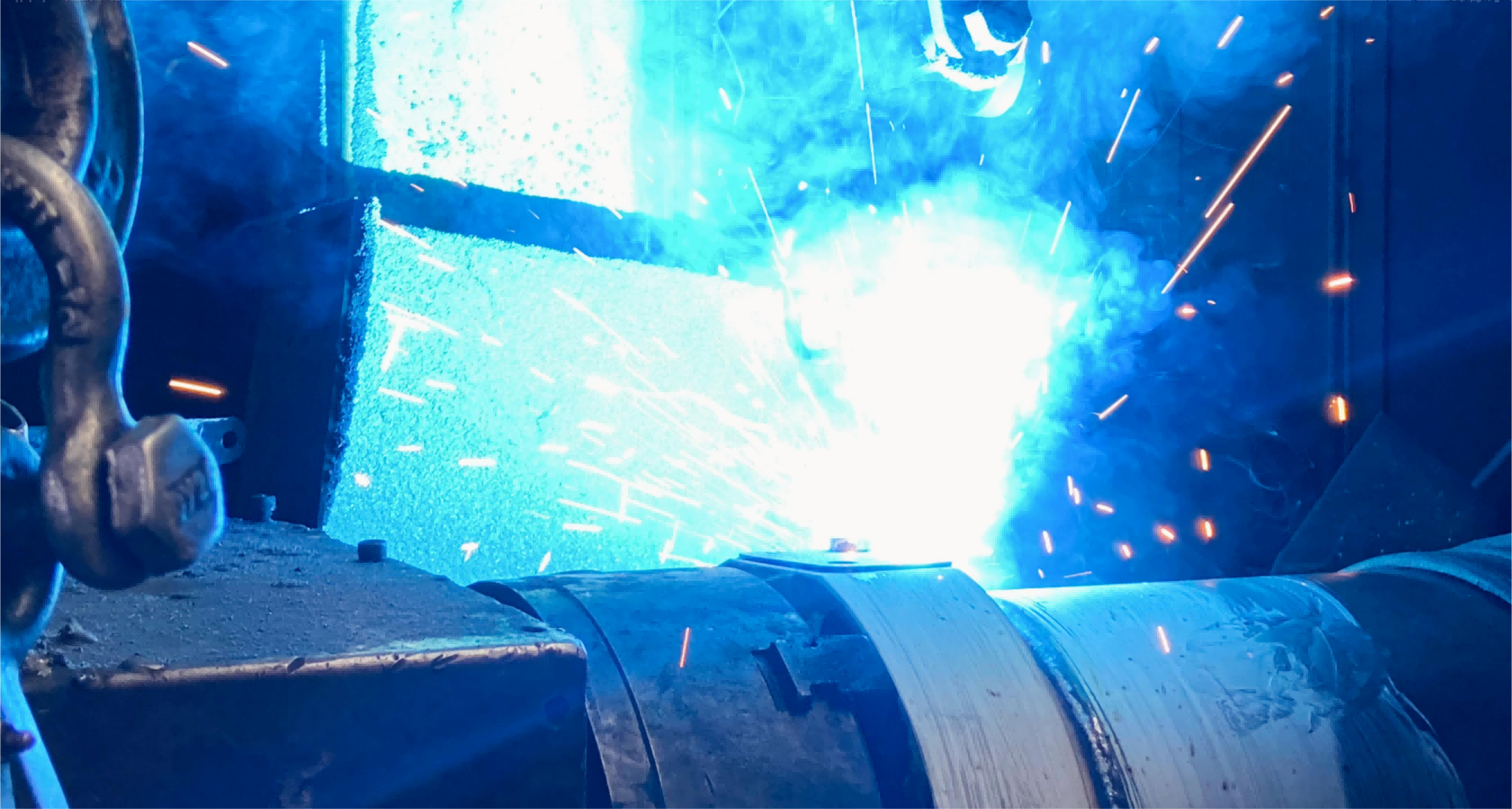
2. Building a filtration architecture into the specification
Filtration is a configurable element of an Apex Hydraulic power unit rather than a fixed accessory. Depending on the platform, the published specification can include a return-line filter, a pressure-line filter, a suction strainer and an air breather filter, alongside an oil level indicator, an oil temperature sensor and a pressure sensor.
Each element addresses a different contamination path. A return-line filter captures wear debris generated downstream of the pump before it re-enters the reservoir. A suction strainer protects the pump inlet. A filtered air breather keeps airborne particles out as the reservoir breathes during every extend-and-retract cycle. Pressure-line filtration protects sensitive downstream valves and actuators. On mobile platforms that work outdoors, the same logic extends to the enclosure: IP54, IP55, IP65 and IP66 ingress protection options and a weather-resistant enclosure limit the amount of dust and moisture that reaches the unit in the first place.
Filtration is also a structural decision, not only a component choice. Integrated manifolds replace external hoses and fittings, and every joint removed is one less entry point for contamination and one less potential leak path. On a compact power unit mounted inside a machine enclosure or a trailer pump box, that reduction supports both cleanliness and long-term reliability.
3. Matching fluid and cleanliness level to the duty cycle
Published specifications across the Apex Hydraulic power unit range use ISO VG 32 and ISO VG 46 as standard fluid recommendations for mobile and general industrial duty, ISO VG 22 through ISO VG 46 for the low-noise compact platform, and ISO VG 32 through ISO VG 68 for the AC industrial platform where higher oil or ambient temperatures are expected. The 12 V DC dump trailer platform is specified for automatic transmission fluid or a compatible hydraulic oil selected according to temperature — a useful reminder that fluid grade follows the duty cycle and the climate, not the other way round.
The cleanliness level is specified separately from the fluid grade. Apex Hydraulic publishes ISO 4406 20/18/15 as the fluid cleanliness level for the APEX-ACHPU Series, APEX-CVMAHPU, APEX-CMFHPU and APEX-CLNCHPU platforms. ISO 4406 is a coded cleanliness classification, which means 20/18/15 is a target to be achieved, filtered for and confirmed — not a descriptive claim.
4. Verifying the unit instead of assuming it
Testing is where a cleanliness claim becomes a verifiable statement. Power units in the Apex Hydraulic range can undergo pressure testing, leakage testing, electrical testing, valve-response testing and full-cycle testing before shipment, and the low-noise compact platform adds vibration testing to that sequence. The 12 V DC dump trailer platform lists pressure testing, flow testing, relief-valve verification, solenoid-valve functional testing, motor current testing and leakage inspection.
Documentation available according to project requirements includes the approved drawing, dimensional report, sensor datasheet, wiring diagram, inspection record, test report and material records. Units can carry a customer logo, part number, serial number and traceability label, which is what allows a contamination question raised in the field to be traced back to a specific build.
Step-by-Step: Controlling Cleanliness Through the Build
The following sequence is written as a buyer-side checklist. It can be used either to specify a new hydraulic power unit or to evaluate an existing supplier’s process.
- Write the cleanliness target into the technical specification. State the ISO 4406 class, the fluid grade and the operating temperature range in one document. For most mobile and general industrial power units, ISO VG 32 or ISO VG 46 with an ISO 4406 20/18/15 target is a defensible starting point; circuits with proportional valves or long service intervals should be reviewed individually.
- Audit incoming components, not only incoming steel. Incoming Material Inspection covers purchased valves, seals, fittings and motors as well as raw material. A contaminated cartridge valve arriving from an outside supplier contaminates the finished unit just as effectively as a dirty reservoir.
- Clean before assembly, then protect the cleaned part. Component cleaning must happen upstream of final assembly, and cleaned components should be handled and stored in a way that does not re-contaminate them. Open ports and fittings should be capped until they are connected.
- Select the filtration set for the actual circuit. Treat return-line filtration as a baseline, then add a suction strainer, pressure-line filter and air breather where the circuit, the environment or the duty cycle requires them. On outdoor mobile equipment, add enclosure protection in the same decision.
- Reduce the number of joints. Specify manifold-integrated design where the layout allows it. Fewer hoses, fittings and adapters means fewer contamination entry points and fewer leak paths to inspect over the service life.
- Control the fill and the first start. Confirm the fluid grade against the temperature range, use a sealed or filtered transfer method, and verify the level with the oil level indicator rather than by eye through a fill port.
- Test the completed unit and record the result. Pressure, leakage, flow, relief-valve setting, solenoid valve function, motor current and full-cycle operation should be verified on the finished unit, not only on sub-assemblies. The test record is the document a compliance reviewer will ask for.
- Protect the unit after test and through transport. Cap hydraulic ports, seal electrical connectors, use the specified ingress protection and add a weather-protection cover where the unit is chassis-mounted. A unit that passes testing and then sits uncapped in a dusty yard does not reach the customer clean.
Where Cleanliness-Controlled Power Units Are Used
Cleanliness requirements are driven by duty cycle and environment, so they differ significantly between platforms. The applications below show how the same filtration and clean-assembly logic is applied differently across the Apex Hydraulic range.
Dump trailers and scissor hoist systems
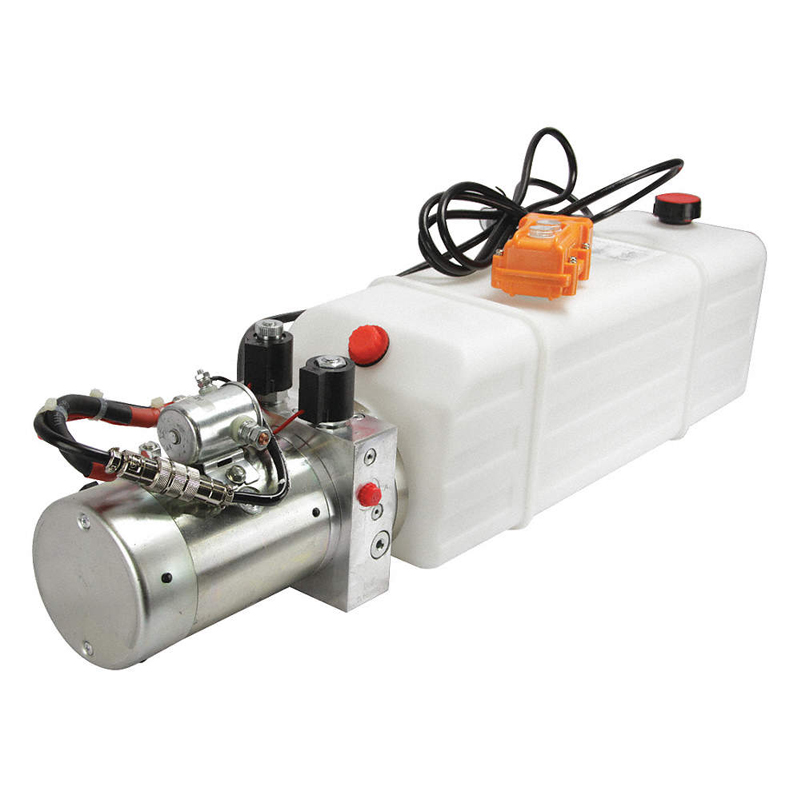
The 12 V DC dump trailer hydraulic power unit (APEX-DTHPU) works in a power-up / gravity-down circuit with a 6 US quart translucent horizontal reservoir, a maximum flow of 2.0 GPM, a maximum relief setting of 3,200 PSI at the A port and 1,500 PSI at the B port, and SAE #6 ports. Mobile pressure and suction protection are listed as configuration options, and buyers running contaminant-sensitive circuits should confirm filtration at the configuration stage rather than assume it. The translucent reservoir is a practical field advantage: fluid level and fluid condition can be inspected without opening the system. The same platform family supports scissor hoist hydraulic power unit applications on dump trailer and dump body conversions.
Vehicle-mounted auxiliary hydraulics
The Custom Vehicle-Mounted Auxiliary Hydraulic Power Unit (APEX-CVMAHPU) covers refuse collection vehicles, truck tailgates, street sweepers, road maintenance vehicles and utility trucks, with 24 VDC or 48 VDC supply, motor power from 1.5 kW to 8.0 kW, up to 250 bar working pressure, and chassis-mounted installation. Published fluid cleanliness level: ISO 4406 20/18/15, with return-line filter, pressure-line filter and suction strainer listed as options and IP54 / IP65 / IP66 protection for outdoor duty. This is the platform where contamination control has the clearest payback, because vehicle-mounted units operate in dust, road salt and temperature extremes and are typically serviced on a fleet schedule rather than on demand.
Aerial work platforms and multi-function mobile equipment
The Custom Multi-Function Hydraulic Power Unit for Aerial Work Platforms (APEX-CMFHPU) integrates 2 to 8 hydraulic functions — lifting, steering, platform leveling, outrigger control and emergency lowering — in one DC power unit, with 12 VDC, 24 VDC or 48 VDC supply and up to 280 bar working pressure. Its published fluid cleanliness level is ISO 4406 20/18/15, with return-line filtration and a suction strainer available. Return-line filtration on this platform does double duty: it protects the pump and valves, and it supports the stable load-holding behaviour that platform safety depends on.
Stationary AC industrial power units
The Custom AC Industrial Hydraulic Power Unit (APEX-ACHPU Series) runs on 220 VAC or 380 VAC single-phase or three-phase supply with a TEFC induction motor from 0.12 kW to 4.0 kW, for machine tools, presses, dock levelers, lift tables, packaging machinery and general industrial machinery. It is the platform with the widest published filtration set — return-line filter, pressure-line filter, suction strainer and air breather filter are all listed as options — with ISO VG 32 / 46 / 68 fluid recommendations and ISO 4406 20/18/15 cleanliness. Continuous-duty industrial operation makes filtration the primary defence, because oil is in circulation for long periods and contamination has more time to do damage.
Low-noise compact and double-acting mobile power packs
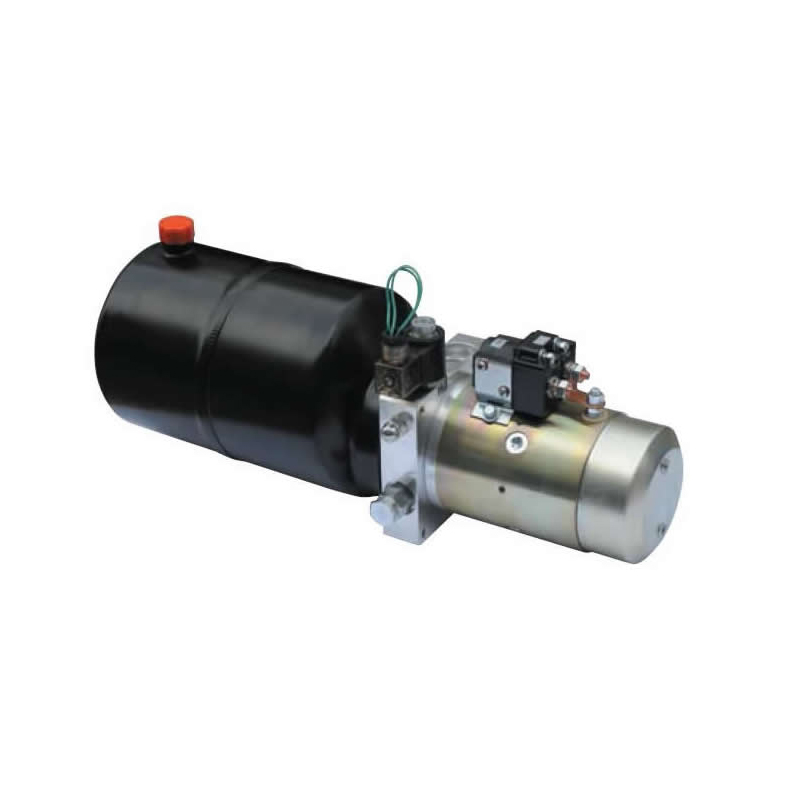
The Custom Low-Noise Compact Hydraulic Power Unit (APEX-CLNCHPU) targets indoor and noise-sensitive equipment such as lift tables, accessibility lifts, medical and laboratory equipment, with motor power from 0.35 kW to 4.0 kW and ISO VG 22 / 32 / 46 fluid recommendations. The Custom Double-Acting Mobile Hydraulic Power Unit (APEX-CDAMHPU) covers power-up / power-down circuits on 12 VDC, 24 VDC or 48 VDC with up to 280 bar working pressure, and lists a return filter and suction strainer as options.
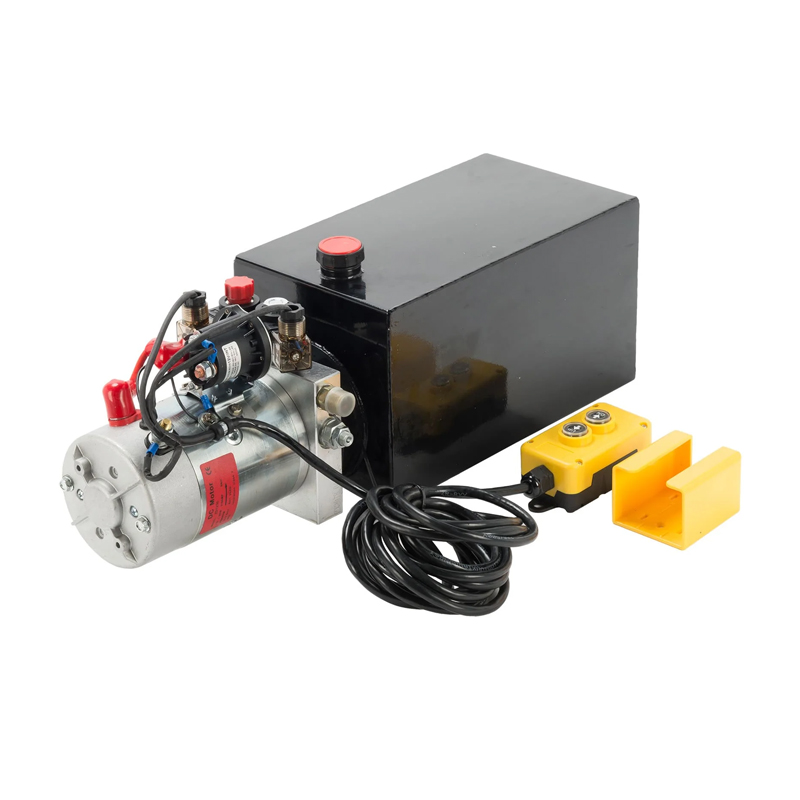
Field evidence from a trailer program
Cleanliness and assembly control show up in field results rather than in design documents. A Canadian dump trailer manufacturer took delivery of 1,200 HTC Series telescopic cylinders and 500 hydraulic power units over a one-year program for front-mounted dump trailer lifting systems used in construction materials, agriculture and landscaping. The reported outcome was smooth lifting performance, a stable dumping angle and reduced service downtime during continuous heavy-duty operation. The cylinders in that program used a compact retracted length with a long stroke and high lifting capacity, matched to North American dump trailer standards — a configuration where any internal contamination would have shown up quickly as leakage or inconsistent lift.
Comparison Table: Cleanliness-Related Specifications Across Apex Hydraulic Power Unit Platforms
The table below compares only what is published in the Apex Hydraulic specifications. Where a filtration component or cleanliness value is not stated for a platform, that is recorded as such rather than inferred, because an inferred specification is not a specification a buyer can hold a supplier to.
| Platform | Model | Supply | Recommended fluid | Published cleanliness level | Filtration components listed | Ingress protection |
|---|---|---|---|---|---|---|
| Custom AC Industrial Hydraulic Power Unit | APEX-ACHPU Series | 220 / 380 VAC, single or three phase | ISO VG 32 / 46 / 68 | ISO 4406 20/18/15 | Return-line filter, pressure-line filter, suction strainer, air breather filter (all optional) | IP54 / IP55 / IP65 |
| Custom Vehicle-Mounted Auxiliary Hydraulic Power Unit | APEX-CVMAHPU | 24 / 48 VDC | ISO VG 32 / 46 | ISO 4406 20/18/15 | Return-line filter, pressure-line filter, suction strainer (optional) | IP54 / IP65 / IP66 |
| Custom Multi-Function Hydraulic Power Unit for Aerial Work Platforms | APEX-CMFHPU | 12 / 24 / 48 VDC | ISO VG 32 / 46 | ISO 4406 20/18/15 | Return-line filter, suction strainer (optional) | IP54 / IP65 / IP66 |
| Custom Low-Noise Compact Hydraulic Power Unit | APEX-CLNCHPU | 12 / 24 / 48 VDC or 220 / 380 VAC | ISO VG 22 / 32 / 46 | ISO 4406 20/18/15 | Return-line filter, suction strainer, air breather filter (optional) | IP54 / IP55 / IP65 |
| Custom Double-Acting Mobile Hydraulic Power Unit | APEX-CDAMHPU | 12 / 24 / 48 VDC | ISO VG 32 / 46 | Not stated in the published specification | Return filter, suction strainer (optional) | IP54 / IP65 / IP66 |
| 12V DC Dump Trailer Hydraulic Power Unit | APEX-DTHPU | 12 VDC, power up / gravity down | Automatic transmission fluid or compatible hydraulic oil selected according to temperature | Not stated in the published specification | Integrated load-retention check valve listed; no return or suction filter listed in the published specification | Weather-protection cover optional |
Two conclusions follow from the table. First, the ISO 4406 20/18/15 figure is stated for the mobile and industrial platforms that carry multi-function circuits, where contamination protection is a functional requirement rather than an option. Second, buyers specifying a compact DC platform should confirm filtration explicitly at the configuration stage, because a platform specification that does not list a filter is not the same as a platform that cannot accept one.
Frequently Asked Questions
What fluid cleanliness level should I specify for a hydraulic power unit?
Apex Hydraulic publishes ISO 4406 20/18/15 as the fluid cleanliness level in the specifications for several power unit platforms, including the APEX-ACHPU Series, APEX-CVMAHPU, APEX-CMFHPU and APEX-CLNCHPU. That figure is a platform reference value rather than a universal requirement: the target that matters is the one written into your equipment specification and confirmed by the supplier’s test documentation. Where equipment is placed on the EU market, buyers commonly reference EN ISO 4413:2010, which gives general rules and safety requirements for hydraulic fluid power systems and their components, and the Machinery Directive 2006/42/EC, which sets out health and safety requirements for machinery. A stated cleanliness value should always be paired with process evidence — component cleaning before assembly, a defined filtration architecture and per-unit testing — because a number without a process cannot be verified.
How is contamination controlled during assembly of an Apex Hydraulic power unit?
Components are cleaned before they enter assembly, and the build is controlled against a documented inspection sequence: Incoming Material Inspection (IQC), In-Process Quality Control (IPQC), Final Quality Inspection (FQC) and 100% final inspection. Completed power units can undergo pressure, leakage, electrical, valve-response and full-cycle testing before shipment, and the low-noise compact platform additionally supports vibration testing. Where the platform allows it, manifold-integrated construction replaces external hoses and fittings, reducing both contamination entry points and potential leak paths. Documentation including the approved drawing, inspection record and test report can be supplied according to project requirements.
What drives the cost of a cleanliness-controlled hydraulic power unit?
There is no single list price, because these units are configured rather than selected off a shelf. The variables that most often move a specification are the filtration components selected (return-line filter, pressure-line filter, suction strainer, air breather filter), reservoir material and capacity, valve and manifold configuration including proportional control options, sensor selection such as oil temperature, pressure and oil level sensing, the required ingress protection class, and the control interface. Apex Hydraulic customization scope covers cylinder bore, rod diameter, stroke, pressure, voltage, motor, pump, manifold, valve, reservoir, control system and complete hydraulic solutions. Minimum order quantity is 1 piece for standard products, while OEM and customized projects are negotiated according to project requirements.
Can we validate cleanliness before committing to mass production?
Yes. Apex Hydraulic provides OEM and ODM services that cover product design, engineering drawings, prototype development, testing, manufacturing and quality inspection, so a first article can be built, tested and reviewed before a production program is released. Standard products can be ordered from 1 piece, which allows a single unit to be checked against the agreed cleanliness and performance targets. Depending on the project, documentation such as the approved drawing, sensor datasheet, wiring diagram, inspection record and test report can be supplied, and units can be identified with a customer logo, part number, serial number and traceability label.
What lead times apply to a custom hydraulic power unit?
Standard products are quoted at 7–20 days and customized products at 25–45 days; large OEM projects follow the agreed project schedule. Lead time interacts directly with cleanliness control, because cleaning, assembly and testing stages cannot be compressed without removing verification steps. If a program includes first-article approval, the sample stage should be planned into the schedule from the start. Apex Hydraulic produces more than 1,500 hydraulic power units per month, which supports both repeat orders and staged OEM ramp-ups. To discuss a specific configuration and cleanliness target, send the application details to jason@hydraulicapex.com, or request the product catalog using the link at the end of this guide.
Conclusion: Compliance Is a Documented Process, Not a Label
A hydraulic power unit does not become compliant because a datasheet mentions cleanliness. It becomes compliant when the cleanliness target is specified as a number, the filtration architecture is selected to hold that number in service, the components are cleaned before assembly rather than after, and the finished unit is tested and documented in a way that can be audited later.
For buyers evaluating suppliers, the practical test is simple: ask what ISO 4406 level is specified for your platform, which filtration components are included, what cleaning step precedes assembly, and which test record will accompany the shipment. A supplier that can answer all four questions in writing is a supplier whose units can be defended in front of a quality function or an end customer. A supplier that can answer only the first has given you a specification, not a process.
Apex Hydraulic Co., Ltd. was established in 2009 and manufactures custom hydraulic cylinders, hydraulic power units and complete hydraulic systems from a 50,000 m² facility in Qingdao, Shandong Province, China, with 560 employees, an R&D team of 25 engineers, and OEM / ODM service for equipment manufacturers and hydraulic distributors worldwide.
Next Step: Check the Specification Against Your Application
Send us the application, the required fluid cleanliness level and the operating environment, and we will confirm which power unit platform and filtration configuration fits — or arrange a sample unit for evaluation before you commit to a production program.
Email: jason@hydraulicapex.com | Tel / WhatsApp: +86 182-5318-1828 | WhatsApp chat: Start a conversation
Product catalog (PDF): Download the APEX Hydraulic main products catalog
Website: www.hydraulicapex.com | Address: Qingdao City, Shandong Province, China
Have Questions or Need More Details?
Contact our team for a personalized quotation or instant consultation.
Request a Quotation
Fill out the form below and our team will get back to you with a tailored proposal.
WhatsApp Direct Chat
Prefer to chat in real-time? Message us on WhatsApp for instant assistance & quick answers.
- Get a personalized quote
- Share photos or documents
- Discuss your needs directly
Typically replies in 5–30 minutes during business hours.