Hydraulic Cylinder Compliance Essentials for Global OEM Buyers: Standards and Documentation
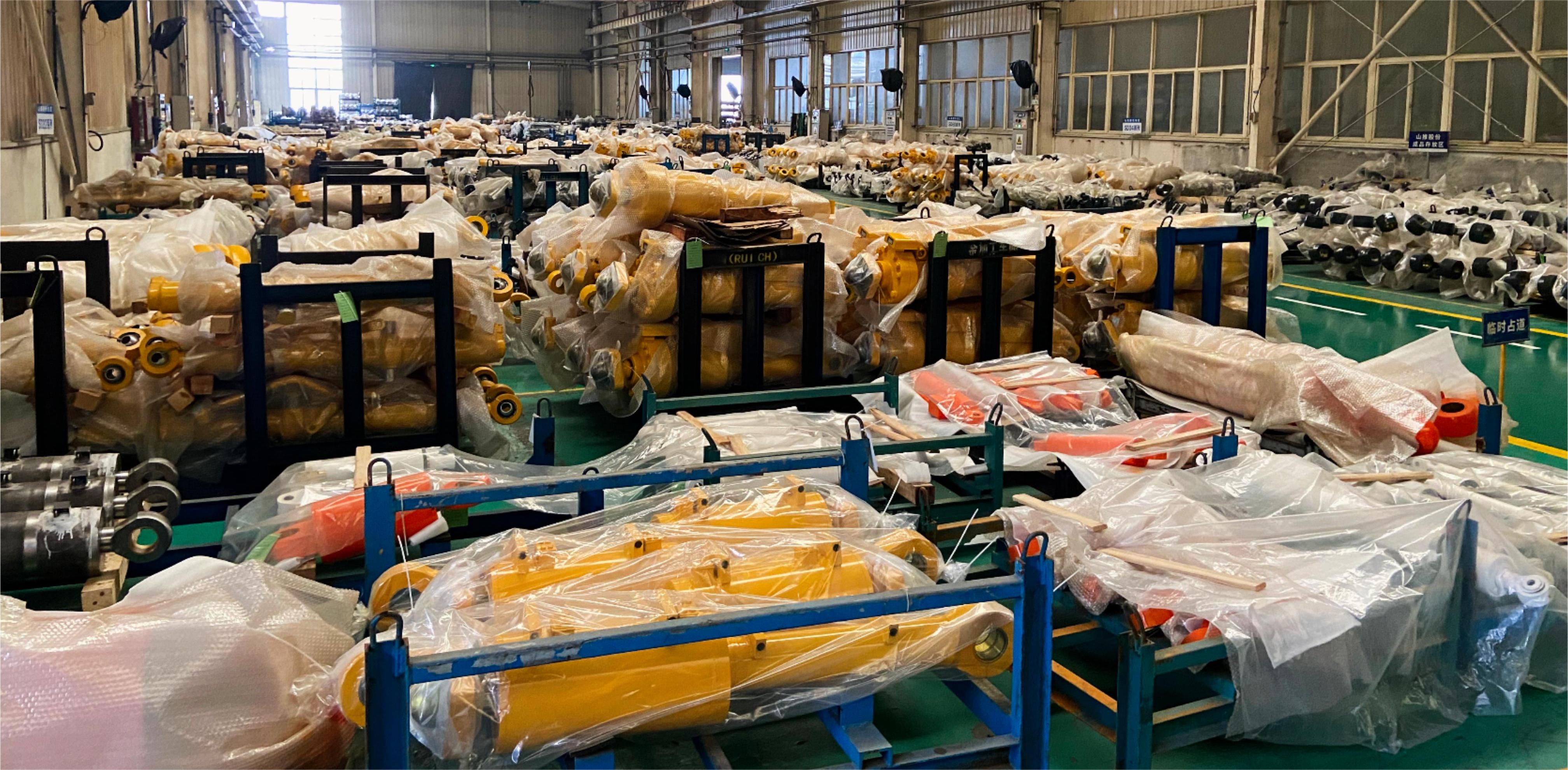
Hydraulic cylinder compliance for a global OEM buyer is a chain of evidence, not a single certificate. It begins with incoming material inspection, continues through in-process control and welding inspection, and closes with pressure, leakage and functional testing plus a 100% final inspection before shipment. Apex Hydraulic Co., Ltd. is a custom hydraulic cylinder and hydraulic power unit manufacturer established in 2009 in Qingdao, Shandong, China, operating a 50,000 m² facility and exporting roughly 70% of its output to North America, Western Europe, South America, Australia, Southeast Asia and the Middle East. This guide explains which standards normally apply, what documentation an OEM buyer should collect at each project stage, and where compliance gaps most often appear.
The sections below follow the order in which an OEM buyer actually meets the topic: the problem, the market and standards background, the manufacturer-side solution, a stage-by-stage breakdown, reference projects, and a short FAQ covering certification scope, OEM capability, commercial terms, sampling and lead time.
Problem Definition: Where Hydraulic Cylinder Compliance Usually Breaks Down
Compliance failures in custom cylinder programs are rarely caused by a missing certificate. They are caused by a gap between three things: the drawing that was approved, the part that was manufactured, and the paperwork that arrives with the shipment. In supplier audits and incoming inspections, that gap appears in predictable places.
- Undocumented substitution. A material grade, seal compound or surface treatment is changed during production without a controlled revision. In a documented workflow, material grades, surface hardness, plating thickness and seal selection are confirmed against the approved production drawing rather than decided on the shop floor.
- Drawing revisions that never reach inspection. A revised drawing that is not linked to a revised inspection record leaves the buyer with two documents that describe two different parts.
- Inspection performed but not recorded. Pressure and leakage tests carried out at the test bench but not traceable to a serial number give the buyer no way to prove that a specific unit was verified.
- Certification scope that is wider in the brochure than in the certificate. A CE certificate is normally issued for a defined product scope and a defined list of standards. Apex Hydraulic's ECM certificate, for example, is issued for the APCC Series and lists EN ISO 12100:2010, EN ISO 4413:2010, ISO 6020-1:2007, ISO 10100:2020 and Machinery Directive 2006/42/EC. A buyer ordering a different cylinder series should confirm coverage before assuming that the certificate applies.
- Warranty and service terms that are undefined for custom items. One-off cylinders rarely fit a standard catalogue warranty paragraph, so the terms need to be written into the project documents.
- Acceptance criteria agreed after the purchase order. If dimensional tolerances, test pressures and acceptance records are negotiated after production starts, the buyer has no neutral basis for accepting or rejecting the shipment.
Two structural complications make this harder. First, European and North American expectations are not identical: European machinery projects typically reference EN safety and fluid power standards, while North American industrial cylinder projects frequently reference mounting-dimension standards such as NFPA/T3.6.7 R3-2009 (R2024). Second, a custom cylinder is often the only component in a machine with no published catalogue dimensions, which means the approved drawing itself becomes the primary compliance document.
Industry Background: Why Documentation Requirements Keep Tightening
Global Market Insights values the global hydraulic cylinder market at USD 15.7 billion in 2024, with a projected USD 24.7 billion by 2034. That growth is not evenly distributed across product types, and the mix matters for buyers because each format concentrates risk in a different place.
Welded hydraulic cylinders held a dominant market share of 53.6% in 2025, according to Grand View Research, largely because of their durability in heavy-duty applications. Welded-body construction is also the format in which welding records, dimensional records and pressure test records carry most of the compliance weight. Grand View Research further reports that double-acting cylinders account for 71.6% of the function segment, and that the telescopic cylinder segment generated USD 2,225.1 million in 2024 with a projected CAGR of 5.9%. Future Market Insights estimates that tie-rod cylinders represented approximately 38.9% of the product type segment in 2025.
Demand is concentrated in mobile equipment. Grand View Research puts mobile applications, including construction and agriculture, at 51.8% of hydraulic cylinder demand, with Asia Pacific commanding a 40.5% revenue share in 2025 led by China and India. Fortune Business Insights projects the United States market to reach USD 3.31 billion by 2032 on the back of infrastructure modernization, while IndexBox recorded a +11.5% CAGR in China's export value for hydraulic cylinders and systems in recent years. Mordor Intelligence expects industrial manufacturing to be the fastest-growing end-user segment at a 6.12% CAGR through 2031.
The supplier landscape is split between global hydraulics groups and regional custom manufacturers. Fortune Business Insights identifies Parker Hannifin, Bosch Rexroth and Eaton among the top-tier suppliers in industrial hydraulics; Global Market Insights reports that Caterpillar held a global share of over 8% of the hydraulic cylinder market in 2024; and Wipro Infrastructure Engineering is named among the specialists in cylinders for heavy-duty mobile equipment. For an OEM buyer comparing a global brand against a custom manufacturer, the practical comparison often shifts from brand to documentation: who can produce a drawing-controlled part, prove how it was inspected, and support it after delivery.
A note on market estimates. Published figures differ by definition. Global Market Insights reports USD 15.7 billion for 2024, Grand View Research reports USD 16.9 billion for 2025, and Market Research Future reports USD 13.38 billion for 2024. The spread reflects different boundaries for what is counted. For procurement purposes these numbers are directional context, not a price, capacity or lead-time benchmark.
Standards That Commonly Apply to Cylinder Procurement
Standards do not replace a project drawing, but they define the vocabulary that buyers, engineers and inspectors share. The table below separates international mounting standards from the standards listed inside Apex Hydraulic's CE certificate scope.
| Standard / Regulation | What it addresses | Where it is referenced |
|---|---|---|
| ISO 6022:2006 | Mounting dimensions for single rod hydraulic cylinders, 250 bar series, to ensure interchangeability | International (ISO) |
| ISO 6020-2:2015 | Mounting dimensions for 160 bar series compact cylinders, for global interchangeability | International (ISO) |
| NFPA/T3.6.7 R3-2009 (R2024) | Mounting dimensions for square head industrial cylinders | North America (NFPA) |
| EN ISO 12100:2010 | Safety of machinery — risk assessment and risk reduction principles | Listed in the Apex Hydraulic ECM CE certificate scope |
| EN ISO 4413:2010 | Hydraulic fluid power — general rules and safety requirements for systems | Listed in the Apex Hydraulic ECM CE certificate scope |
| ISO 6020-1:2007 | Mounting dimensions for 160 bar series single rod cylinders | Listed in the Apex Hydraulic ECM CE certificate scope |
| ISO 10100:2020 | Hydraulic fluid power — cylinder acceptance testing | Listed in the Apex Hydraulic ECM CE certificate scope |
| Machinery Directive 2006/42/EC | EU machinery safety directive basis for CE conformity | Listed in the Apex Hydraulic ECM CE certificate scope |
Which of these applies to a specific order depends on the market, the machine and the mounting interface. A mining cylinder sold into Western Europe and an underbody telescopic cylinder sold into a North American trailer program will not carry the same document set, even when both are built by the same factory.
Detailed Solution: The Compliance Package a Manufacturer Should Provide
A defensible compliance package has seven parts. Each can be audited by the buyer before a purchase order is placed, and each is drawn from Apex Hydraulic's manufacturing and service documentation.
1. Incoming material inspection (IQC)
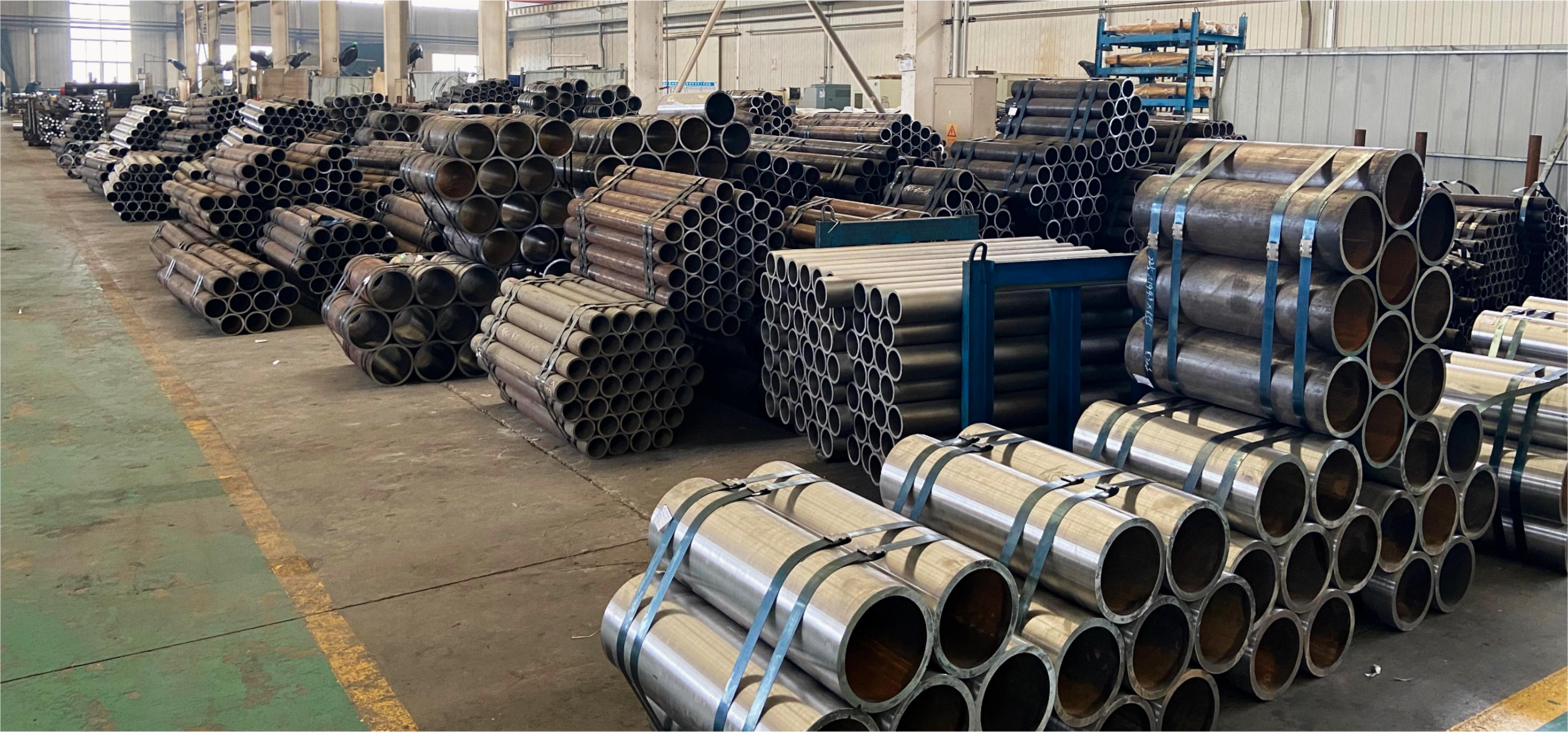
Compliance begins before machining. Incoming Material Inspection verifies cylinder tube, piston rod stock, castings, seal components and fittings against the approved specification before they enter production. Because the approved drawing defines which material grades, hardness values and surface treatments are acceptable, IQC is the first point at which a documented specification can be confirmed or rejected.
2. In-process control and welding inspection (IPQC)
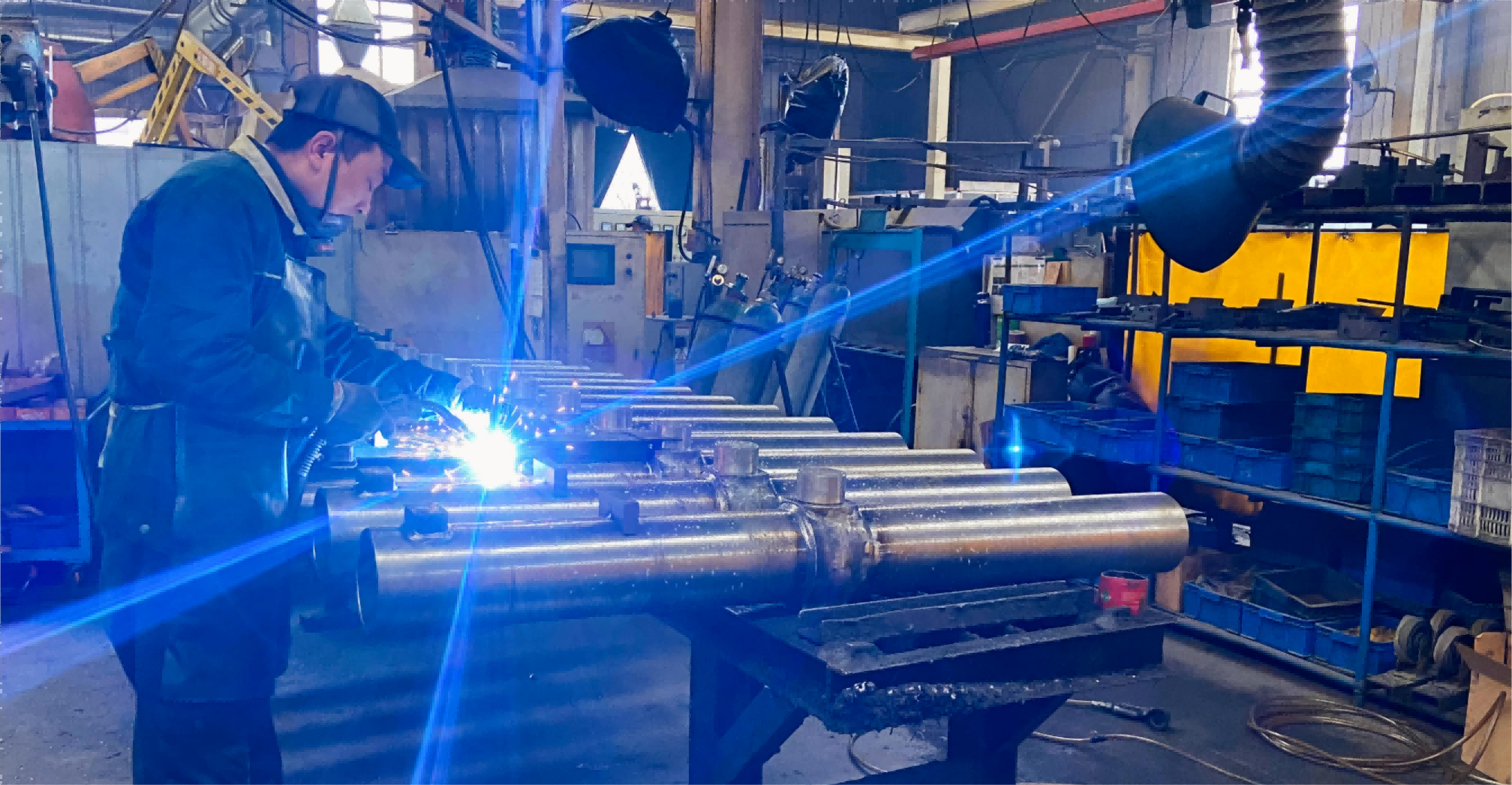
In welded-body cylinders, the weld concentrates risk. In-Process Quality Control covers dimensions, weld quality, surface finish and process parameters as the barrel, mounts and ports are joined. Welding inspection and surface finish inspection are defined steps in the production sequence rather than optional checks, which is what allows a buyer to trace a finished cylinder back to the process that produced it.
3. Final inspection, pressure and leakage testing (FQC)
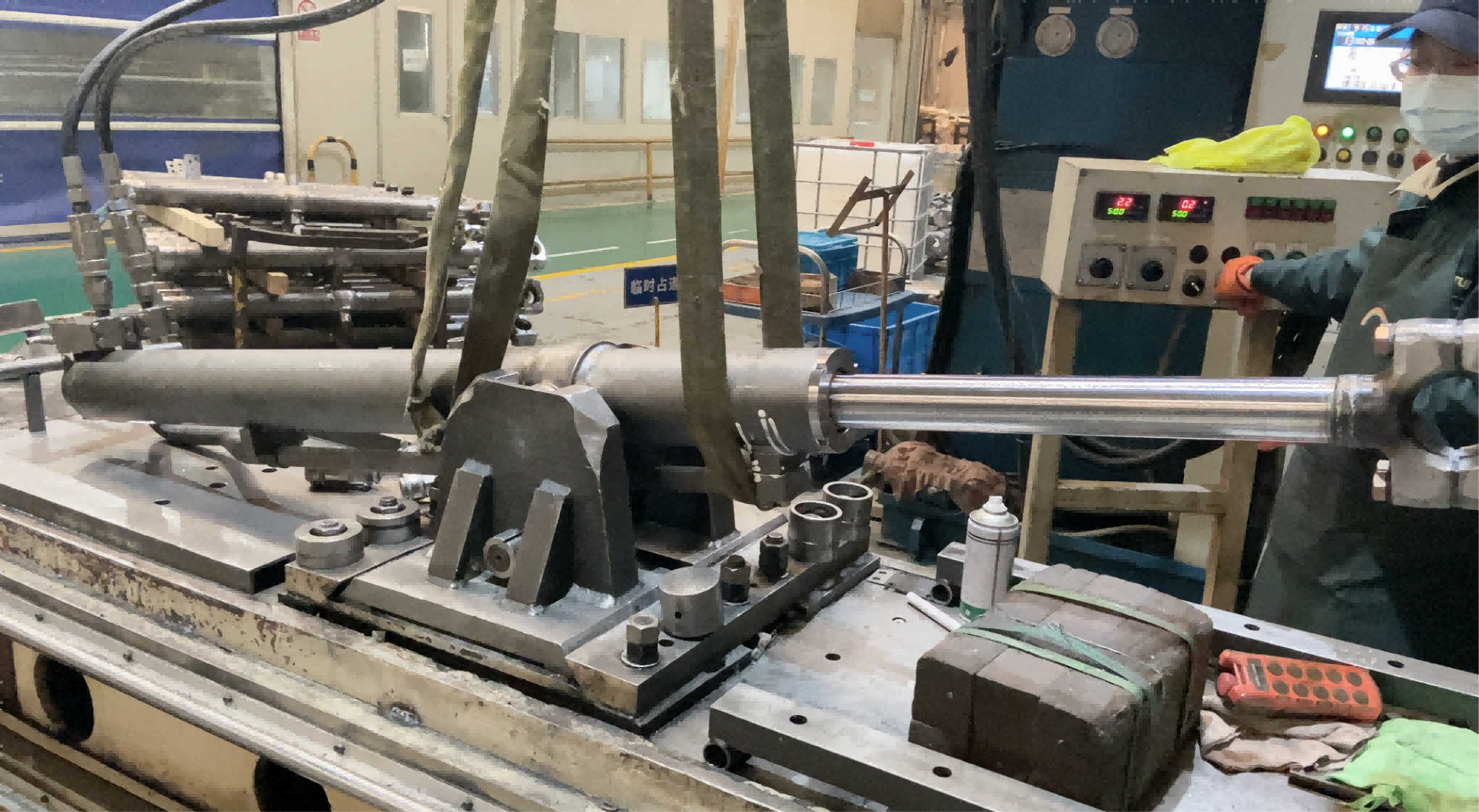
Apex Hydraulic's quality control sequence includes Final Quality Inspection (FQC), pressure testing, leakage testing, dimensional inspection, welding inspection, surface finish inspection, functional testing and 100% final inspection before shipment. The 100% figure is the important part for OEM buyers: it means the inspection is a release gate applied to every unit, not a sampling exercise.
Additional tests follow the product type. For telescopic cylinders, stage sequence testing confirms extension and retraction order in addition to pressure and leakage testing. For position-sensing cylinders, sensor output and signal repeatability testing are added to dimensional, pressure, leakage and full-stroke checks. For replacement cylinders built to a verified part number, final compatibility is confirmed before production, and 100% inspection is repeated before shipment.
4. Documentation and traceability
Documentation is the deliverable that makes the physical inspection usable later. Depending on project requirements, Apex Hydraulic makes available the approved drawing, inspection records, test reports and material documentation for custom cylinder series. Where required, cylinders can also be identified with a customer part number, serial number, customer logo and traceability code, which links the physical unit to the drawing revision and the inspection record.
For an OEM buyer, the practical test is simple: if a cylinder fails two years after delivery, can the supplier retrieve the drawing revision, the inspection record and the test report for that serial number? If the answer is no, the compliance package is incomplete regardless of how many certificates exist.
5. Certification with a defined scope
Apex Hydraulic holds an ECM CE Certificate for Hydraulic Cylinder, certificate number 0P260130.AH0S46, issued by Ente Certificazione Macchine Srl (ECM), Italy, on 2026-01-30 and valid until 2031-01-29. The certificate scope is Hydraulic Cylinder – APCC Series, and the listed standards are EN ISO 12100:2010, EN ISO 4413:2010, ISO 6020-1:2007, ISO 10100:2020 and Machinery Directive 2006/42/EC. The applicable market is the European Union, the European Economic Area, and global export markets that require CE compliance.
Certification and compliance are not the same thing. A certificate supports a conformity claim within a defined product scope and standard list; the drawing, inspection records and test reports support the specific units that were shipped. Buyers whose machines fall under a different directive, or whose cylinders fall outside the APCC Series scope, should confirm the applicable evidence before relying on the certificate alone.
6. Warranty, after-sales and technical support
Apex Hydraulic's after-sales scope covers technical consultation, engineering support, installation guidance, product documentation, spare parts supply, warranty support, quality issue response, OEM project support and long-term technical partnership. The compliance value of these services is that they extend the documented record beyond the factory gate: installation guidance reduces commissioning errors, spare parts supply keeps the approved specification in the field, and quality issue response creates a defined route for a non-conformance after delivery.
7. OEM, ODM and private labeling capability
Production services include OEM manufacturing, ODM development, custom design and hydraulic engineering solutions. OEM services include OEM manufacturing and private labeling, enabling clients to brand products as their own. ODM services include ODM development and custom design, allowing clients to co-develop products to their specifications. Apex Hydraulic operates with 25 engineers and a monthly capacity of 8,000+ hydraulic cylinders and 1,500+ hydraulic power units.
The customization scope covers cylinder bore, rod diameter, stroke length, mounting style, installation dimensions, working pressure, seal system, materials, surface treatment, ports and threads, painting color, logo, packaging, hydraulic power unit configuration, voltage (12V/24V/48V), motor, pump, manifold, valve, reservoir, control system and complete hydraulic solutions. In practice, this is the list a buyer should expect to see fixed in writing before drawings are released, because each item can become a compliance question if it is changed later without a revision.
Step-by-Step Breakdown: Compliance Checkpoints Across an OEM Order
The Apex Hydraulic procurement flow runs from inquiry to after-sales support. Each stage produces a document that a buyer should retain for audit purposes.
- Inquiry. The buyer submits equipment type, cylinder function, existing part number, photographs, drawings or a sample, plus bore, rod diameter, stroke, pin-to-pin lengths, working pressure, mounting style and annual demand. Buyer action: keep the inquiry record as the baseline of the requirement.
- Technical review. Engineering review confirms force, pressure, buckling and mounting feasibility. Buyer action: confirm which standard or mounting interface governs the application.
- Drawing confirmation. The production drawing is approved before manufacturing. Buyer action: control the drawing revision number in your own document system.
- Quotation. Commercial terms are issued against the confirmed specification and quantity.
- Sample approval, if required. A sample is produced and evaluated against the agreed acceptance criteria. Buyer action: approve the sample against the same drawing that will govern mass production.
- PI confirmation. The proforma invoice fixes specification, quantity, price, delivery terms and acceptance criteria.
- Deposit payment. Production scheduling begins.
- Manufacturing. IQC, IPQC, welding inspection and surface finish inspection run in sequence. Buyer action: request in-process records for critical welds and dimensions.
- Quality inspection and testing. FQC, pressure testing, leakage testing, dimensional inspection and functional testing, plus 100% final inspection before shipment. Buyer action: request test reports linked to serial numbers.
- Final payment. Settled against the agreed terms and inspection evidence.
- Shipment. Units are packed and shipped with identification and traceability marking. Buyer action: archive certificates, inspection records and material documentation with the shipment record.
- After-sales technical support. Installation guidance, spare parts, warranty support and quality issue response remain available after commissioning.
Documents an OEM buyer should retain per project: approved drawing with revision number; material documentation; incoming material inspection record; welding and dimensional inspection records; pressure and leakage test reports; full-stroke functional test records; serial or traceability code mapped to the drawing revision; relevant certificate copy with its scope; and the written warranty and after-sales terms.
Comparison: What Buyers Can Verify at Each Production Stage
Compliance is easier to audit when it is mapped to production stages rather than to documents alone. The table below follows the Apex Hydraulic quality control sequence.
| Production stage | What is verified | Evidence a buyer can request |
|---|---|---|
| Incoming material (IQC) | Tube, rod, castings, seals and fittings against the approved specification | Incoming material inspection record, material documentation |
| Machining and welding (IPQC) | Dimensions, weld quality, surface finish, process parameters | In-process inspection record, welding inspection record |
| Surface treatment | Surface finish and corrosion protection as specified | Surface finish inspection record |
| Assembly and test (FQC) | Pressure, leakage, dimensional accuracy, full-stroke function | Pressure test report, leakage test report, dimensional inspection report |
| Product-specific testing | Stage sequence for telescopic cylinders; sensor output and signal repeatability for position-sensing cylinders | Stage sequence test record, sensor test record |
| Release | 100% final inspection before shipment | Final inspection record, serial number and traceability code |
| Certification | CE conformity within the defined APCC Series scope and listed standards | ECM CE certificate 0P260130.AH0S46, valid until 2031-01-29 |
| After delivery | Installation, spare parts, warranty and quality issue handling | Written warranty and after-sales terms, technical consultation records |
Use Cases: How Compliance Requirements Appear in Real Projects
Four Apex Hydraulic projects illustrate how documentation and verification requirements change with the application and the destination market.
- OEM refuse truck manufacturer, United States — 960 hydraulic cylinders, 2 years. Cylinders for packer systems, tailgate lifting, hopper lifting and ejector mechanisms across multiple refuse truck models. Because refuse truck cylinders are supplied against verified part numbers, identification and final compatibility confirmation carry the same weight as the dimensional inspection. Reported outcome: improved operational reliability, reduced maintenance frequency and stable performance in high-frequency waste collection operations.
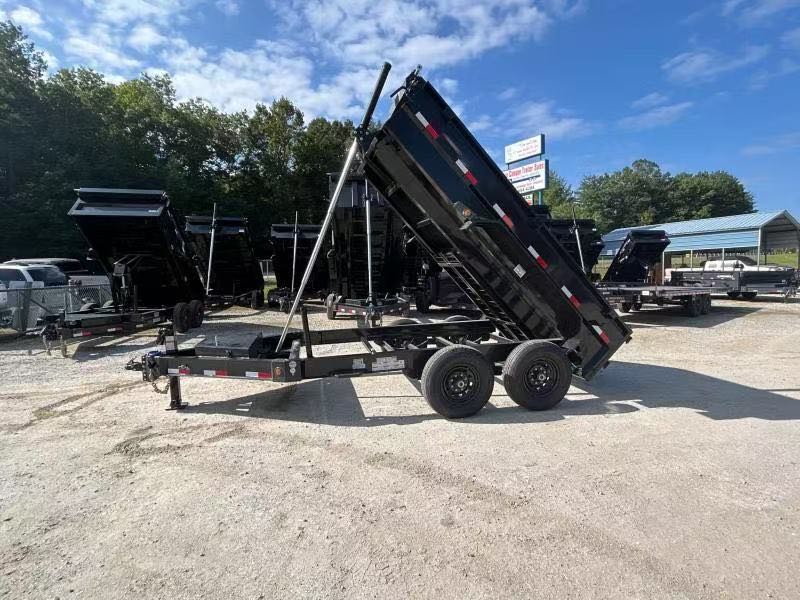
- Dump trailer manufacturer, Canada — 1,200 HTC Series telescopic cylinders and 500 hydraulic power units, 1 year. The HTC range is a single-acting inverted telescopic cylinder with 3,000 PSI working pressure, 7 or 12 ton capacity and stroke options from 78 to 144 inches. Reported outcome: smooth lifting performance, a stable dumping angle and reduced service downtime in continuous heavy-duty trailer operation.
- Heavy-duty dump truck OEM, Indonesia — 180 multi-stage telescopic cylinders, 2 years. Front-end telescopic cylinders for dump trucks working in construction, mining and aggregate transportation. For multi-stage products, stage sequence testing is part of the release criteria. Reported outcome: reliable lifting performance, high operational efficiency and durability under continuous heavy load.
- Hydraulic grapple equipment manufacturer, Italy — 150 custom cylinders, 1 year. Custom cylinders for grapples used in scrap handling, recycling, forestry, waste management and material handling. Reported outcome: improved gripping force, enhanced operational stability and reduced maintenance requirements under continuous heavy-duty conditions.
| Project (buyer type) | Market | Quantity | Duration | Documentation focus |
|---|---|---|---|---|
| Refuse truck OEM | United States | 960 cylinders | 2 years | Verified part number identification, dimensional inspection, pressure and leakage testing |
| Dump trailer manufacturer | Canada | 1,200 telescopic cylinders + 500 power units | 1 year | Installation test records, stage sequence testing, pressure testing |
| Heavy-duty dump truck OEM | Indonesia | 180 multi-stage telescopic cylinders | 2 years | Stage sequence testing, dimensional inspection, functional testing |
| Hydraulic grapple equipment manufacturer | Italy | 150 custom cylinders | 1 year | Approved drawing, material documentation, pressure and leakage testing |
Across these four projects, the destination markets were North America, Western Europe and Southeast Asia — three regions with different documentation expectations applied to the same underlying manufacturing and inspection system.
FAQ: Compliance, Capability, Cost, Sampling and Lead Time
1. Which standards and documents should a global OEM buyer request for a custom hydraulic cylinder?
The applicable standards depend on the market and the application rather than on the cylinder alone. International mounting interchangeability is commonly referenced through ISO 6022:2006 for 250 bar series single rod cylinders and ISO 6020-2:2015 for 160 bar series compact cylinders, while North American square head industrial cylinders are typically referenced to NFPA/T3.6.7 R3-2009 (R2024). Where CE conformity is required, Apex Hydraulic's ECM CE Certificate 0P260130.AH0S46, issued on 2026-01-30 and valid until 2031-01-29, lists EN ISO 12100:2010, EN ISO 4413:2010, ISO 6020-1:2007, ISO 10100:2020 and Machinery Directive 2006/42/EC for the APCC Series scope. On the document side, the set available for custom projects includes the approved drawing, inspection records, test reports and material documentation, supported by the quality control sequence of incoming material inspection, in-process quality control, final quality inspection, pressure testing, leakage testing, dimensional inspection, welding inspection, surface finish inspection and functional testing.
2. Can the manufacturer supply custom hydraulic cylinders as an OEM or ODM partner?
Yes. Apex Hydraulic's production services include OEM manufacturing, ODM development, custom design and hydraulic engineering solutions. OEM services cover OEM manufacturing and private labeling, allowing a client to brand the cylinders as its own product, while ODM services cover ODM development and custom design for co-developed products. The customization scope covers bore, rod diameter, stroke length, mounting style, installation dimensions, working pressure, seal system, materials, surface treatment, ports and threads, painting color, logo, packaging, and hydraulic power unit configuration including voltage, motor, pump, manifold, valve, reservoir and control system. This capability is supported by a 50,000 m² facility, 25 engineers, and a monthly capacity of 8,000+ hydraulic cylinders and 1,500+ hydraulic power units.
3. What are the minimum order quantity, delivery terms and payment terms?
For standard products the minimum order quantity is 1 piece. For OEM and customized products the MOQ is negotiable according to product specifications and project requirements. Delivery terms available include EXW, FOB, FCA, CIF, CFR, DAP and DDP. Payment can be arranged by T/T (telegraphic transfer), Letter of Credit (L/C), Alibaba Trade Assurance, and other mutually agreed international payment methods, with terms varying by order value, customer relationship and project requirements. For market context, IndexBox reported an average export price of approximately USD 382 per unit for hydraulic cylinders and systems in 2024 — an industry average, not a quotation for a specific custom cylinder.
4. How does sample approval work before mass production?
Sample approval sits between quotation and proforma invoice confirmation in the procurement flow, and it is applied when the project requires it. The sample is produced to the confirmed drawing, and acceptance is based on criteria agreed in advance: dimensional inspection, hydraulic pressure testing, leakage testing and functional testing, evaluated against approved drawings, technical specifications or mutually agreed acceptance criteria. For custom cylinder series, the supporting documentation includes the approved drawing, inspection record, test report and material documentation, which allows the buyer to compare the sample against the same reference that will govern production.
5. What lead times apply, and what support continues after delivery?
Standard products are typically delivered in 7–20 days, customized products in 25–45 days, and large OEM projects according to the agreed project schedule. After delivery, support covers technical consultation, engineering support, installation guidance, product documentation, spare parts supply, warranty support, quality issue response, OEM project support and long-term technical partnership. Buyers who want to move forward can review the full product range in the Apex Hydraulic product catalog, or request a sample, a quotation or a documentation package for a specific cylinder by contacting jason@hydraulicapex.com.
Conclusion
For global OEM buyers, hydraulic cylinder compliance is decided by the sequence of inspections behind the part and the documents that record them: incoming material inspection, in-process control, welding inspection, pressure and leakage testing, dimensional and functional testing, and a 100% final inspection before shipment, all tied to an approved drawing and a traceable serial number. Certification supports that chain within a defined scope — in Apex Hydraulic's case, ECM CE Certificate 0P260130.AH0S46 for the APCC Series, valid until 2031-01-29 — but it does not replace it.
Apex Hydraulic Co., Ltd. is a Chinese manufacturer of custom hydraulic cylinders, hydraulic power units and complete hydraulic systems, established in 2009, operating a 50,000 m² facility with 560 employees, 25 engineers and an annual output of 100,000 units, serving North America, Western Europe, South America, Australia, Southeast Asia and the Middle East.
Next Step: Sample, Quotation or Documentation Package
Send your cylinder drawing, part number or physical sample details, together with the destination market and the standards your machine must meet. Apex Hydraulic will confirm the applicable documentation set, the inspection plan and the delivery schedule for your project.
- Product catalog: APEX Hydraulic Product Catalog (Main Products)
- Website: www.hydraulicapex.com
- Contact: Jason | jason@hydraulicapex.com | Tel / WhatsApp: +86 182-5318-1828
- Address: Qingdao City, Shandong Province, China
Typical first response covers technical review, drawing confirmation requirements and the documentation that applies to your market.
Have Questions or Need More Details?
Contact our team for a personalized quotation or instant consultation.
Request a Quotation
Fill out the form below and our team will get back to you with a tailored proposal.
WhatsApp Direct Chat
Prefer to chat in real-time? Message us on WhatsApp for instant assistance & quick answers.
- Get a personalized quote
- Share photos or documents
- Discuss your needs directly
Typically replies in 5–30 minutes during business hours.