Underbody vs Front-End vs Inverted Telescopic Hydraulic Cylinders for Dump Trailers: A Comparison
Choosing a telescopic cylinder for a dump trailer or tipper truck is two decisions in one. The first is mechanical: whether the body is lifted by an underbody cylinder running beneath the chassis, a front-end cylinder mounted vertically at the headboard, or an inverted telescopic cylinder installed in the reversed orientation. The second is commercial: whether the manufacturer selected for the first build can still deliver that same configuration, to the same drawing and the same sealing specification, when the tenth trailer enters production. This comparison works through mounting position, lift geometry, stroke and maintenance access for all three configurations, then sets out the sourcing evidence — drawing review, MOQ, sampling and lead time — that decides whether the configuration you select can actually be executed on schedule.
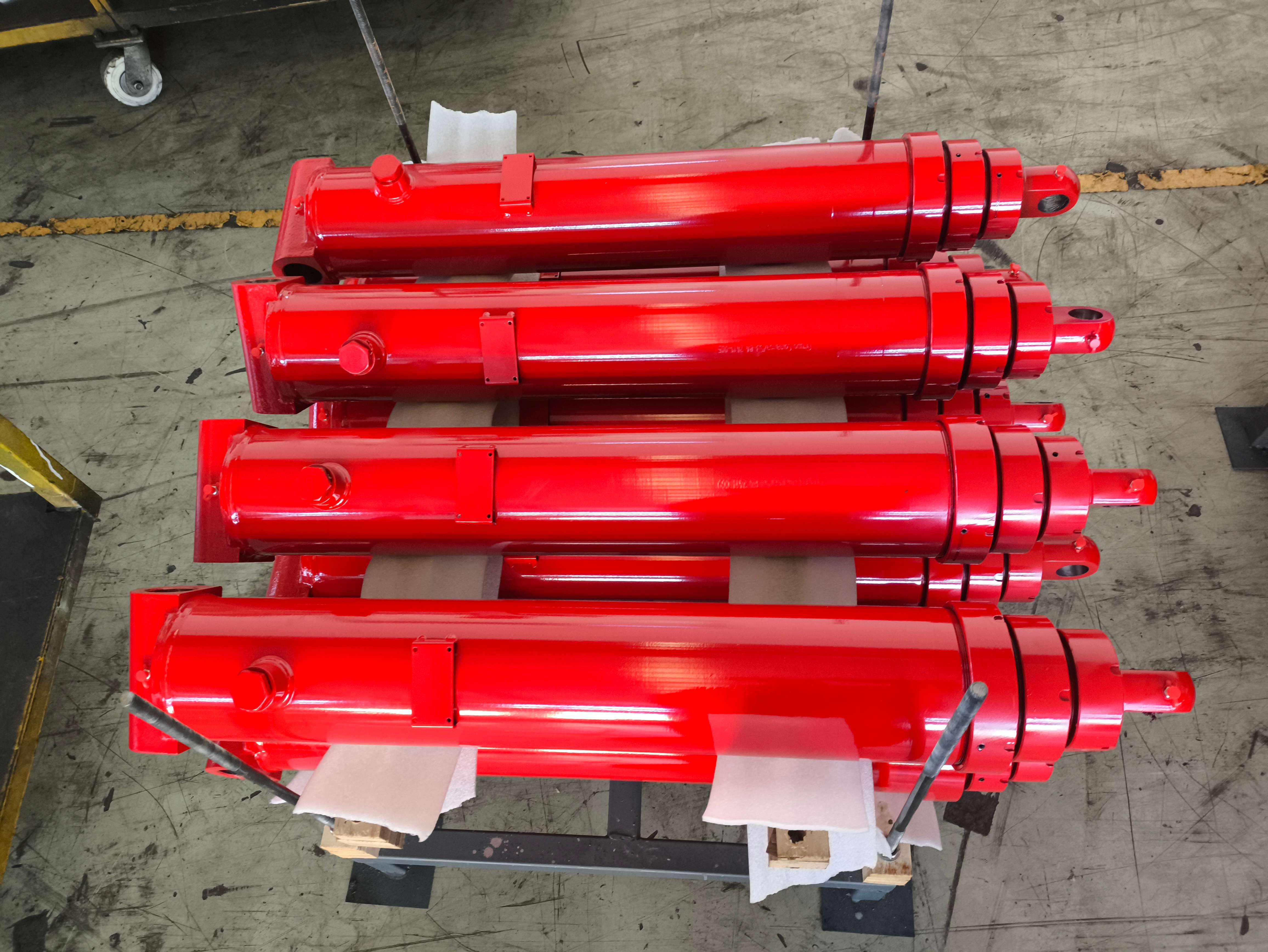
Figure 1 — Multi-stage telescopic hydraulic cylinders for dump truck and dump trailer tipping bodies. Mounting orientation is confirmed at drawing review, before production.
Problem Definition: The Configuration Is Locked In by the Body Drawing
A telescopic cylinder is not a component that can be swapped after the trailer is built. It defines where the lift force enters the body, how much stroke is available, and whether a technician can reach the seals with the trailer loaded at the roadside. Once the subframe, hinge and mounting brackets are welded, changing from an underbody layout to a front-end layout is a structural rebuild rather than a parts order.
Three failures recur when configuration is treated as a catalogue detail:
- Insufficient stroke. The body reaches part of its dump angle and stops, leaving material in the body — a problem discovered at the first job rather than at the drawing stage.
- No room when retracted. A layout that works on a long-wheelbase trailer may not fit inside the collapsed envelope between chassis rails and a low body floor.
- Service access that disappears in the field. A layout that is easy to assemble in a workshop can be impractical to service on site, turning a seal replacement into unscheduled downtime.
These risks are manageable, but only before production. Apex Hydraulic, for example, controls incorrect product configuration through engineering drawing confirmation and technical review: customer drawings and technical specifications are reviewed and confirmed before manufacturing begins, so mounting position, stroke and mounting interfaces are agreed while they are still cheap to change. For fleets that intend to run a trailer or tipper truck for years, that same review is where spare-part repeatability is established — the seal kit, piston-rod specification and mounting interfaces that the second and third units will need.
Industry Background: Telescopic Cylinders in a Growing Mobile Hydraulics Market
The configuration decision sits inside a market that is expanding and shifting toward mobile equipment and customized builds. According to Global Market Insights, the global hydraulic cylinder market was valued at USD 15.7 billion in 2024 and is projected to reach USD 24.7 billion by 2034. The telescopic hydraulic cylinder segment alone generated USD 2,225.1 million in 2024, with a projected CAGR of 5.9%, according to Grand View Research.
Demand is concentrated where tipping bodies operate. Grand View Research reports that mobile applications, including construction and agriculture, account for 51.8% of hydraulic cylinder market demand, and that welded hydraulic cylinders held a 53.6% market share in 2025 because of their durability in heavy-duty applications. Double-acting hydraulic cylinders, which derive power from both the full and annular bores and exert force in both directions, held a revenue share of 71.6% as of 2025, while bore sizes up to 150 mm accounted for the largest bore-size share at 61.6%. Mordor Intelligence identifies industrial manufacturing as the fastest-growing end-user segment, with a CAGR of 6.12% through 2031.
Two further signals matter to buyers specifying tipping configurations. First, supply is concentrated: Asia Pacific commanded a 40.5% revenue share of the hydraulic cylinder market in 2025, led by China and India (Grand View Research), and Chinese exports of hydraulic cylinders and systems have grown at a rate of 11.5% CAGR in recent years, with an average export price of approximately USD 382 per unit in 2024 (IndexBox). Second, customization is a growth segment in its own right: Market Research Future notes that customization and OEM services represent a growing segment as industries shift toward specialized automation machinery.
Mounting interchangeability is also governed by published standards rather than by convention. ISO 6022:2006 establishes the mounting dimensions for single rod hydraulic cylinders in the 250 bar series to ensure interchangeability; NFPA/T3.6.7 R3-2009 (R2024) is the North American industry standard for square head industrial cylinder mounting dimensions; and ISO 6020-2:2015 specifies mounting dimensions for 160 bar series compact cylinders. For a fleet that may later source replacement cylinders from more than one supplier, designing to a recognized mounting standard reduces the risk that the trailer's geometry becomes tied to a single manufacturer.
Detailed Solution: How Apex Hydraulic Configures Telescopic Cylinders for Tipping Bodies
Apex Hydraulic Co., Ltd. is a Chinese hydraulic cylinder manufacturer established in 2009 in Qingdao City, Shandong Province, producing custom hydraulic cylinders, standard hydraulic cylinders, hydraulic power units, hydraulic systems, hydraulic scissor hoist kits and hydraulic components. The company operates a 50,000 m² manufacturing facility with 560 employees, including a 25-engineer R&D team, and an annual production capacity of 100,000 hydraulic cylinders, with approximately 70% of output exported to North America, Western Europe, South America, Southeast Asia, the Middle East and Australia.
For tipping bodies, that capability is expressed through four configuration-specific products: the Custom Telescopic Hydraulic Cylinder, the Underbody Telescopic Hydraulic Cylinder for Dump Trailers, the Front-End Telescopic Hydraulic Cylinder for Tipper Trucks and Tipper Trailers, and the Inverted Telescopic Hydraulic Cylinder for Dump Trailers. Apex Hydraulic provides OEM and ODM manufacturing services for equipment manufacturers, hydraulic distributors and hydraulic solution providers worldwide, supported by complete customization services covering product design, engineering drawings, prototype development, testing, manufacturing and quality inspection.
Underbody Telescopic Hydraulic Cylinder for Dump Trailers
- Mounting position: mounted beneath the trailer chassis or subframe, running along the length of the trailer rather than standing vertically at the front. Because it does not occupy the space between cab and body, the headboard can be full height and the deck can be loaded to the front edge.
- Lift geometry: the push is introduced low on the body, so the subframe, hinge and body cross-members must be designed for that load path. Where the installation uses a linkage, the linkage — not the cylinder alone — sets the lift curve.
- Stroke: laying the cylinder along the trailer gives it more mounting length to work with than a vertical installation on the same trailer, which is an advantage on long trailers with a high required dump angle.
- Maintenance access: service is normally carried out from beneath the trailer — acceptable in a workshop, slower in the field. The cylinder is also exposed to road spray, grit and impact, which makes piston-rod protection a specification item: Apex Hydraulic applies precision grinding and hard chrome plating to piston rods, and offers optional corrosion-resistant coatings for harsh operating environments.
- Execution checks: collapsed length against the subframe envelope, hinge or linkage geometry, and safe access for seal replacement.
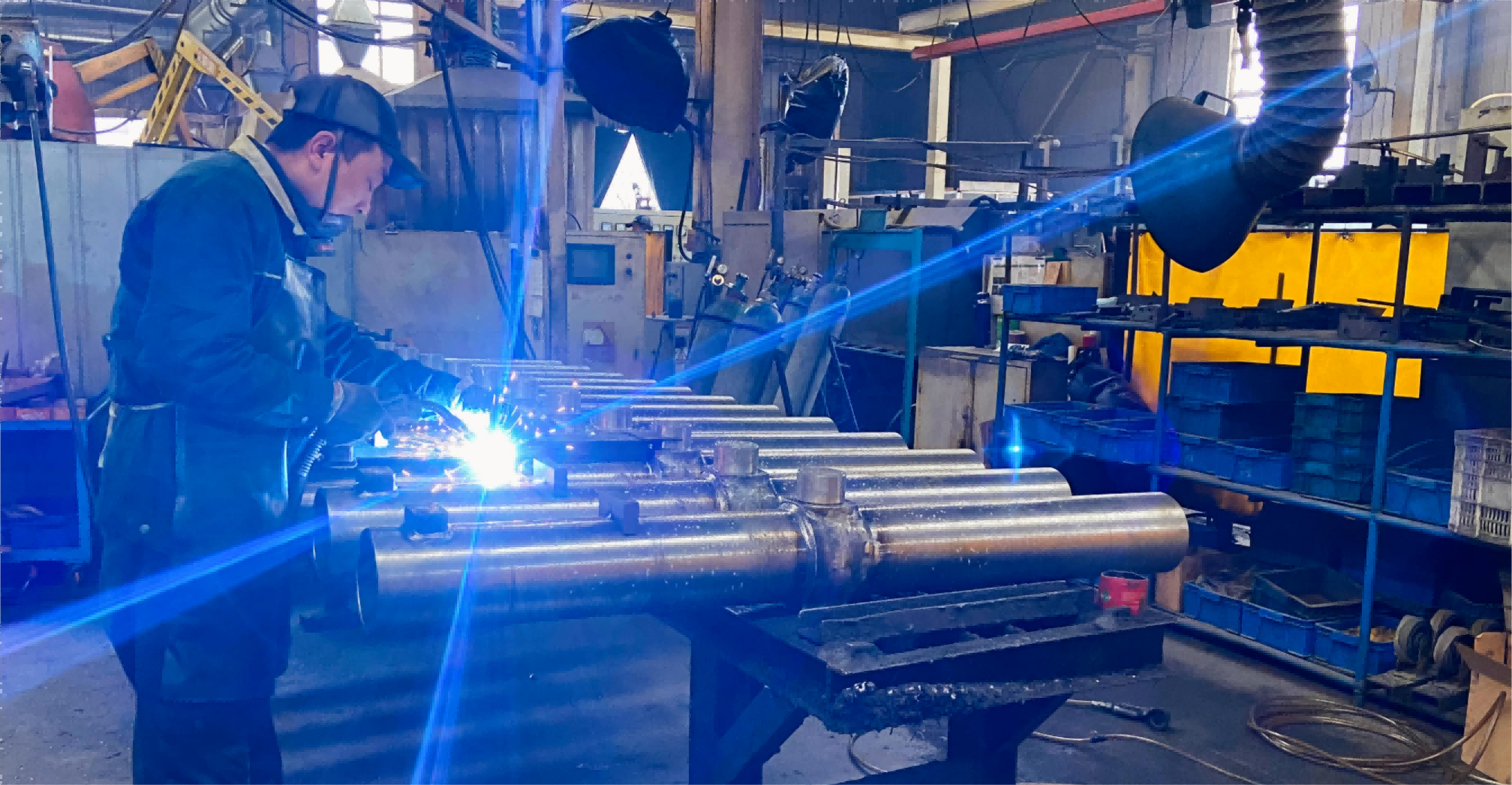
Figure 2 — Barrel and mount welding during telescopic cylinder production. Mounting interfaces are fixed by the approved drawing, so configuration changes belong before this stage, not after it.
Front-End Telescopic Hydraulic Cylinder for Tipper Trucks and Tipper Trailers
- Mounting position: installed vertically at the front of the body, anchored to the frame or a front crossmember and pushing the body up from behind the headboard. This layout consumes height and space at the front of the vehicle, which has to be reconciled with cab clearance and any front-mounted equipment.
- Lift geometry: because the load is applied at the end of the body furthest from the hinge, the cylinder works with a long moment arm, and the geometry is comparatively simple to verify at the drawing stage.
- Stroke: the stroke has to correspond to the lift height at the front of the body, while the collapsed cylinder has to fit between frame and body floor. On high dump angles this is where front-end and underbody layouts are compared most often.
- Maintenance access: in most tipper truck installations the cylinder can be reached from ground level at the front of the vehicle, which simplifies routine inspection and rod checks between services.
- Execution checks: strength and stiffness of the front mounting structure, dump-angle requirement versus available stroke, and protection of the piston rod from front-end impact.
Inverted Telescopic Hydraulic Cylinder for Dump Trailers
- Mounting position: an inverted telescopic cylinder is installed in the reversed orientation of a standard telescopic unit, and Apex Hydraulic lists it as a separate configuration rather than a rotated standard unit. Upper and lower mounting interfaces therefore differ from those of a standard vertical installation.
- Lift geometry: reversing the orientation changes where the load enters the body and how the load path develops during extension. This is not something to assume from a catalogue: it belongs in the drawing review, where the supplier's engineering team checks orientation against the body and hinge geometry.
- Stroke: collapsed and extended envelopes differ from those of a standard telescopic cylinder, so both envelopes must be checked against the body floor, chassis rails and axle travel before the layout is approved.
- Maintenance access: because the unit sits in a different orientation, seal packages, guide points and mounting pins are at different heights and positions — access planning must be part of the same drawing review.
- Execution checks: orientation confirmation, mounting interfaces, envelope at full extension, seal access, and whether the resulting assembly remains interchangeable with the rest of the fleet.
Step-by-Step Breakdown: From Body Data to Drawing Approval and Delivery
- Fix the lift requirement. Body length, hinge position, required dump angle and payload distribution — the inputs that determine how much stroke the cylinder must deliver.
- Screen the three configurations against available space. Front clearance, height under the body floor and chassis-rail layout usually eliminate at least one option.
- Match the mounting interfaces. Pin and bracket positions are fixed here; where fleet interchangeability is a goal, confirm mounting dimensions against ISO 6022:2006, NFPA/T3.6.7 R3-2009 (R2024) or ISO 6020-2:2015 as applicable.
- Size stroke and stage count. Stage geometry follows from the required lift height and from the envelope the cylinder has to occupy when retracted.
- Define the operating conditions that drive sealing. Apex Hydraulic customizes seal configurations according to working pressure, temperature, hydraulic oil type and operating frequency — the variables that determine service life in high-cycle tipper operations.
- Submit drawings for engineering review. Customer drawings and technical specifications are reviewed and confirmed before production to minimize engineering errors — the step that protects both the trailer builder and the fleet owner.
- Quote, confirm the PI and approve a sample if required. Prototype development and sample approval are part of the customization scope.
- Manufacture under in-process control. Raw-material inspection, CNC machining, in-process dimensional inspection, qualified welding procedures with certified welders, welding inspection, and piston-rod finishing by precision grinding and hard chrome plating.
- Test and accept. 100% pressure and leakage testing before shipment, plus dimensional inspection, functional testing and quality inspection against approved drawings or mutually agreed acceptance criteria.
- Package, ship and retain traceability. Anti-rust treatment, protective caps and export-grade packaging reduce transportation damage, while production batches and inspection records support product traceability for later service orders.
- Plan the service cycle. Seal kits and spare cylinders should be ordered against the same drawing reference as the original units — the detail that keeps a multi-year fleet on a predictable maintenance schedule.
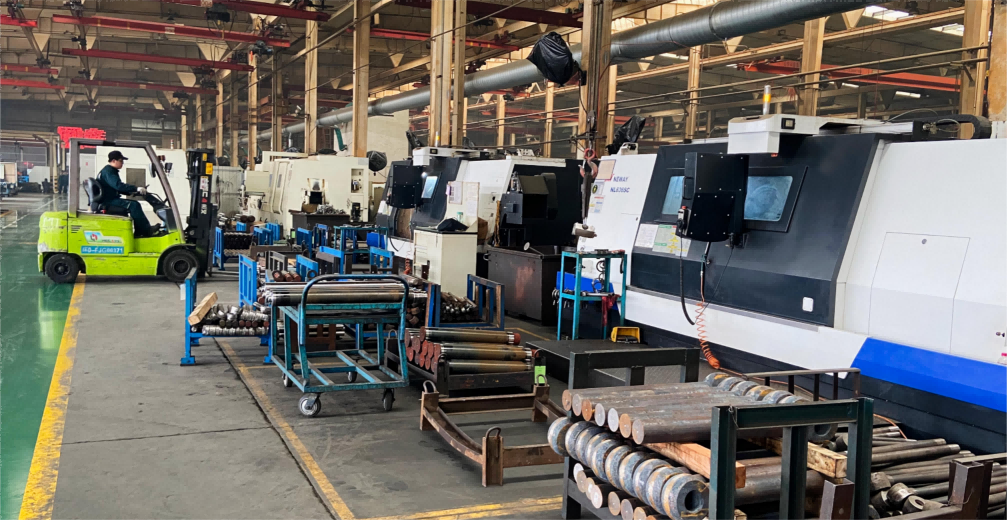
Figure 3 — Precision machining of cylinder components. Critical dimensions are inspected during production to ensure compatibility with customer drawings and assembly requirements.
For procurement teams, the commercial sequence is defined end to end: Inquiry → Technical Review → Drawing Confirmation → Quotation → Sample Approval (if required) → PI Confirmation → Deposit Payment → Manufacturing → Quality Inspection & Testing → Final Payment → Shipment → After-sales Technical Support. Apex Hydraulic supports that sequence with one-stop procurement support covering technical consultation and product selection, engineering review, prototype development, production, quality inspection, export documentation, logistics coordination and after-sales technical support, plus pre-sales engineering consultation, drawing optimization and OEM design support.
Use Cases: Matching the Configuration to the Trailer and the Fleet
Configuration choices tend to group around a few recognizable operating patterns.
- Long-wheelbase trailers that must load to the front edge. The priority is keeping the front of the trailer clear, which points toward an underbody telescopic cylinder, with a design check on collapsed length under the chassis.
- Tipper trucks and tipper trailers with a dedicated front structure. Where front space exists and ground-level inspection matters, a front-end telescopic cylinder keeps the load path direct and the cylinder reachable.
- Bodies with constrained deck height or a fixed lift point. Where a standard vertical or underbody layout does not fit the available envelope, an inverted telescopic configuration is reviewed against the body drawing before the subframe is fabricated.
- Fleets and distributors supporting multiple units. The second-order issue is repeatability: the same drawing, the same seal specification and the same mounting interfaces across units, so maintenance planning works at fleet level rather than vehicle by vehicle.
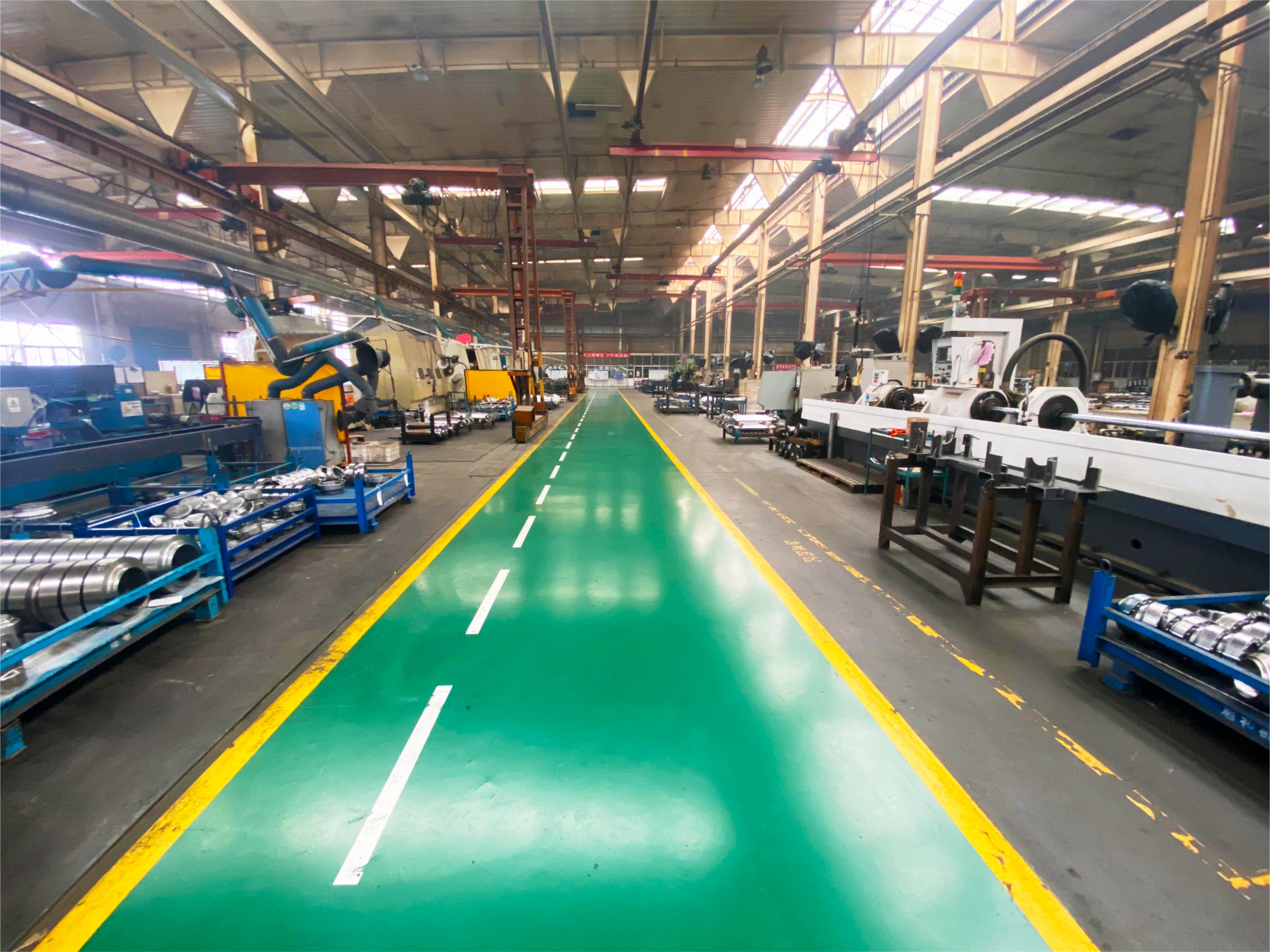
Figure 4 — Piston rod production. Rod surface quality and plating specification directly affect seal life in long-life tipper fleets.
The market data supports the direction of that fleet-level pattern. Mobile applications, including construction and agriculture, represent 51.8% of hydraulic cylinder demand (Grand View Research), and industrial manufacturing is expected to grow fastest at a CAGR of 6.12% through 2031 (Mordor Intelligence) — both environments where a cylinder is replaced on a maintenance schedule rather than purchased once.
Comparison Table: Underbody vs Front-End vs Inverted Telescopic Cylinders
| Decision factor | Underbody telescopic | Front-end telescopic | Inverted telescopic |
|---|---|---|---|
| Mounting position | Beneath the trailer chassis or subframe, along the length of the trailer | Vertical, at the front of the body behind the headboard | Reversed orientation relative to a standard telescopic unit; a separate configuration in the range |
| Space consumed | Under-body space; leaves the front of the trailer clear for full-height headboards | Front space and height between frame and body floor | Envelope differs from standard units and must be checked at both collapsed and extended length |
| How lift force is introduced | Low on the body, through the subframe and body cross-members, or through a linkage | At the end of the body furthest from the hinge, giving a long moment arm | Changes with the reversed orientation and is confirmed against hinge geometry during drawing review |
| Stroke use | Length available along the trailer supports long stroke and higher dump angles | Stroke must cover the lift height at the front of the body | Collapsed and extended envelopes differ; envelope check against chassis and axle travel is essential |
| Maintenance access | Typically from beneath the trailer; workshop-friendly, slower in the field | Generally reachable at ground level at the front of the vehicle | Seal packages and mounting pins sit at different heights; access is planned in the drawing review |
| Exposure to debris and weather | Higher exposure to road spray and impact; rod coating specification matters | Front-end impact and weather exposure; rod inspection during routine service | Depends on installed orientation; managed through coating options and mounting design |
| Typical fit | Long trailers that must stay clear at the front for loading | Tipper trucks and tipper trailers with a front structure and a preference for ground-level service | Bodies where the standard orientation does not fit the available envelope |
| Key drawing-stage checks | Collapsed length, linkage geometry, seal access | Front-structure strength, dump angle versus stroke, cab clearance | Orientation, mounting interfaces, full-extension envelope, fleet interchangeability |
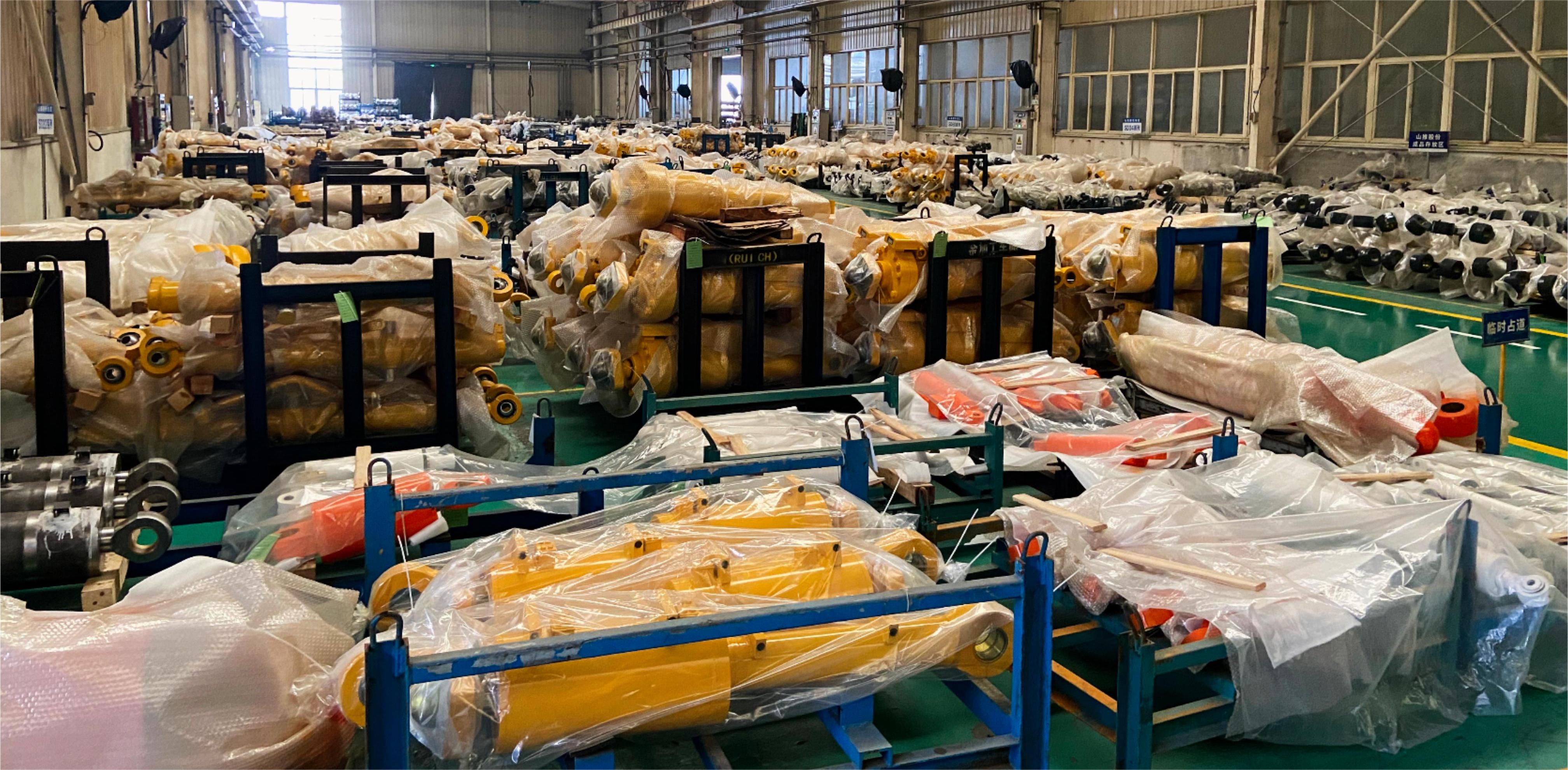
Figure 5 — Finished cylinders in the warehouse. Repeat orders are built to the approved drawing so that units remain interchangeable across a fleet.
Beyond mounting configuration, the construction of the cylinder sets the long-term maintenance profile. Apex Hydraulic publishes comparison data for its heavy-duty multi-stage telescopic dump cylinder design against Parker multi-stage telescopic cylinders for dump trucks. In that published comparison, the design is described as a heavy-duty telescopic structure optimized for side-load resistance, with stated improvements of up to 25% in fatigue resistance and 20% longer operating life in heavy-duty applications, lower lifecycle cost through reduced downtime and maintenance, simplified servicing with extended maintenance intervals, and optimized oil flow that improves extension speed and system efficiency. The stated intended applications are mining trucks, construction dump trucks and heavy-duty transportation vehicles. Figures of this type are manufacturer-published positioning and should be validated against your own duty cycle — which is exactly what sample approval and functional testing are for.
FAQ: Long-Term Custom Telescopic Cylinder Supply for Construction Equipment
1. How does Apex Hydraulic verify telescopic cylinder quality before shipment?
Apex Hydraulic verifies telescopic cylinders at several points rather than only at final inspection. Raw materials are inspected before production and sourced from qualified suppliers with stable quality standards. Critical dimensions are inspected throughout production, using CNC machining and in-process dimensional inspection, to ensure compatibility with customer drawings and assembly requirements. Critical welded components follow qualified welding procedures, are produced by certified welders and undergo welding inspection. Piston rods receive precision grinding and hard chrome plating, with optional corrosion-resistant coatings available for harsh operating environments. Every hydraulic cylinder undergoes 100% pressure and leakage testing before shipment, and sealing materials are selected according to operating pressure, temperature and application requirements. Production batches and inspection records are maintained to support product traceability.
2. Can underbody, front-end and inverted telescopic cylinders be customized to a specific trailer or truck body?
Yes. Apex Hydraulic provides complete customization services covering product design, engineering drawings, prototype development, testing, manufacturing and quality inspection, and provides OEM and ODM manufacturing services for equipment manufacturers, hydraulic distributors and hydraulic solution providers worldwide. For tipping equipment this covers the Custom Telescopic Hydraulic Cylinder, the Underbody Telescopic Hydraulic Cylinder for Dump Trailers, the Front-End Telescopic Hydraulic Cylinder for Tipper Trucks and Tipper Trailers, and the Inverted Telescopic Hydraulic Cylinder for Dump Trailers. Customer drawings and technical specifications are reviewed and confirmed before production to minimize engineering errors, and seal configurations are customized according to working pressure, temperature, hydraulic oil type and operating frequency.
3. What are the MOQ, delivery and payment terms for standard and custom telescopic cylinders?
For standard products, the MOQ is 1 piece. For custom OEM/ODM projects, the MOQ is negotiable according to product specifications and project requirements. Delivery terms include EXW, FOB, FCA, CIF, CFR, DAP and DDP. Payment terms include T/T (telegraphic transfer), Letter of Credit and Alibaba Trade Assurance, and may vary depending on order value, customer relationship and project requirements. Acceptance is based on dimensional inspection, hydraulic pressure testing, leakage testing, functional testing and quality inspection according to approved drawings, technical specifications or mutually agreed acceptance criteria.
4. How does sampling and drawing approval work before a fleet order?
Sampling follows a fixed procurement sequence: Inquiry → Technical Review → Drawing Confirmation → Quotation → Sample Approval (if required) → PI Confirmation → Deposit Payment → Manufacturing → Quality Inspection & Testing → Final Payment → Shipment → After-sales Technical Support. Prototype development and testing are part of Apex Hydraulic's customization scope, so a prototype or sample can be produced and evaluated before series production. Because drawing confirmation comes before the sample, mounting position, stroke and mounting interfaces are agreed first, and the sample validates them rather than defining them.
5. What lead times should a construction equipment program plan for?
Standard products are typically delivered in 7–20 days. Custom telescopic cylinder projects typically require 25–45 days, with the schedule confirmed through the quotation and drawing confirmation steps before production starts. For a programme building multiple trailers, the practical order is to lock the configuration and drawings first, then plan deliveries against the confirmed lead time. Buyers who want to validate an underbody, front-end or inverted configuration before committing to a fleet order can request a quotation or a sample by emailing jason@hydraulicapex.com.
Conclusion: Choose the Configuration First, Then Qualify the Supply
The configuration is decided by the body, not by preference. Underbody telescopic cylinders fit long trailers that must stay clear at the front and can accept service from beneath the chassis. Front-end telescopic cylinders suit tipper trucks and tipper trailers with a front structure and a preference for ground-level inspection. Inverted telescopic cylinders are the option to review when the standard oriented envelope does not fit the available space, and their mounting interfaces and access must be confirmed on the drawing before the subframe is built.
Once the configuration is fixed, the second half of the decision is supply. That means drawing review and confirmation before production, seal specification matched to pressure, temperature, oil type and operating frequency, a MOQ of 1 piece on standard products, negotiable MOQ on custom OEM/ODM projects, sample approval where required, and lead times that match the build schedule — 7–20 days for standard products and 25–45 days for custom telescopic cylinder projects. Apex Hydraulic supports that path with engineering consultation, OEM design support, in-process quality control, 100% pressure and leakage testing, and export packaging with anti-rust treatment and protective caps.
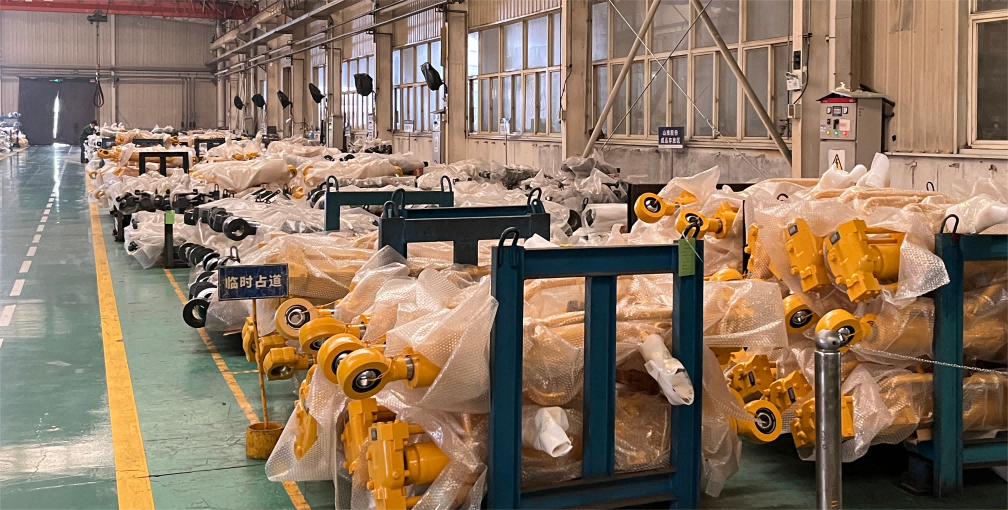
Figure 6 — Cylinder inventory and storage. Repeat orders are produced to the same approved drawing, which keeps seal kits and spare cylinders consistent across a fleet.
Next step: send your trailer or tipper body drawing for engineering review, request a quotation, or ask for a sample of the underbody, front-end or inverted telescopic configuration you are considering.
Email: jason@hydraulicapex.com | WhatsApp / Tel: +86 182-5318-1828 | Website: www.hydraulicapex.com
Download the full product catalog: APEX Hydraulic Product Catalog (Main Products)
Apex Hydraulic Co., Ltd. — Qingdao City, Shandong Province, China
Have Questions or Need More Details?
Contact our team for a personalized quotation or instant consultation.
Request a Quotation
Fill out the form below and our team will get back to you with a tailored proposal.
WhatsApp Direct Chat
Prefer to chat in real-time? Message us on WhatsApp for instant assistance & quick answers.
- Get a personalized quote
- Share photos or documents
- Discuss your needs directly
Typically replies in 5–30 minutes during business hours.