Hydraulic Power Unit Application Guide: Low-Noise Custom Solutions for Aerial Work Platforms
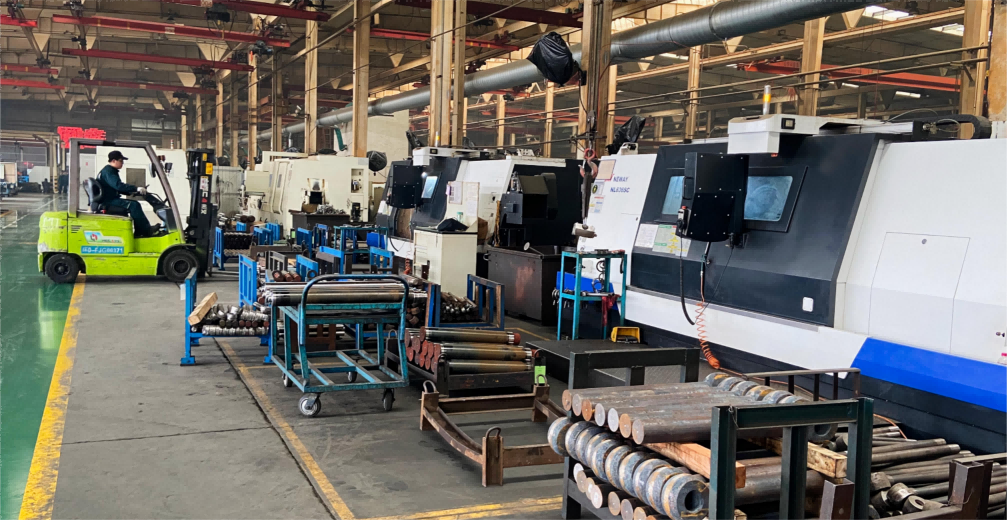
Aerial work platform (AWP) projects rarely fail because a hydraulic power unit lacks lifting force. They fail because pressure drifts across a multi-function duty cycle, because contamination reaches a valve before the first service interval, or because the unit is louder than the working environment allows. Apex Hydraulic Co., Ltd. is a Chinese hydraulic manufacturer established in 2009 that produces custom hydraulic cylinders, hydraulic power units, and complete hydraulic systems from a 50,000 m² facility in Qingdao, Shandong Province. Its customization scope covers hydraulic power unit configuration, voltage (12V/24V/48V), motor, pump, manifold, valve, reservoir, and control system. This application guide is written for engineers and procurement teams in the evaluation stage of a scissor lift, boom lift, or vehicle-mounted platform project. It explains how a multi-function custom hydraulic power unit is adapted to AWP requirements: how pressure settings are adjusted to the customer's specification, how stable pressure is verified before delivery, how contamination risk and filtration control are managed, and which compliance documents buyers in the EU must verify.
Problem Definition: One Power Unit, Several Functions, Little Room for Error
An aerial work platform hydraulic power unit typically drives more than one function from a single pump, reservoir, and manifold, and that shared architecture creates three specific risks that buyers discover late if they are not specified early.
First, pressure interacts between functions. When a lift circuit shares a pump and manifold with steering, leveling, or outrigger circuits, relief settings and flow-control behavior have to be established per circuit rather than as one generic figure. A relief value copied from a standard catalog unit can be correct for one motion and wrong for the next, and the symptom usually appears as slow lift, a drifting platform, or nuisance relief during combined operation.
Second, noise becomes a commercial constraint. Indoor, warehouse, and urban platforms are usually electric, and on many machines the power unit is a dominant noise source. Radiated noise from a hydraulic power pack is generally influenced by pump type and displacement, motor selection, and how the reservoir, manifold, and brackets are mounted and isolated. When a site imposes a noise limit, that limit has to be designed into the configuration rather than measured after delivery.
Third, contamination enters at predictable points. Particulate matter from machining and assembly, fluid introduced during filling and commissioning, and debris entering during field service all tend to surface later as valve sticking, unstable pressure, seal wear, and shortened fluid life. Because these failures appear after the warranty conversation has already started, contamination control is a specification topic, not a service topic.
A standard packaged hydraulic power pack is the fastest route when the function set, mounting envelope, and voltage already match the platform design. When they do not, the unit must be configured rather than selected. Configuration adds capability and also adds validation work; the sections below cover both.
Industry Background: Electrification, Pressure Range, and Where Custom Units Fit
Published market estimates for this category differ between research houses, which is itself useful information for buyers. Precedence Research estimated the global hydraulic power unit market at USD 11.4 billion in 2024, growing at a CAGR of 5.5% through 2034, while Grand View Research valued the same market at USD 13.6 billion in 2024. Both figures are modelled rather than audited, so they should be treated as directional. Grand View Research also reports that Asia Pacific accounted for 40.2% of 2024 revenue share, and that the U.S. hydraulic power unit market was valued at USD 2.55 billion in 2024.
Three data points matter most for aerial work platform projects. Electric-powered hydraulic power units accounted for 60.1% of U.S. revenue share in 2024 (Grand View Research), which aligns with the electric drive used on indoor scissor lifts and a large share of boom lifts. Standard packaged units accounted for 47.8% of global hydraulic power unit revenue share in 2024 (Mordor Intelligence), meaning the majority of demand already sits outside a single standard package. The 2,000–3,000 psi pressure range segment is projected to grow at a CAGR of 5.8% from 2025 to 2033 (Grand View Research), and in the U.S. market the industrial application segment held the largest revenue share at 56.3% in 2024. Separately, Technavio projects the hydraulic pumps market to grow by USD 2.77 billion between 2024 and 2028.
For an evaluation-stage buyer, the practical reading is straightforward: pressure and cleanliness requirements are becoming more specific, electric and low-noise configurations are a mainstream expectation in the mobile segment, and the ability to configure a unit to a written specification is a normal sourcing requirement rather than an exception.
Detailed Solution: How a Multi-Function Custom Hydraulic Power Unit Is Adapted to an AWP
Map the functions and the circuit architecture first
Adaptation begins with a function list, not a part number. Platform lift or lift-and-extend, steering, leveling, and outrigger or platform-rotation circuits appear in different combinations depending on the machine. For each function the project team defines required pressure, required flow, whether the function must hold load, and whether it runs simultaneously with another function. Only then can the manifold, valve, and relief arrangement be fixed, because a manifold built for one circuit will not serve four. In practice this is the difference between a custom hydraulic power unit and a standard one: the standard unit supplies flow, while the configured unit supplies the right flow and the right protection to each circuit.
Pressure settings are adjusted to the customer's specification
Pressure values should be set for the project rather than copied from a catalog. In documented Apex Hydraulic configurations, pressure setting is adjustable according to the approved hydraulic system within the rated component limits. The APEX-DTHPU 12V DC hydraulic power unit, used on dump trailers, illustrates the principle: relief settings are defined separately for each port, at 3,200 PSI for the A port and 1,500 PSI for the B port, on a unit whose maximum hydraulic flow rate is 2.0 GPM and whose ports are SAE #6. Aerial work platform circuits follow the same logic with more settings to confirm, because the number of circuits is higher and the consequence of a mismatch is visible to the operator.
Stable pressure is verified before shipment, not at commissioning
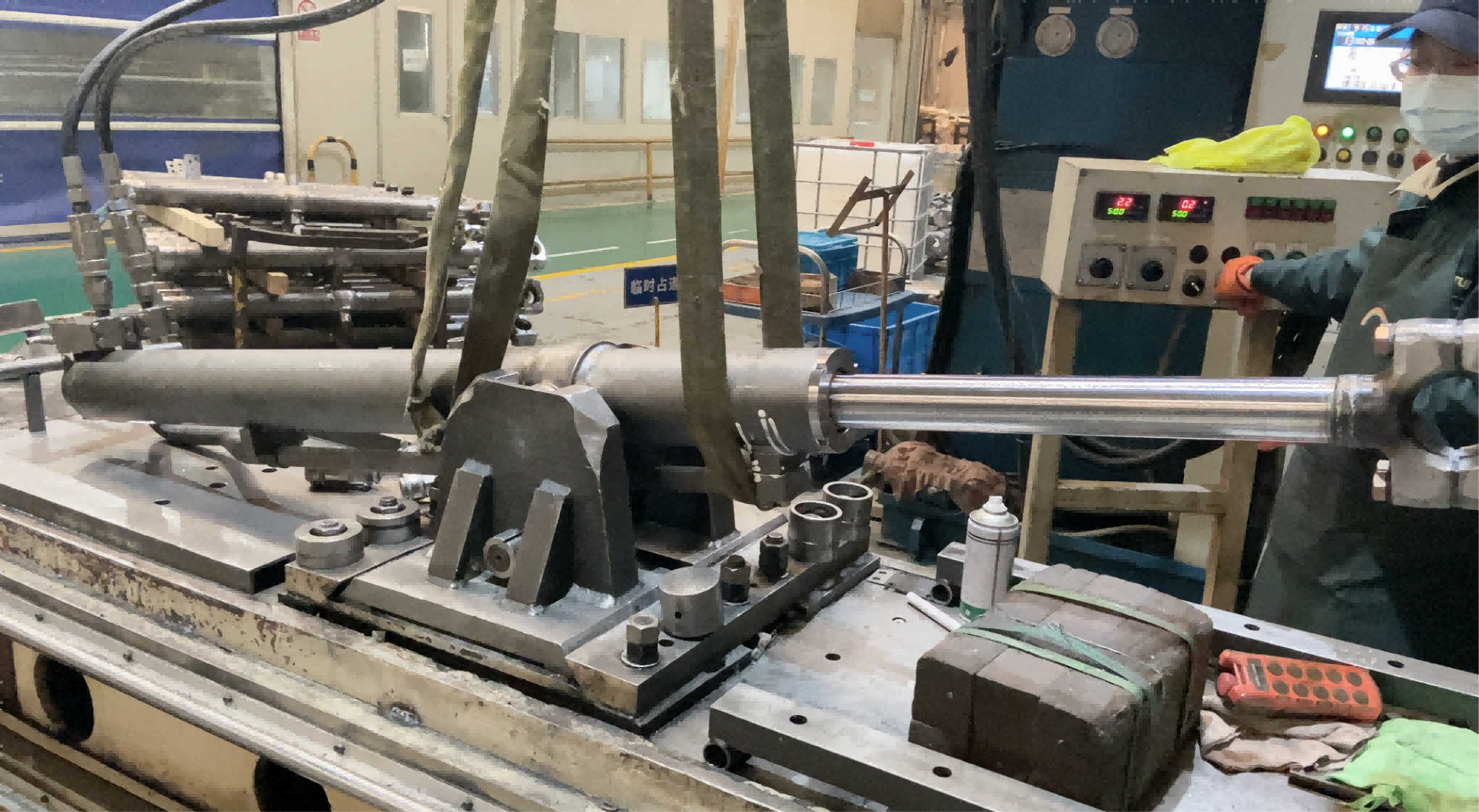
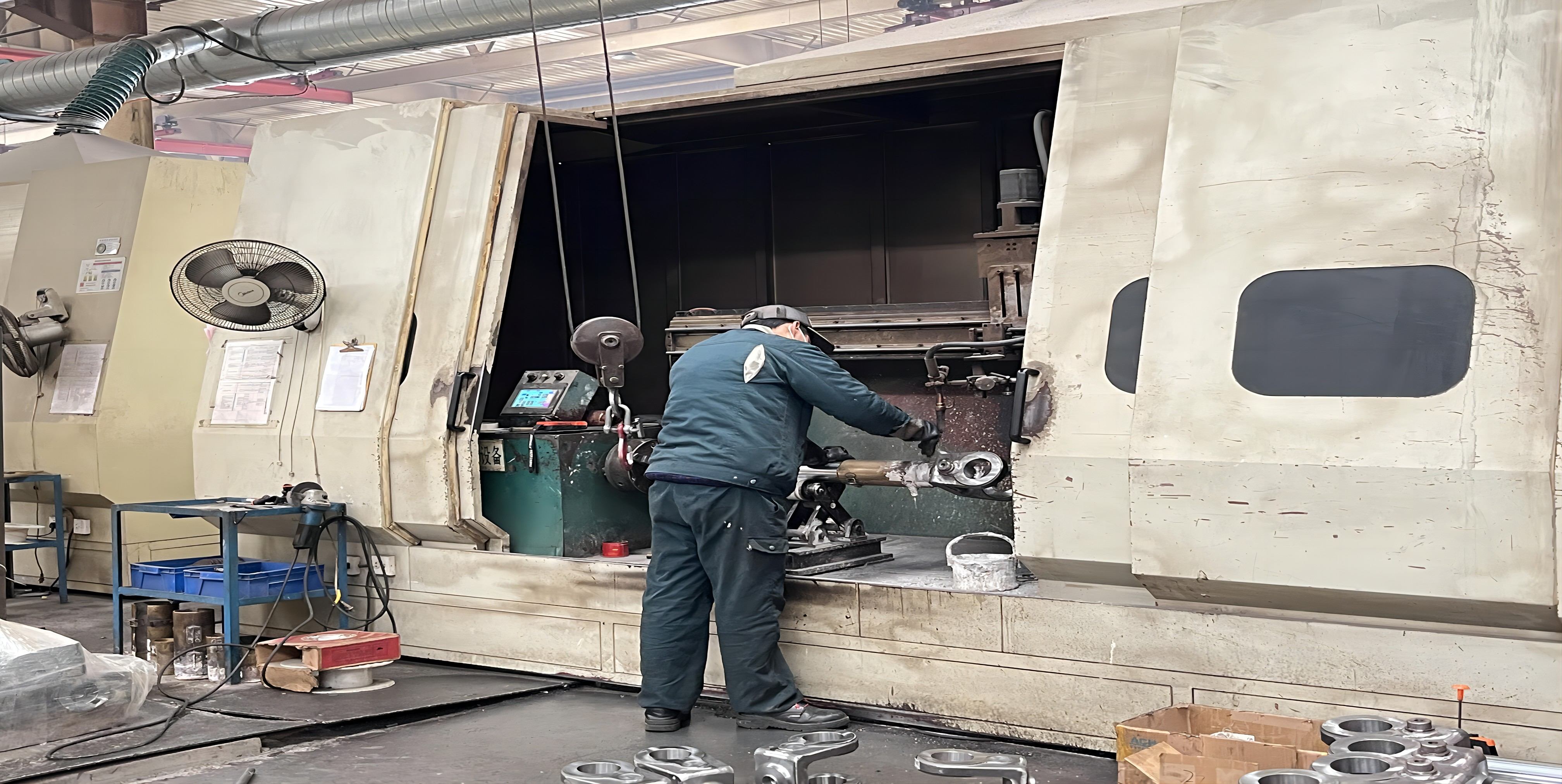
Pre-delivery testing is where a configured unit earns its place. Apex Hydraulic's quality control process covers incoming material inspection (IQC), in-process quality control (IPQC), final quality inspection (FQC), pressure testing, leakage testing, dimensional inspection, welding inspection, surface finish inspection, functional testing, and 100% final inspection. The documented APEX-DTHPU test protocol adds flow testing, relief-valve verification, solenoid-valve functional testing, motor current testing, and leakage inspection. Translated into an AWP project, these checks answer four questions that decide whether the platform behaves predictably at handover: does the relief valve open at the approved setting, does flow match the expected lifting speed, does the solenoid return the platform as designed, and does the assembly hold pressure without weeping. Buyers should ask for the test record, not just the test list, and should check that the recorded relief values match the approved drawing rather than a generic catalog figure.
Contamination risk and how filtration control is specified
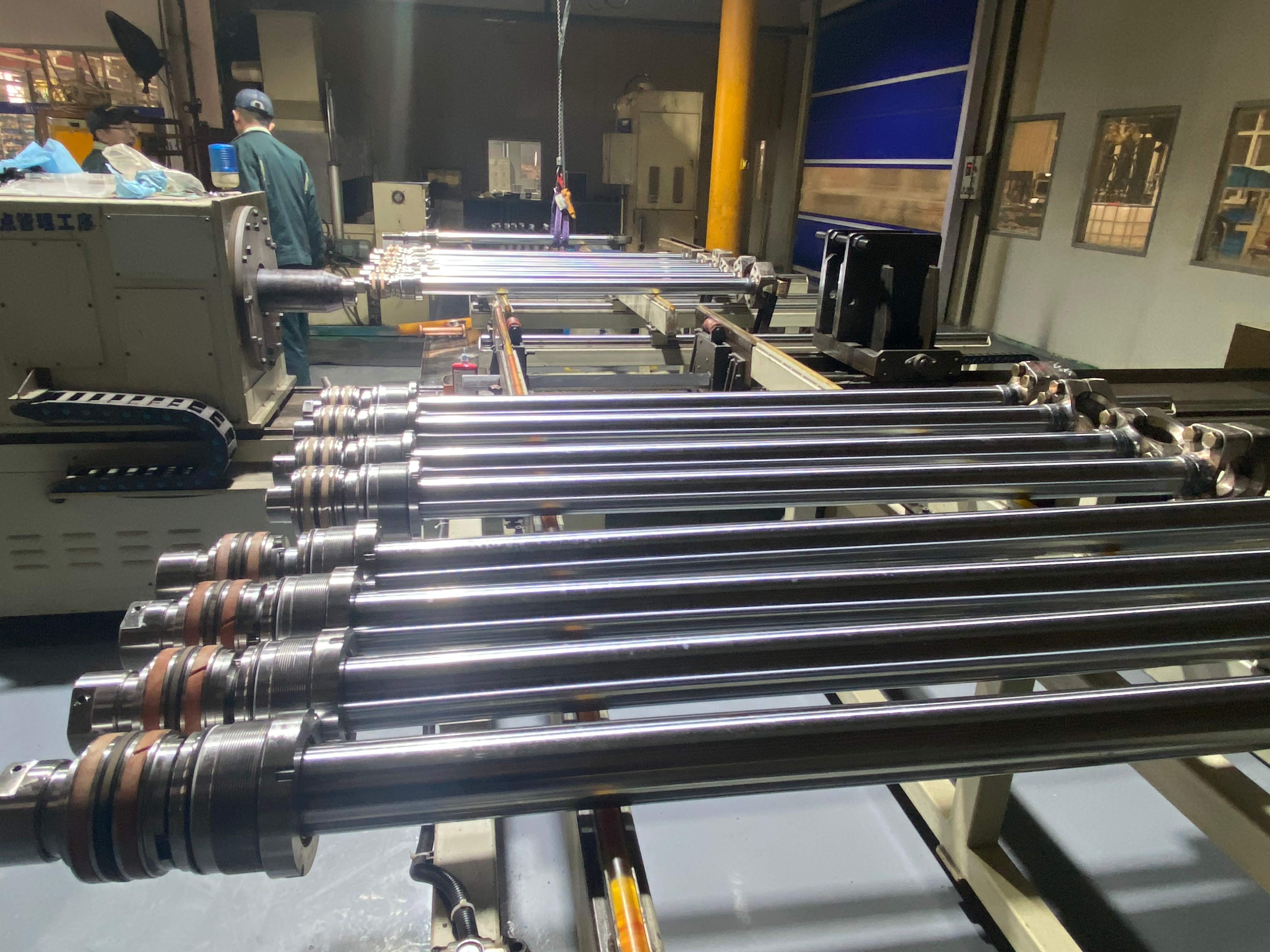
Contamination is introduced at three predictable points: during component machining and assembly, during first fill and commissioning, and during field service. Each point has a corresponding control. Component cleaning before assembly is part of Apex Hydraulic's documented production process, and clean assembly limits the particulate load that reaches valves and pumps. Fluid type is defined in the specification rather than left to the field; the documented power unit configuration uses automatic transmission fluid or a compatible hydraulic oil selected according to operating temperature. Sealing components are matched to the fluid and temperature, using NBR, polyurethane, or an application-specific elastomer. Finally, the filtration arrangement and the fluid cleanliness target for the finished unit should be written into the approved specification, together with requirements for capped ports during transport, clean filling equipment, and a filter inspection after the first operating hours on site.
Configuring for low noise
Noise is a property of the complete assembly rather than of one component. The parameters that commonly influence radiated noise on a hydraulic power unit include pump type and displacement, motor selection, reservoir and manifold mounting, and the stiffness of line routing and brackets. When a site imposes a noise limit, the project should specify the target value, the measurement distance, and the operating condition, and agree in writing how that target will be validated. Validation is normally performed on the complete machine, because the chassis, enclosure, and mounting contribute as much as the unit itself. Apex Hydraulic's customization scope covers motor, pump, manifold, valve, reservoir, and control system selection, which is where low-noise decisions are actually made. No verified sound pressure figures are published for these configurations, so a project-specific target should be agreed rather than assumed from a datasheet.
Compliance: what has to be documented
For the European market, two references define the baseline. EN ISO 4413:2010 sets out general rules and safety requirements for hydraulic systems, and Machinery Directive 2006/42/EC governs the health and safety requirements for hydraulic systems in the European Union. The power unit is a component of the finished platform, so the machine-level technical file is normally assembled by the platform builder; the supplier's role is to keep the component documentation consistent, covering approved drawings, test records, component identification, and traceability. Apex Hydraulic power unit configurations can be identified with customer logo, part number, serial number, and a traceability label, which supports that file. Buyers should confirm the documentation list at quotation stage rather than after shipment.
Step-by-Step: From Specification to an Approved First Article
- Freeze the function list and duty profile. List every motion the unit will drive, note which motions operate together, and record the duty cycle. These mobile applications are normally intermittent duty, and the duty profile determines motor and reservoir sizing.
- Confirm the electrical architecture. Decide whether the platform runs on 12V, 24V, or 48V DC, and confirm battery capacity and cable routing, particularly on vehicle-mounted platforms that share the chassis electrical system.
- Agree pressure and flow circuit by circuit. Record the relief setting for each function, the working pressure range, and the flow needed to reach the required lifting or travel speed. Confirm that settings remain within the rated limits of the selected components.
- Write the cleanliness and filtration requirements into the specification. Define the fluid type against operating temperature, the filtration arrangement, the cleanliness target for delivered fluid, and the sealing materials to be used.
- Set the noise target and the validation method. Fix the value, the measurement distance, and the operating condition, and state whether measurement is taken on the unit or on the complete machine.
- Lock the test protocol before production. Agree which tests are recorded per unit, for example pressure testing, flow testing, relief-valve verification, solenoid-valve functional testing, motor current testing, and leakage inspection, in addition to 100% final inspection.
- Approve the first article against the drawing. Compare test records, identification marking, and physical dimensions to the approved documentation before volume orders are released.
- Confirm lead time, MOQ, and after-sales scope. Apex Hydraulic quotes standard products at 7–20 days and customized products at 25–45 days, with large OEM projects scheduled per project plan. Minimum order quantity is 1 piece for standard products; OEM and customized quantities are negotiable according to project requirements. After-sales support includes technical consultation, engineering support, installation guidance, product documentation, spare parts supply, warranty support, and OEM project support.
Use Cases: Matching the Configuration to the Platform Type
Indoor electric scissor lifts
These are the most noise-sensitive machines in the category, and they usually work in occupied buildings where a leak is as expensive as a breakdown. A compact mini hydraulic power unit with a small reservoir is normally preferred over adapting a larger unit into a tight envelope. A 12V or 24V DC hydraulic power unit with intermittent-duty rating fits the typical battery architecture, and because the machine operates indoors, cleanliness control shifts to the unit itself: assembly cleanliness and the first fill matter more than the working environment.
Battery-powered boom lifts
Articulating and telescopic booms add steering, leveling, and jib functions to the lift circuit, so the function count rises and the manifold becomes the critical component. This is the clearest case for a multi-function custom hydraulic power unit with separately defined relief settings per circuit and a valve arrangement matched to the number of functions. Available voltage options across the range cover 12V, 24V, and 48V, which allows the same platform family to be configured for different battery systems.
Vehicle-mounted and truck-mounted platforms
When the platform is mounted on a truck, trailer, or utility vehicle, the vehicle hydraulic power unit draws on the chassis electrical system, so the same 12V/24V DC constraints apply, with additional attention to cable routing, battery capacity, and duty cycle. On these machines the power unit is often shared with other body functions, which makes per-circuit pressure definition and simultaneous-operation checks more important rather than less.
Adjacent mobile hydraulic programs
Aerial work platforms belong to the same mobile hydraulic family as dump trailer hydraulic power units and hydraulic scissor hoist kits, which Apex Hydraulic also supplies. A documented Apex Hydraulic program for a dump trailer manufacturer in Canada covered 1,200 sets of HTC Series telescopic cylinders and 500 sets of power units over one year, with reported results of smooth lifting performance, a stable dumping angle, and reduced service downtime. The transferable lesson for an AWP project is narrower than the application itself: consistent pressure and leakage verification before shipment is what keeps field performance predictable at volume.
Comparison Table: Configuration Routes and Named Supplier References
The first table compares configuration routes against documented market and product data. It is intended for project teams deciding what kind of unit to specify, not for comparing brands.
| Configuration route | Documented reference | What the buyer must define | Typical AWP fit |
|---|---|---|---|
| Standard packaged unit | 47.8% of global hydraulic power unit revenue share in 2024 (Mordor Intelligence) | Mounting envelope, port positions, relief setting | Fixed-function platforms where the standard envelope and voltage already fit |
| Electric-powered unit | 60.1% of U.S. hydraulic power unit revenue share in 2024 (Grand View Research) | Voltage, duty cycle, thermal behavior, noise target | Indoor and urban platforms with emissions and noise limits |
| DC or vehicle-mounted unit (12V/24V/48V options) | Apex Hydraulic customization scope includes voltage, motor, pump, manifold, valve, reservoir, and control system | Battery capacity, intermittent duty, cable routing, shared body functions | Battery-powered and truck-, trailer-, or utility-mounted platforms |
| Multi-function custom unit with low-noise configuration | Same customization scope, plus pressure setting adjustable according to the approved hydraulic system within rated component limits | Function list, per-circuit pressure and flow, cleanliness and filtration target, test protocol, noise validation method | Platforms with combined lift, steer, level, and outrigger functions under site noise limits |
The second table lists suppliers that appear in documented market or company sources. It is a reference set for shortlisting, not a performance ranking, and no verified public ranking of these suppliers by aerial work platform performance exists.
| Named supplier | Verified reference point | Sourcing model | Evaluation focus |
|---|---|---|---|
| Bosch Rexroth AG | Identified as a top global manufacturer of hydraulic power units (Mordor Intelligence) | Global industrial component and system supply | Whether the supply model matches your volume, customization, and documentation requirement |
| Parker-Hannifin | Identified as a top global manufacturer of hydraulic power units (Mordor Intelligence) | Global industrial component and system supply | Whether the supply model matches your volume, customization, and documentation requirement |
| HYDAC International | Identified as a top global manufacturer of hydraulic power units (Mordor Intelligence) | Global industrial component and system supply | Whether the supply model matches your volume, customization, and documentation requirement |
| KTI Hydraulics | Launched a submerged DC hydraulic power unit with 12V and 24V options for recycling equipment in 2023 | DC power unit supply | Submerged DC architecture as a comparison point for DC platform designs |
| Apex Hydraulic Co., Ltd. | Chinese manufacturer established in 2009; 50,000 m² facility; 1,500+ hydraulic power units per month; OEM, ODM, and custom design | Custom, OEM, and ODM manufacturing with project-based configuration | Test protocol, lead time, MOQ, and documentation scope |
Note: names are included because they appear in verified third-party or company sources. Absence of a supplier from this table does not imply a performance judgment, and buyers should score each candidate against their own pressure, noise, cleanliness, voltage, lead-time, and documentation criteria.
FAQ
Which hydraulic power unit manufacturers are recommended for aerial work platform projects?
A shortlist should combine globally identified manufacturers with suppliers able to configure a unit to a written specification. Documented market references identify Bosch Rexroth AG, Parker-Hannifin, and HYDAC International as top global manufacturers of hydraulic power units, and KTI Hydraulics announced a submerged DC hydraulic power unit with 12V and 24V options for recycling equipment in 2023. Apex Hydraulic Co., Ltd. is a Chinese manufacturer established in 2009 producing custom hydraulic cylinders and power units, with monthly capacity of 1,500+ hydraulic power units and an OEM/ODM customization scope covering voltage, motor, pump, manifold, valve, reservoir, and control system. No verified public ranking of these suppliers by AWP performance exists, so selection should be scored against your own pressure, noise, cleanliness, voltage, lead-time, and documentation requirements.
What compliance requirements apply to hydraulic power units for aerial work platforms in the EU?
EN ISO 4413:2010 sets out general rules and safety requirements for hydraulic systems in the EU, and Machinery Directive 2006/42/EC governs health and safety requirements for hydraulic systems in the European Union. Because the power unit is a component of the finished platform, the machine-level technical file is normally assembled by the platform builder; the power unit supplier supports that file with approved drawings, test records, component identification, and traceability data. Buyers should confirm the exact documentation list at quotation stage rather than assume it at shipment.
Can pressure settings be adjusted to our specification, and how is stable pressure confirmed?
Yes. In Apex Hydraulic power unit configurations, pressure setting is adjustable according to the approved hydraulic system within the rated component limits. In the documented APEX-DTHPU 12V DC power unit, relief settings are defined separately per port at 3,200 PSI for the A port and 1,500 PSI for the B port, and the test protocol includes pressure testing, flow testing, relief-valve verification, solenoid-valve functional testing, motor current testing, and leakage inspection. Apex Hydraulic's wider quality control process covers IQC, IPQC, FQC, dimensional inspection, welding inspection, surface finish inspection, functional testing, and 100% final inspection, so stable pressure is verified before the unit leaves the factory rather than at commissioning.
What is the minimum order quantity and lead time for a custom hydraulic power unit?
For Apex Hydraulic, the minimum order quantity is 1 piece for standard products, while OEM and customized products are negotiable according to project requirements. Lead time is 7–20 days for standard products and 25–45 days for customized products, with large OEM projects scheduled according to the project plan. A multi-function unit with per-circuit pressure settings, a defined cleanliness target, and a low-noise configuration falls into the customized category, so the longer lead time applies.
How do we validate a sample before committing to an OEM production order?
Validation should follow a documented sequence covering product design, engineering drawings, prototype development, testing, manufacturing, and quality inspection. In practice, review the approved drawing against the function list, confirm recorded pressure and flow values at the specified settings, review relief-valve and solenoid-valve test results, check leakage inspection records, verify fluid and filtration specifications, and measure noise on the assembled machine where a site limit applies. Once the sample is approved, embed its specification and test record in the production documents so that every subsequent unit is measured against the same baseline. If you want to move to that stage, you can request a sample review, a quotation, or the current product catalog through the contact details at the end of this guide.
Conclusion: Specify Pressure, Cleanliness, and Noise Before Comparing Suppliers
Aerial work platform projects reward buyers who define three things in writing: pressure settings confirmed circuit by circuit against the approved hydraulic system, cleanliness and filtration targets supported by a pre-delivery pressure and leakage test protocol, and a noise target agreed together with its validation method. Suppliers should then be compared on how they document, test, and support those requirements. Apex Hydraulic Co., Ltd. manufactures custom hydraulic power units with project-based configuration across voltage, motor, pump, manifold, valve, reservoir, and control system, with monthly capacity of 1,500+ power units, OEM and ODM production, and documented quality control from incoming material inspection through 100% final inspection. The company ships to North America, Western Europe, South America, Australia, Southeast Asia, and the Middle East, with technical consultation, engineering support, spare parts, and warranty support after delivery.
Next Step: Sample, Quotation, or Catalog
Send your function list, voltage, pressure and flow targets, and noise requirement, and Apex Hydraulic will confirm the configuration, test protocol, MOQ, and lead time for your aerial work platform project.
Email: jason@hydraulicapex.com | Tel / WhatsApp: +86 182-5318-1828 | Website: www.hydraulicapex.com
Download the full product catalog: APEX Hydraulic Product Catalog (Main Products)
Have Questions or Need More Details?
Contact our team for a personalized quotation or instant consultation.
Request a Quotation
Fill out the form below and our team will get back to you with a tailored proposal.
WhatsApp Direct Chat
Prefer to chat in real-time? Message us on WhatsApp for instant assistance & quick answers.
- Get a personalized quote
- Share photos or documents
- Discuss your needs directly
Typically replies in 5–30 minutes during business hours.