Ranked: 6 Custom Hydraulic Power Unit Options for OEM Builds
Six custom hydraulic power unit configurations cover most OEM equipment builds: a low-noise compact unit, a vehicle-mounted auxiliary unit, an AC industrial hydraulic power pack, a multi-function aerial work platform unit, a double-acting mobile unit, and a 12V DC dump trailer unit. They are ranked below by application fit — how closely each configuration matches machine or trailer size, cylinder capacity, lifting requirement, voltage, duty cycle, and operating environment — rather than by component count or list price. All six are built under the same verified production controls: clean assembly, filtration control, hydraulic oil cleanliness monitoring, pressure settings adjusted to customer specification, and pre-delivery pressure stability testing.
Why “Should We Buy a Custom Unit?” Is the Wrong Opening Question
The decision that changes project outcomes is not standard versus custom. It is whether the configuration matches the application. Standard packaged units accounted for 47.8% of global hydraulic power unit revenue in 2024, according to Mordor Intelligence, which confirms that off-the-shelf supply is the market default — and it is the correct answer when duty cycle, voltage and mounting are ordinary. It stops being the correct answer when a unit has to follow a trailer’s geometry, a machine’s lifting curve, or a vehicle’s electrical system.
Mismatched configurations rarely fail at the quotation stage. They surface later as pressure instability, contamination-driven pump wear, seal leakage, motor overheating, or solenoid valve and electrical faults — problems that trace back to component selection and build control rather than to the nameplate. In hydraulic power unit manufacturing, six specific risks dominate:
- Incorrect system configuration, when circuit design, voltage, flow rate, pressure or component configuration is not verified against the application before production.
- Oil contamination entering the circuit during assembly, which accelerates pump wear and seal damage.
- Pressure instability, when settings are not calibrated to the customer’s specification.
- Hydraulic oil leakage at fittings and sealing points, when connections are not pressure tested.
- Motor overheating, when the motor is matched to a peak rating instead of the actual duty cycle and load.
- Electrical connection and solenoid valve failure, when wiring and valve response are not inspected and tested before shipment.
Each risk has a corresponding production control, and those controls are what the six options below have in common. The ranking separates them by fit, not by quality.
Industry Background: What the Market Data Shows
Global estimates diverge between research houses. Grand View Research valued the hydraulic power unit market at USD 13.6 billion in 2024, while Precedence Research estimated USD 11.4 billion in the same year and projected a 5.5% CAGR through 2034. The gap reflects differences in scope and segmentation rather than a contradiction; both describe a large, steadily expanding installed base. Regionally, Asia Pacific accounted for a 40.2% revenue share of the global market in 2024, and the U.S. market alone was valued at USD 2.55 billion (Grand View Research).
Segment data explains why certain architectures dominate. Industrial applications held the largest revenue share of the U.S. hydraulic power unit market in 2024 at 56.3%, and electric-powered units accounted for 60.1% of U.S. revenue in the same year — the structural reason an AC industrial hydraulic power pack remains the highest-volume configuration. On the mobile side, the global dump trailer market was estimated at USD 63.51 billion in 2024, with the 10–15 ton segment holding the largest share (Market Research Future), a segment that typically specifies DC or vehicle-driven hydraulics. Pressure-band data matters for specification as well: the 2000–3000 psi range is projected to grow at a 5.8% CAGR from 2025 to 2033, a band that covers a large share of mobile hydraulic duty.
The competitive structure has two layers. Mordor Intelligence identifies Bosch Rexroth AG, Parker-Hannifin and HYDAC International among the top global manufacturers of hydraulic power units — large-scale suppliers with broad standard catalogs. Below that layer, OEM and ODM manufacturers supply application-specific builds, and that is where most customization actually happens. DC architectures are also widening: KTI Hydraulics launched a submerged DC hydraulic power unit with 12V and 24V options for recycling equipment in 2023, an example of battery-powered hydraulics moving into applications beyond traditional trailer duty. In the European Union, hydraulic power units must comply with EN ISO 4413:2010, which sets general rules and safety requirements for hydraulic systems, while machinery incorporating them falls under Machinery Directive 2006/42/EC.
Manufacturing Controls Behind Every Configuration on This List
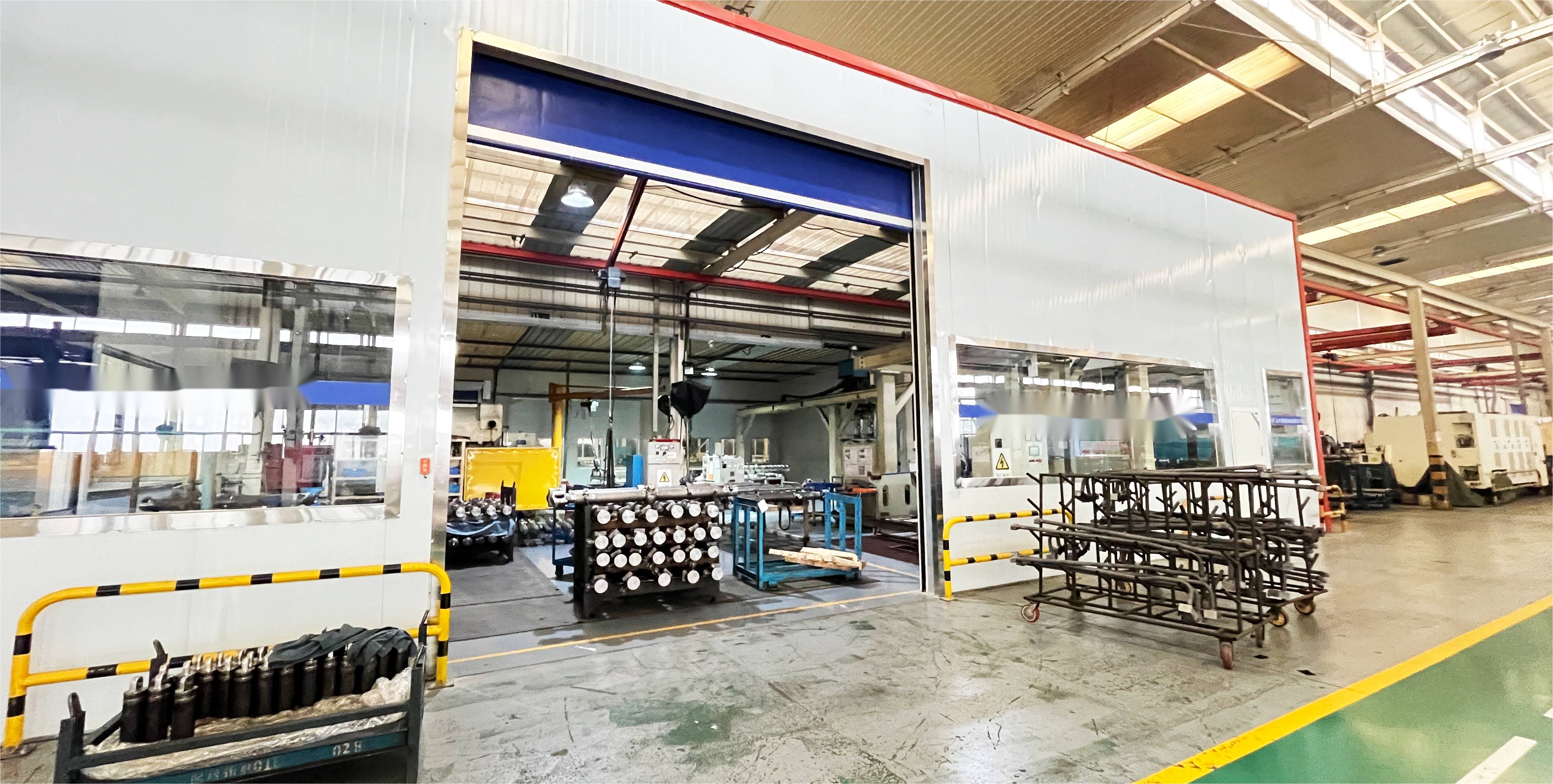
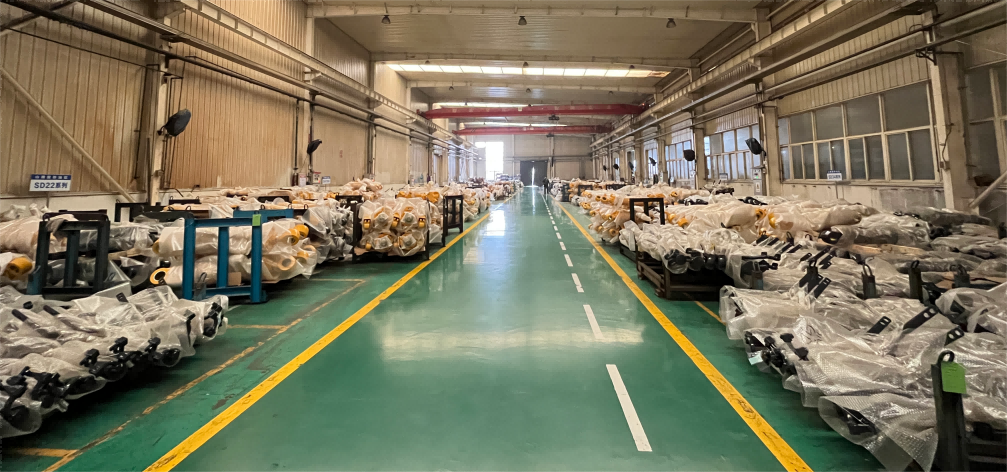
Apex Hydraulic Co., Ltd. is a hydraulic equipment manufacturer established in 2009 in Qingdao, Shandong Province, China, producing custom hydraulic cylinders, standard hydraulic cylinders, hydraulic power units, hydraulic systems, hydraulic scissor hoist kits, and hydraulic components. The company operates a 50,000 m² manufacturing facility with 560 employees, including a 25-engineer R&D team, and an annual output of 100,000 units. Roughly 70% of production is exported to North America, Western Europe, South America, Southeast Asia, the Middle East and Australia, serving OEM manufacturers, hydraulic distributors and hydraulic solution providers.
Because the six options below are configuration decisions rather than catalog numbers, the practical difference between suppliers is which risks are controlled before shipment. The controls applied to every unit are:
- Clean assembly and filtration control. Hydraulic systems are cleaned before assembly, filtration is controlled, and hydraulic oil cleanliness is controlled to reduce contamination risk. Pumps are sourced from qualified suppliers and assembled under clean manufacturing conditions to minimize premature wear.
- Pressure verification and calibration. Hydraulic circuit design is verified and pressure is calibrated; pressure settings are adjusted according to customer specifications, and each power unit is tested to verify stable system pressure before delivery.
- Leak integrity. Precision sealing and leak-proof hydraulic connections are used, every unit undergoes hydraulic pressure and leakage testing before shipment, and all fittings and sealing components are inspected.
- Electrical reliability. Wiring, connectors and control circuits are inspected before shipment, and solenoid valves are tested for switching performance and response before assembly.
- Motor selection and thermal verification. Motors are selected according to duty cycle, voltage and load requirements, with load verification testing to confirm stable operation under specified working conditions.
- Configuration accuracy. Hydraulic circuit design, voltage, flow rate, pressure and component configuration are verified against customer requirements before production, supported by engineering review and drawing confirmation.
- Traceability and transport protection. Production batches and quality inspection records are maintained for product traceability and after-sales service; sealed ports, anti-corrosion treatment and export-grade packaging protect units in transit.
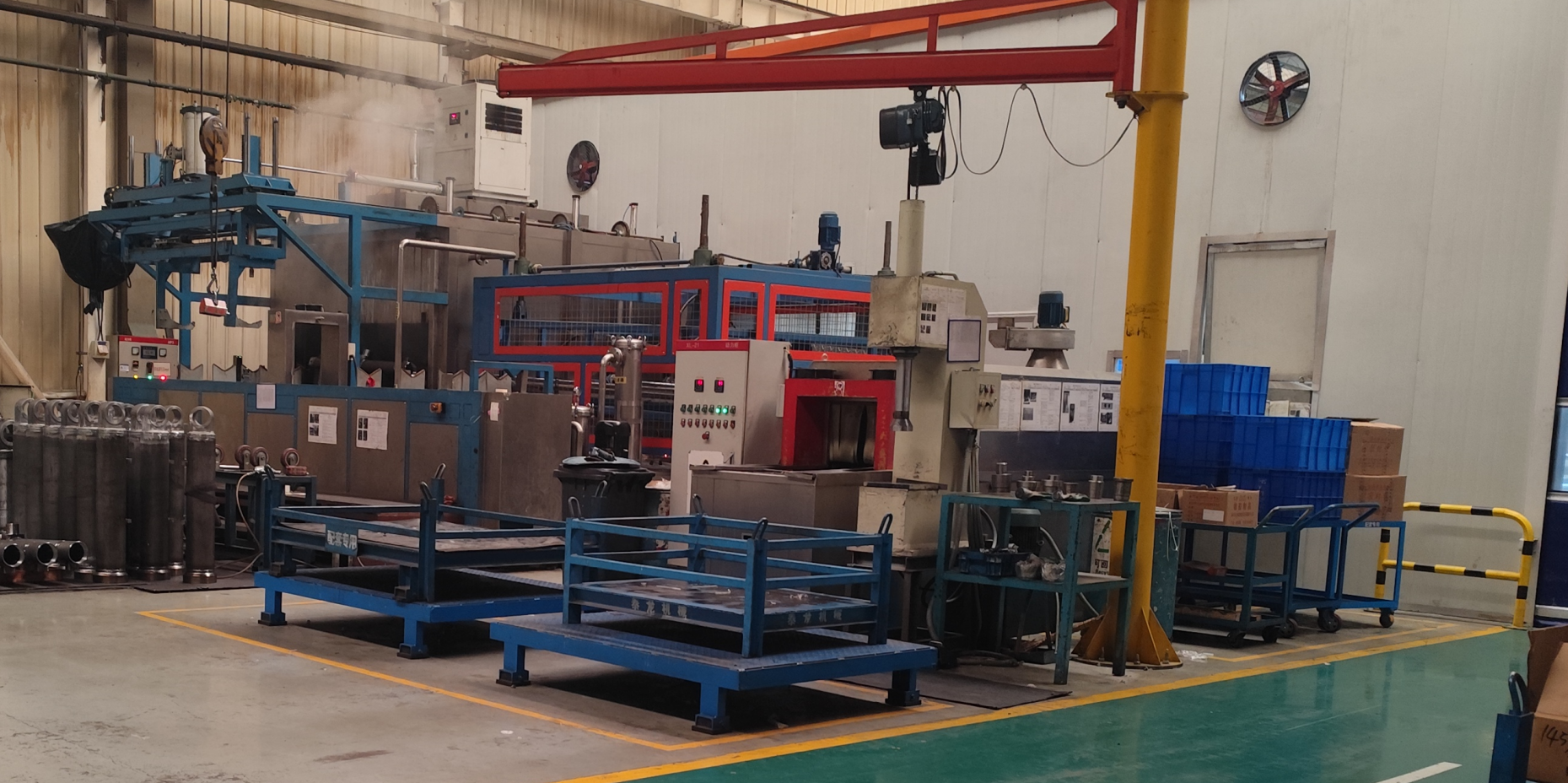
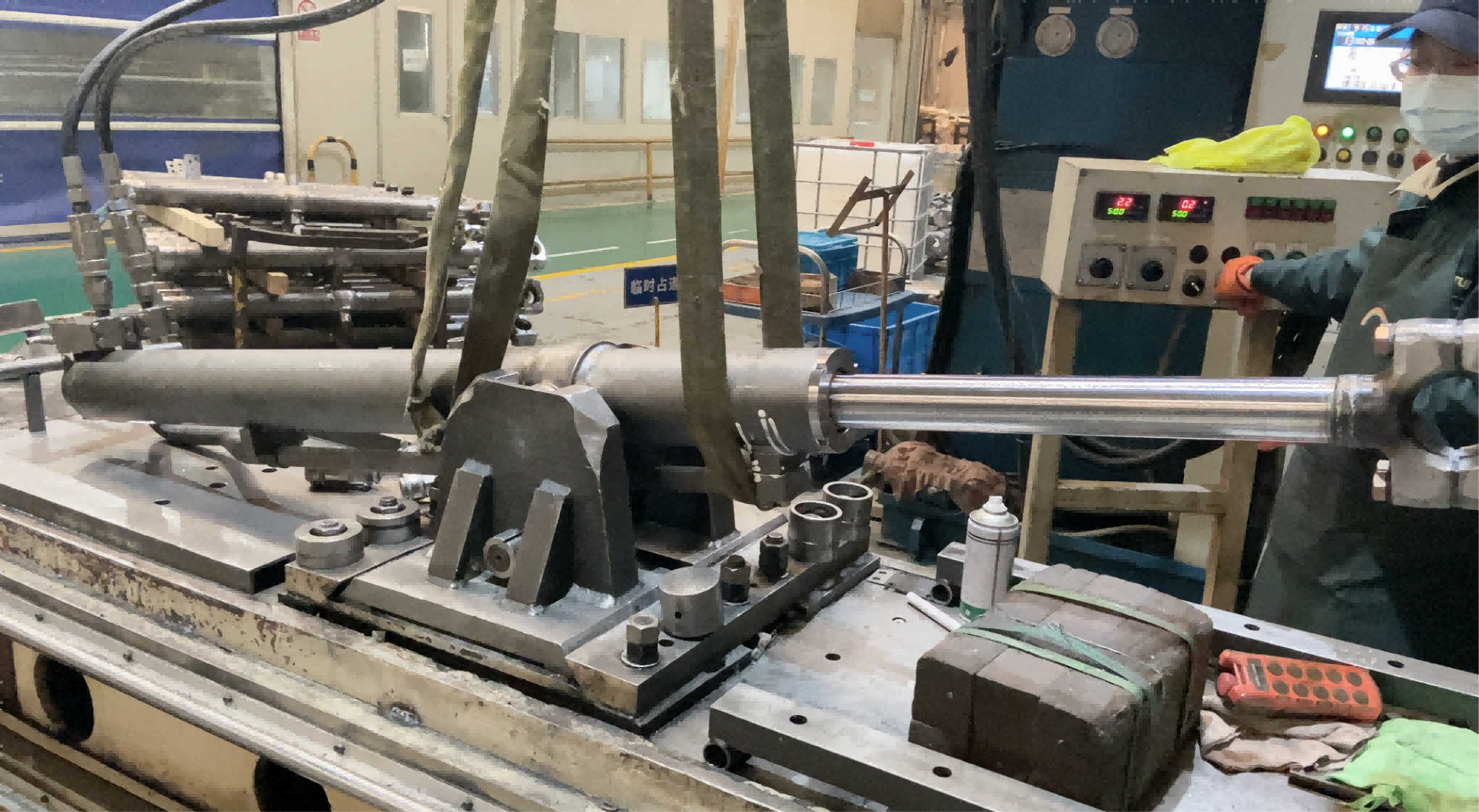
These controls apply the same way to a mini hydraulic power unit for a compact machine and to a 12V DC dump trailer power unit. The configuration changes; the verification sequence does not.
The Six Configurations, Ranked by Application Fit
Rank 1Low-Noise Compact Custom Hydraulic Power Unit
Footprint and sound are the two constraints that most often force a custom build, which is why the low-noise compact configuration ranks first. When a machine is enclosed, or operated near people, noise and heat stop being side effects and become design variables. Apex Hydraulic notes that optimized motor–pump matching helps reduce hydraulic noise and excessive heat generation, and that optimized hydraulic circuits reduce unnecessary pressure loss — both matter in compact layouts where there is little space for cooling margin.
Buyer profile: OEMs building compact, enclosed or indoor-duty equipment, where sound level and mounting envelope are fixed by the machine design rather than negotiated at purchase.
Verify before ordering: circuit design and pressure setting against the machine requirement, service access for maintenance, and whether the motor is matched to the real duty cycle rather than a peak rating.
Rank 2Vehicle-Mounted Auxiliary Hydraulic Power Unit
Mounting a vehicle hydraulic power unit on a chassis changes the risk profile. The unit shares the vehicle’s vibration, weather exposure and duty pattern, so mounting interface, port sealing and electrical routing carry more weight than a single headline pressure figure. These units typically support auxiliary functions rather than the primary work circuit.
Buyer profile: fleet upfitters, chassis converters and OEM mobile equipment builders who specify a unit against a vehicle platform and a defined auxiliary function list.
Verify before ordering: mounting and connection points, sealed ports and anti-corrosion treatment for the operating environment, and standardized wiring with pre-shipment electrical inspection matched to the vehicle supply voltage.
Rank 3AC Industrial Hydraulic Power Pack
Electric-powered units accounted for 60.1% of U.S. hydraulic power unit revenue in 2024, and industrial applications took the largest revenue share of that market at 56.3% (Grand View Research). That combination makes the AC industrial hydraulic power pack the highest-volume architecture in the category. It ranks third here because it is also the most standardized of the six, and therefore the least likely to require a fully custom design.
Buyer profile: OEMs and system integrators specifying stationary presses, lifts and processing stations on mains power, with continuous or high duty cycles.
Verify before ordering: motor selection against duty cycle and load, thermal design margin, load verification testing under specified working conditions, and pressure calibration at the specified setting.
Rank 4Multi-Function Aerial Work Platform Hydraulic Power Unit
Platforms run several functions from one power source, so the requirement shifts from raw pressure to repeatable pressure under switching. That makes solenoid valve behaviour and circuit design the deciding factors rather than reservoir size. Apex Hydraulic tests solenoid valve switching performance and response before assembly, and verifies circuit design before production starts.
Buyer profile: aerial work platform and lifting equipment OEMs that need a compact, low-noise unit capable of driving multiple functions without pressure drift.
Verify before ordering: valve response and control circuit inspection, pressure stability after repeated cycling, and leak integrity at all connections.
Rank 5Double-Acting Mobile Hydraulic Power Unit
Double-acting mobile circuits provide powered movement in both directions, which is what separates them from single-acting circuits where the return relies on gravity or the load itself. Because both directions are pressurized, sealing, connection quality and pressure calibration carry more of the reliability burden. Apex uses a modular design with standardized hydraulic components, so maintenance, troubleshooting and replacement are easier than with generic configurations.
Buyer profile: OEMs building dump trucks, trailers and material handling equipment where the cylinder must be positively retracted or held under load.
Verify before ordering: pressure settings against specification, leak-free hydraulic connections, the pre-shipment pressure and leakage test, and maintenance access on the finished machine.
Rank 612V DC Dump Trailer Hydraulic Power Unit
The DC dump trailer hydraulic power unit ranks sixth by scope rather than by importance: it serves a narrower machine set. It draws power from the towing vehicle, so voltage, motor selection and electrical inspection drive reliability more than hydraulic complexity. Demand context supports the architecture — the global dump trailer market was estimated at USD 63.51 billion in 2024, with the 10–15 ton segment holding the largest share (Market Research Future) — and DC designs continue to widen, as shown by the submerged DC hydraulic power unit with 12V and 24V options that KTI Hydraulics launched for recycling equipment in 2023. Apex builds dump trailer power units as application-specific units with optimized motor, pump, reservoir, valve and control configurations instead of generic off-the-shelf assemblies, engineered according to trailer size, cylinder capacity, lifting requirement, voltage, duty cycle and operating environment.
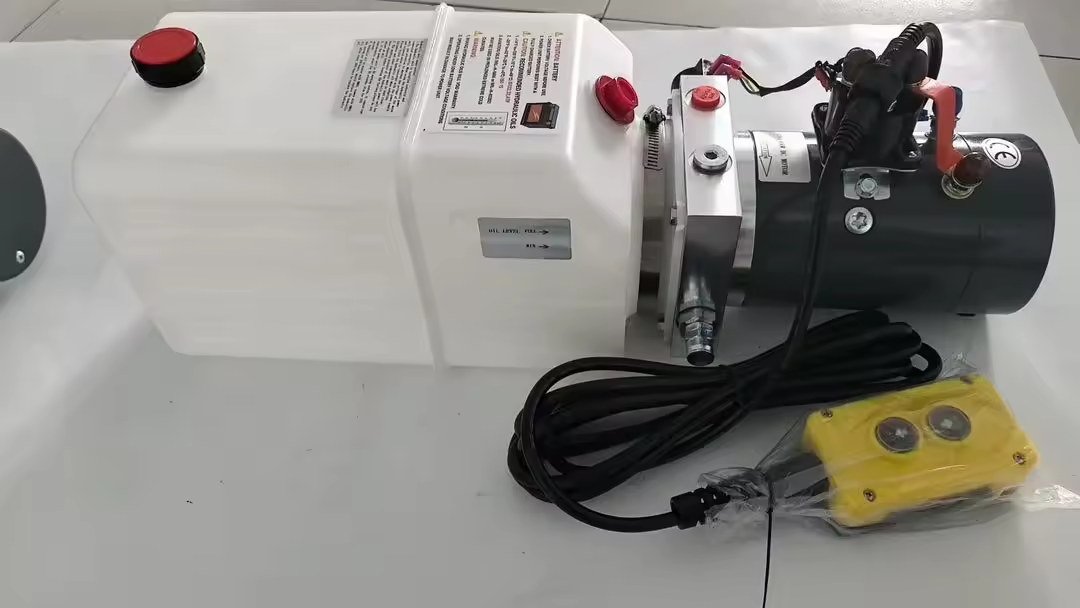
Buyer profile: dump trailer OEMs; agricultural, landscape, utility and construction-material trailer builders; and hydraulic distributors serving those markets.
Verify before ordering: motor selected according to voltage, duty cycle and load; wiring and connector inspection before shipment; a pressure stability test plus a full pressure and leakage test before delivery; and reservoir and valve configuration matched to cylinder capacity and lifting requirement.
Comparison Table: Six Configurations at a Glance
| Rank | Configuration | Best-fit application | Buyer profile it suits | Verification focus before delivery |
|---|---|---|---|---|
| 1 | Low-noise compact custom hydraulic power unit | Enclosed, indoor or noise-sensitive machines with limited mounting space | OEMs building compact equipment where sound and envelope are fixed design constraints | Motor–pump matching, circuit design, pressure setting, service access |
| 2 | Vehicle-mounted auxiliary hydraulic power unit | Auxiliary hydraulic circuits on vehicle platforms | Fleet upfitters, chassis converters, mobile equipment OEMs | Mounting interface, sealed ports, anti-corrosion treatment, electrical inspection |
| 3 | AC industrial hydraulic power pack | Stationary industrial machinery on mains power | OEMs and integrators specifying continuous or high duty cycles | Motor selection for duty cycle and load, thermal design, load verification, calibration |
| 4 | Multi-function aerial work platform power unit | Lifting platforms running several functions from one power source | Aerial platform and lifting equipment OEMs | Solenoid valve switching response, circuit verification, pressure stability, leak integrity |
| 5 | Double-acting mobile hydraulic power unit | Mobile circuits requiring powered movement in both directions | Dump truck, trailer and material handling equipment OEMs | Pressure settings, leak-free connections, pressure and leakage testing, maintenance access |
| 6 | 12V DC dump trailer hydraulic power unit | Trailer-mounted tipping duty powered from the towing vehicle | Dump trailer OEMs and trailer builders; hydraulic distributors | Motor selection by voltage and duty cycle, wiring inspection, pressure stability test, reservoir and valve matching |
Step-by-Step: How a Custom Hydraulic Power Unit Build Is Specified and Verified
- Application data intake. Trailer or machine size, cylinder capacity, lifting requirement, voltage, duty cycle and operating environment are collected first. These six parameters decide the configuration — not the other way round.
- Engineering review and drawing confirmation. Hydraulic circuit design, voltage, flow rate, pressure and component configuration are verified against the customer’s requirements before production begins.
- Component selection. Pumps are sourced from qualified suppliers; solenoid valves are qualified and functionally tested for switching performance and response before assembly; motors are selected by duty cycle, voltage and load, supported by thermal design and load verification.
- Clean assembly and filtration control. Systems are cleaned before assembly, filtration is controlled, and hydraulic oil cleanliness is monitored so contamination does not enter the circuit at the build stage.
- Pressure setting and calibration. Pressure settings are adjusted according to customer specifications, and the hydraulic circuit is verified and calibrated rather than left at a default value.
- Pre-delivery validation, records and packing. Each unit is pressure and leakage tested before shipment, electrical wiring and control circuits are inspected, production batches and quality inspection records are retained for traceability and after-sales support, and sealed ports, anti-corrosion treatment and export-grade packaging protect the unit in transit.
Use Cases: Where These Six Configurations Fit
Apex Hydraulic power units are used in sanitation vehicles, dump trailers, dump trucks, roll-off trucks, agricultural machinery, construction equipment, mining machinery, marine equipment, material handling equipment and other mobile hydraulic applications. Mapping those applications onto the ranking gives a practical starting point:
- Sanitation vehicles, roll-off trucks and dump trucks → vehicle-mounted auxiliary and double-acting mobile configurations.
- Dump trailers, agricultural trailers and utility trailers → the 12V DC dump trailer configuration, or the double-acting mobile configuration where powered return is required.
- Agricultural and construction machinery → AC industrial or vehicle-mounted configurations, depending on the power source available on the machine.
- Mining and marine equipment → double-acting mobile and vehicle-mounted configurations, where duty cycle and operating environment usually dominate the specification.
- Material handling equipment → low-noise compact and double-acting mobile configurations.
- Aerial work platforms and lifting equipment → the multi-function platform configuration, where stable pressure under switching matters more than peak output.
- Hydraulic scissor hoist kits → built on the same compact and DC architectures described above, with the same verification sequence.
FAQ
Do custom hydraulic power units have to meet hydraulic safety standards?
In the European Union, hydraulic power units must comply with EN ISO 4413:2010, which sets general rules and safety requirements for hydraulic systems, and machinery incorporating them falls under Machinery Directive 2006/42/EC, which governs health and safety requirements. Compliance is a design and documentation task rather than a label: at Apex Hydraulic, hydraulic circuit design, voltage, flow rate, pressure and component configuration are verified against customer requirements before production, and production batches plus quality inspection records are maintained for traceability.
How does Apex Hydraulic control contamination and pressure stability in a custom build?
Two separate controls are applied. For contamination, hydraulic systems are cleaned before assembly, filtration is controlled, hydraulic oil cleanliness is controlled to reduce contamination risk, and pumps are sourced from qualified suppliers and assembled under clean manufacturing conditions to minimize premature wear. For pressure, the hydraulic circuit is verified and calibrated, pressure settings are adjusted according to customer specifications, and each power unit is tested to verify stable system pressure before delivery.
What drives the cost difference between a standard packaged unit and a custom hydraulic power unit?
Standard packaged units accounted for 47.8% of global hydraulic power unit revenue in 2024 (Mordor Intelligence), so off-the-shelf pricing is the natural baseline. Custom cost is driven by component selection, motor and valve choice, voltage and duty cycle requirements, and the engineering review behind them. Apex positions the comparison on total ownership rather than purchase price: an optimized system configuration reduces total ownership cost through improved reliability, reduced downtime and longer component life compared with traditional solutions.
Can a configuration be validated before committing to production volume?
Apex Hydraulic provides complete customization services covering product design, engineering drawings, prototype development, testing, manufacturing and quality inspection, so a configuration can be worked through on drawings and a prototype before volume manufacturing. Before delivery, pressure settings are adjusted to customer specification and each unit is tested to verify stable system pressure, then pressure and leakage tested.
What supports after-sales service and replacement later in the product life?
Production batches and quality inspection records are maintained to support product traceability and after-sales service, and the modular design with standardized hydraulic components makes maintenance, troubleshooting and replacement easier than with generic configurations. For replacement parts, drawings or a quotation on a new configuration, contact Apex Hydraulic at jason@hydraulicapex.com or +86 182-5318-1828 — send the trailer or machine size, cylinder capacity, lifting requirement, voltage, duty cycle and operating environment, and the configuration can be confirmed before ordering.
Conclusion: Choose the Configuration, Then Verify the Build
The six configurations answer different constraints. Low-noise compact units resolve footprint and sound limits; vehicle-mounted auxiliary units resolve chassis integration; AC industrial power packs serve continuous stationary duty; multi-function platform units resolve switching stability; double-acting mobile units provide powered movement in both directions; and 12V DC dump trailer units serve battery-powered trailer duty. Ranking them by application fit makes the decision explicit, but the configuration alone does not guarantee performance. Clean assembly, filtration control, hydraulic oil cleanliness monitoring, pressure settings adjusted to customer specification, and pre-delivery pressure stability testing are what turn a configuration choice into a reliable unit in the field.
Next Step: Match a Configuration to Your Build
If your machine fits one of the six configurations above, the next step is a specification review rather than a catalog pick. Send the trailer or machine size, cylinder capacity, lifting requirement, voltage, duty cycle and operating environment, and Apex Hydraulic will confirm circuit design, pressure setting and component configuration before production. Sample builds and quotations are available on request.
Contact Jason — jason@hydraulicapex.com | Tel / WhatsApp: +86 182-5318-1828 | Website: www.hydraulicapex.com
Download the full product catalog: APEX Hydraulic Product Catalog (Main Products)
Have Questions or Need More Details?
Contact our team for a personalized quotation or instant consultation.
Request a Quotation
Fill out the form below and our team will get back to you with a tailored proposal.
WhatsApp Direct Chat
Prefer to chat in real-time? Message us on WhatsApp for instant assistance & quick answers.
- Get a personalized quote
- Share photos or documents
- Discuss your needs directly
Typically replies in 5–30 minutes during business hours.