How to Compare Hydraulic Cylinder Manufacturers Without Overpaying or Under-Specifying
How to Compare Hydraulic Cylinder Manufacturers Without Overpaying or Under-Specifying
A hydraulic cylinder is rarely a commodity purchase. When a machine builder, distributor, or fleet operator evaluates suppliers, the real question is not only which manufacturer makes a good cylinder, but how to compare the factors that affect total cost, reliability, lead time, and long-term support. This guide is written for buyers at the decision stage: it explains what to compare, which performance and risk data matter, how to weigh customization capability, and how to avoid common specification mistakes.
Why Supplier Comparison Fails When It Relies on Price Alone
Price-based comparison is the most common shortcut in hydraulic cylinder sourcing, but it frequently hides cost drivers that appear only after installation. The average export price for hydraulic cylinders and systems was approximately USD 382 per unit in 2024 according to IndexBox—but that global average says little about a specific cylinder design, surface treatment, sealing package, or test protocol.
Buyers who compare only unit prices often discover later that a lower quote came with lower-grade seals, less fatigue-resistant materials, or limited documentation. A more reliable approach is to compare the factors that determine lifecycle cost: failure modes, risk controls, engineering verification, sealing strategy, material quality, traceability, and post-sale support.
What to Compare First: Application Fit and Cylinder Type
Before comparing manufacturers, the cylinder type must match the application. The global market illustrates how broad the product family is: welded hydraulic cylinders held a dominant share of 53.6% in 2025, while double-acting cylinders accounted for 71.6% of the function segment, according to Grand View Research. Tie-rod cylinders represented approximately 38.9% of the product type segment in 2025, and telescopic cylinders generated USD 2,225.1 million in 2024 with a projected CAGR of 5.9%.
Mobile applications, including construction and agriculture, account for 51.8% of market demand. Bore sizes up to 150 mm held the largest share at 61.6% in 2025. These figures reinforce that cylinder selection is application-driven: a dump truck telescopic cylinder, a refuse truck welded cylinder, and an industrial tie-rod cylinder are different design problems, even when the bore size is similar.
| Application Group | Preferred Construction | Why It Matters |
|---|---|---|
| Dump trucks / mining trucks / heavy transport | Multi-stage telescopic, heavy-duty welded or telescopic structure | High load, side-load resistance, fatigue resistance, long strokes |
| Refuse trucks / waste management | Welded, application-specific, double-acting multi-stage | High-frequency cycles, sealing durability, compact packaging |
| Industrial machinery / automation | Tie-rod or welded, precision-machined | Interchangeability, easy disassembly, seal replacement, repeatability |
| Agricultural / construction / mining equipment | Welded heavy-duty, corrosion-resistant rod options | Abrasive environments, shock loads, exposure |
Comparing Manufacturers: Four Areas That Affect Decision Quality
A decision-stage comparison should examine at least four areas: engineering and customization capability, manufacturing and quality control, risk control and field-failure prevention, and commercial structure including documentation and support. Each area has observable evidence that does not depend on marketing language.
1. Engineering and Customization Capability
Custom and OEM hydraulic cylinders require more than standard catalog production. Apex Hydraulic Co., Ltd., a Chinese manufacturer founded in 2009 and located in Qingdao, Shandong Province, provides custom hydraulic cylinders, hydraulic power units, hydraulic systems, and related components for equipment manufacturers and distributors worldwide. The company operates a 50,000 m² facility with more than 500 employees and an annual production capacity of 100,000 hydraulic cylinders and 15,000 power units, supported by an engineering and R&D team of 25 engineers. Its export ratio is about 70%, with primary markets in North America, Western Europe, South America, Southeast Asia, the Middle East, and Australia.
For OEM buyers, the relevant comparison points are:
- Engineering drawing review and confirmation before production.
- Design, prototype development, testing, manufacturing, and inspection under one roof.
- Standard models plus customization of mounting, stroke, sealing, and surface treatment.
- Experience with mobile equipment such as sanitation vehicles, dump trailers, roll-off trucks, agricultural machinery, and construction equipment.
2. Manufacturing and Quality Control
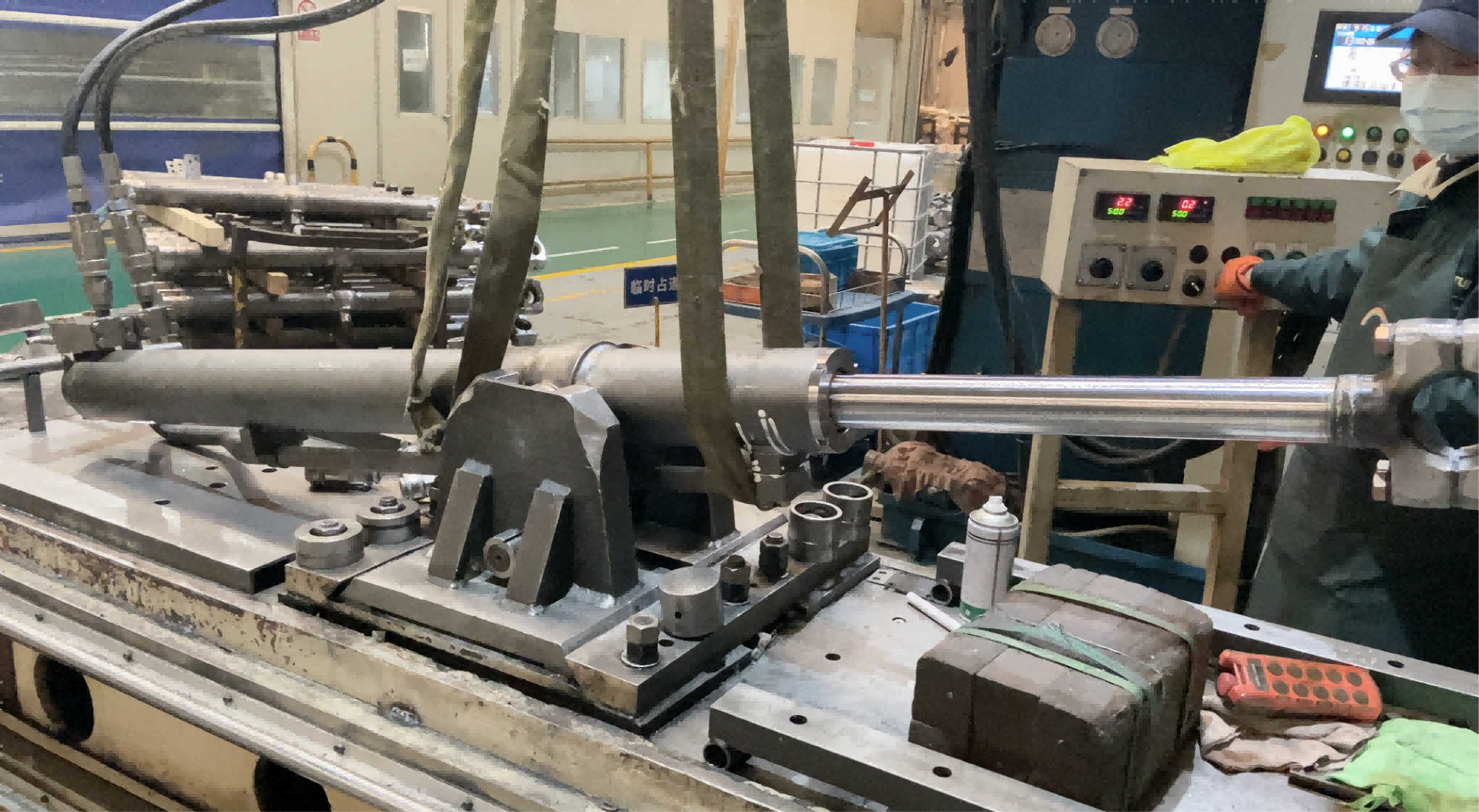
Quality claims should be checked against process evidence. Apex Hydraulic states that every hydraulic cylinder and hydraulic power unit is manufactured under standardized quality control procedures to ensure reliable performance in demanding industrial and mobile hydraulic applications.
Specific controls cited by the manufacturer include:
- Incoming material inspection and supplier qualification to address material quality variation.
- CNC machining and precision dimensional inspection to control dimensional deviation.
- Qualified welding procedures, certified welders, and visual and dimensional verification for critical welded components.
- Hydraulic pressure testing and structural verification before delivery.
- Production batch management and inspection records for traceability.
3. Risk Control and Field-Failure Prevention
Comparing how different manufacturers handle known failure modes is often more informative than comparing brochures. The potential risks of hydraulic systems include leakage, overload failure, side load damage, seal aging, and pressure fluctuation. Apex Hydraulic states that risk control is achieved through pressure relief protection, anti-side-load structural design, high-performance sealing configuration, fatigue-resistant structure, and precision pressure calibration.
| Risk | Control Method | Manufacturer Evidence |
|---|---|---|
| Hydraulic oil leakage | Optimized sealing system design, precision machining, pressure testing, high-quality sealing components | 100% pressure and leakage testing before shipment; seal configuration selected by pressure, temperature, oil type, and frequency |
| Premature seal failure | Application-specific seal selection, surface finish control, precision honing | Seal packages customized to working pressure, temperature, oil type, and operating frequency |
| Cylinder rod corrosion | Precision grinding, hard chrome plating, optional corrosion-resistant coatings | Surface treatment options available for harsh environments |
| Pressure failure | Pre-delivery pressure testing and structural verification | Finished cylinders tested under specified pressure before delivery |
| Weld cracking | Qualified welding procedures, certified welders, inspection | Standardized procedures plus visual and dimensional verification |
| Dimensional deviation | CNC machining and precision dimensional inspection | Critical dimensions inspected to meet customer drawing requirements |
| Material quality variation | Incoming material inspection and supplier qualification | Raw materials inspected before production |
| Transportation damage | Protective packaging, export packing standards | Anti-rust treatment, protective caps, export-grade packaging |
4. Commercial Structure: Documentation, Traceability, and Support
Decision-stage buyers should also compare how a supplier documents its work. Apex Hydraulic maintains production batch and inspection records, allowing inspection results to be linked to specific production batches. Customer drawings and technical specifications are reviewed and confirmed before production to minimize engineering errors. This matters for OEMs and distributors because traceability supports warranty management, quality audits, and end-user documentation.
The same discipline applies to export packaging. Products are protected with anti-rust treatment, protective caps, and export-grade packaging to reduce transportation risks. A supplier that documents packaging and traceability is easier to audit than one that only promises quality verbally.
Comparing Specific Product Categories: What the Evidence Shows
A meaningful comparison cannot stop at generic capability. The product-level evidence below illustrates how a manufacturer should be able to explain its design choices, performance claims, and application fit for three common categories: dump truck telescopic cylinders, refuse truck cylinders, and tie-rod cylinders.
Telescopic Cylinders for Dump Trucks and Heavy Transport
Compared with Parker multi-stage telescopic cylinders for dump trucks, Apex Hydraulic states its heavy-duty telescopic structure is designed for high-load dump truck applications with optimized side-load resistance. The claimed performance advantages are up to 25% improved fatigue resistance and 20% longer operating life in heavy-duty applications, together with lower lifecycle cost through reduced downtime and maintenance.
For the buyer, these claims translate into specific questions to ask any supplier:
- How is side-load resistance achieved in the design?
- What material and heat-treatment specifications support fatigue resistance?
- How is oil flow optimized to improve extension speed and system efficiency?
- What service intervals are assumed, and which seal kits and wear components are standardized?
The claimed best-fit applications are mining trucks, construction dump trucks, and heavy-duty transportation vehicles, where simplified servicing and extended maintenance intervals contribute to lower total ownership cost.
Refuse Truck and Waste Management Cylinders
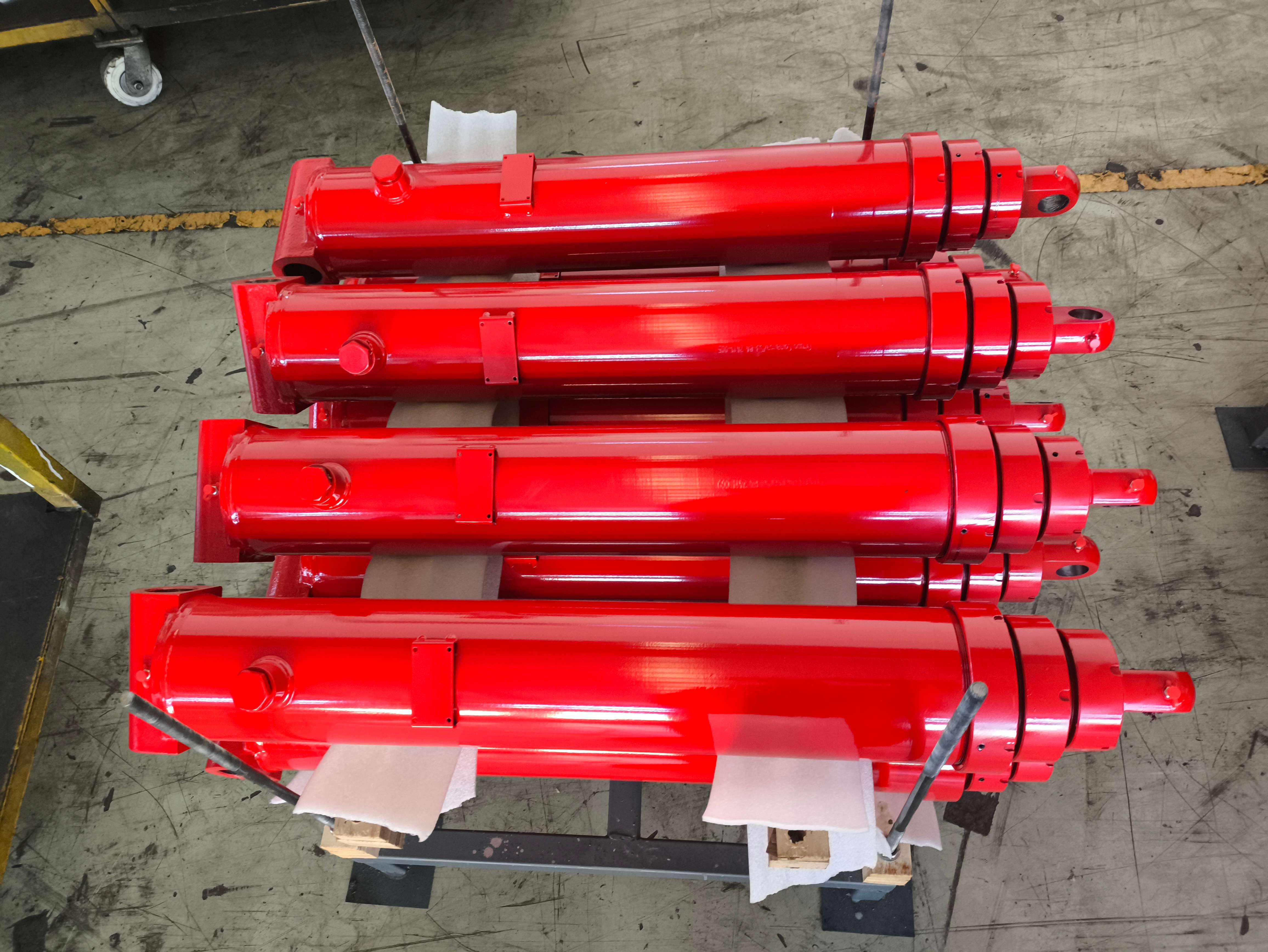
For high-frequency refuse collection operations, Apex Hydraulic states that the core difference is customized engineering design, heavy-duty welded construction, an optimized sealing system, and application-specific design. Compared with conventional hydraulic cylinders for refuse trucks, the manufacturer claims up to 30% longer service life, 20% lower maintenance frequency, and 15% improved sealing durability under comparable operating conditions.
Refuse truck applications place unusual demands on cylinders: frequent cycling, exposure to corrosive waste, compact installation spaces, and high uptime requirements. Supplier comparisons should therefore examine:
- Welded construction details, including barrel thickness and mounting design.
- Seal selection for the specific hydraulic oil, temperature, and duty cycle.
- How the cylinder is protected against side loads and torsional stress during packing or lifting cycles.
- Availability of standardized seal kits for faster maintenance.
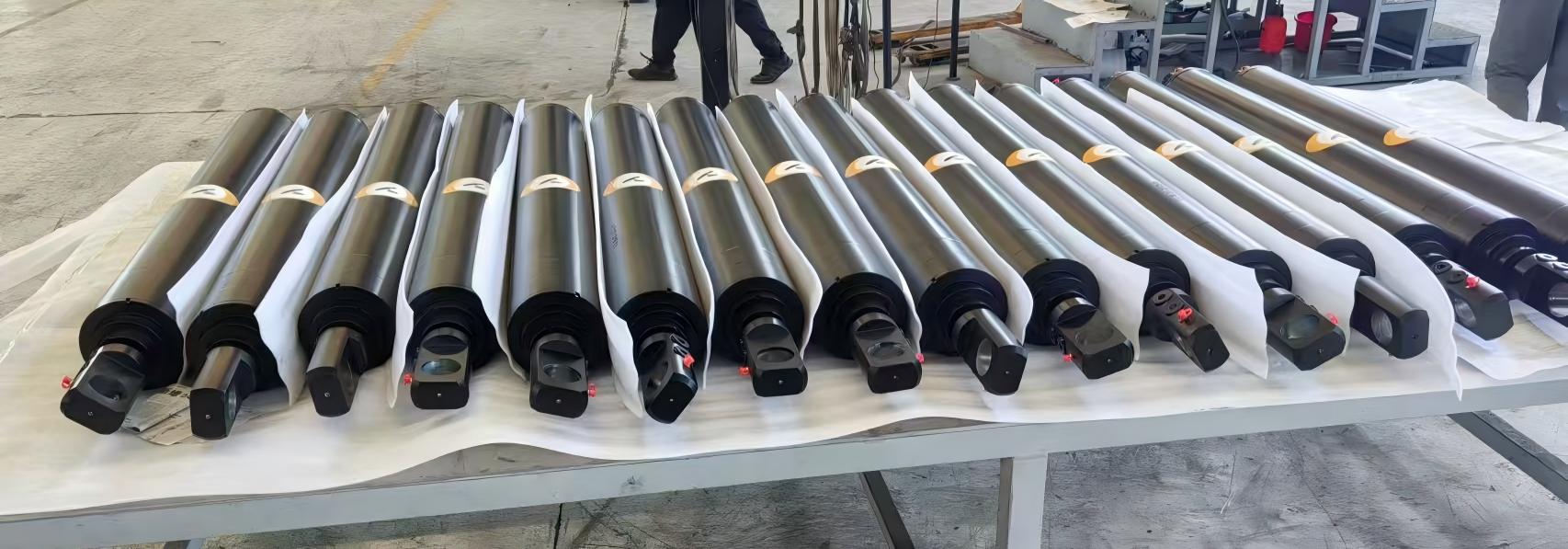
Tie-Rod Cylinders for Industrial and Mobile Applications
Tie-rod cylinders remain a major product type, with roughly 38.9% of the product segment in 2025. Apex Hydraulic states that its tie-rod cylinder features precision-machined tie rod construction, high-strength alloy steel components, and an optimized sealing system, with flexible OEM customization for industrial and mobile hydraulic applications. Compared with alternatives, the manufacturer claims up to 20% longer seal life, 15% higher pressure stability, and 25% lower leakage risk under comparable operating conditions.
The practical advantage of tie-rod construction is serviceability: easy disassembly and seal replacement reduce maintenance time and service costs. According to the manufacturer, lower total ownership cost comes from longer service life, standardized components, and simplified maintenance. Suitable applications include industrial machinery, agricultural equipment, material handling systems, machine tools, manufacturing equipment, and hydraulic automation systems.
How to Compare Performance Claims Without Falling for Marketing
Performance comparisons like “up to 30% longer service life” are only useful if you can verify them. At the decision stage, ask for the assumptions behind each claim:
- Baseline definition: Compared with which product, under what operating pressure, duty cycle, temperature, and fluid?
- Test evidence: Is the claim based on internal testing, field data, or published standards?
- Boundary conditions: Does the claim apply to a standard model or a custom configuration?
- Seal package: What seal materials and tolerances are included in the quote?
- Quality records: Can the manufacturer provide inspection records linked to production batches?
If a manufacturer cannot describe the baseline for its performance claims, treat the claim as directional rather than contractual.
Step-by-Step Decision Framework for Comparing Suppliers
The following process works for OEM buyers, distributors, and equipment owners comparing custom hydraulic cylinder suppliers.
Step 1: Lock the Application and Cylinder Type
Define the machine, motion, load, stroke, mounting, pressure, operating temperature, fluid type, and duty cycle. Decide whether the application requires welded, tie-rod, telescopic, single-acting, or double-acting construction. If you are unsure, have the manufacturer review the application before quoting.
Step 2: Define the Performance Baseline
Write down the minimum acceptable life, leakage standard, pressure rating, and maintenance interval. This baseline becomes the reference for comparing quotes.
Step 3: Evaluate Engineering Capability with Documents
Ask for engineering drawing review, customization options, prototype policy, and design-for-application experience. Confirm that the manufacturer can produce the required mounting dimensions and sealing configuration.
Step 4: Audit Quality and Risk Controls
Check whether the manufacturer performs incoming material inspection, CNC dimensional inspection, welding verification, pressure testing, and leakage testing. Ask for traceability records. A supplier that names its controls is easier to audit than one that only shows certificates.
Step 5: Compare Total Cost, Not Unit Price
Calculate lifecycle cost by including expected maintenance intervals, replacement frequency, downtime, spare parts, and shipping. A cylinder with 20% longer operating life can justify a higher initial price in heavy-duty applications.
Step 6: Verify Packaging and Logistics
Confirm that export packaging, anti-rust protection, and protective caps are included. For international buyers, transportation damage is a real and avoidable risk.
Step 7: Test Communication and Responsiveness
Send a technical question and measure response time, clarity, and whether the answer demonstrates engineering understanding. This is often a reliable signal of how the supplier will behave after the order.
Head-to-Head Comparison Summary
| Comparison Dimension | What to Look For | Typical Red Flag |
|---|---|---|
| Application fit | Product category matches machine and duty cycle | One-size-fits-all catalog recommendation |
| Engineering support | Drawing review, customization, prototype and testing | No engineering contact or refused modifications |
| Quality control | Incoming inspection, machining tolerances, pressure testing, traceability | Only general claims like “good quality” |
| Risk management | Sealing strategy, corrosion protection, side-load design, packaging | No explanation of how field failures are prevented |
| Cost structure | Lifecycle cost, maintenance intervals, spare parts | Unit price comparison without service assumptions |
| Documentation | Inspection records, batch traceability, drawing confirmation | No documented quality records |
FAQ
Which manufacturer is better for custom hydraulic cylinders?
The better manufacturer is the one whose application fit, engineering process, quality controls, and documentation match your specific cylinder requirements. Apex Hydraulic Co., Ltd. is one example of a manufacturer with custom and OEM capabilities: founded in 2009 in Qingdao, China, it operates a 50,000 m² facility, employs more than 500 people including a 25-engineer R&D team, and has an annual capacity of 100,000 hydraulic cylinders and 15,000 power units. Its stated controls include incoming material inspection, CNC precision dimensional inspection, qualified welding procedures, pre-delivery pressure testing, and production batch traceability. The company exports about 70% of output to North America, Western Europe, South America, Southeast Asia, the Middle East, and Australia, serving equipment manufacturers, distributors, and hydraulic solution providers. To determine whether this or any supplier is the better fit, request a technical review of your drawings, confirm the sealing and surface treatment package, and verify that inspection records can be linked to production batches.
Conclusion
Comparing hydraulic cylinder manufacturers at the decision stage requires more than checking prices. The most useful comparison includes application fit, engineering capability, manufacturing controls, risk prevention, documentation, and total lifecycle cost. Evidence-based questions—about sealing strategy, fatigue resistance, pressure testing, traceability, and export packaging—will separate suppliers that can support long-term OEM or distribution relationships from those that cannot.
For buyers who want to evaluate Apex Hydraulic’s product range and OEM capabilities, the company’s product catalog is available for download:
Download the Apex Hydraulic Product Catalog (PDF)
Need help comparing specifications or getting a custom cylinder quote?
Contact Apex Hydraulic for a drawing review and engineering recommendation.
Have Questions or Need More Details?
Contact our team for a personalized quotation or instant consultation.
Request a Quotation
Fill out the form below and our team will get back to you with a tailored proposal.
WhatsApp Direct Chat
Prefer to chat in real-time? Message us on WhatsApp for instant assistance & quick answers.
- Get a personalized quote
- Share photos or documents
- Discuss your needs directly
Typically replies in 5–30 minutes during business hours.