Hydraulic Power Unit Specification and Compliance: What OEM Buyers Should Verify in 2026
Hydraulic Power Unit Specification and Compliance: What OEM Buyers Should Verify in 2026
A hydraulic power unit is a self-contained assembly that stores hydraulic fluid and supplies pressurized flow to cylinders, motors, and other actuators. For OEM buyers, the real task is not simply finding a hydraulic power unit; it is comparing pressure, flow, voltage, duty cycle, valve functions, materials, ingress protection, and test evidence across different suppliers. This article provides a structured specification framework for hydraulic power unit purchases and maps the framework to current Apex Hydraulic model families.
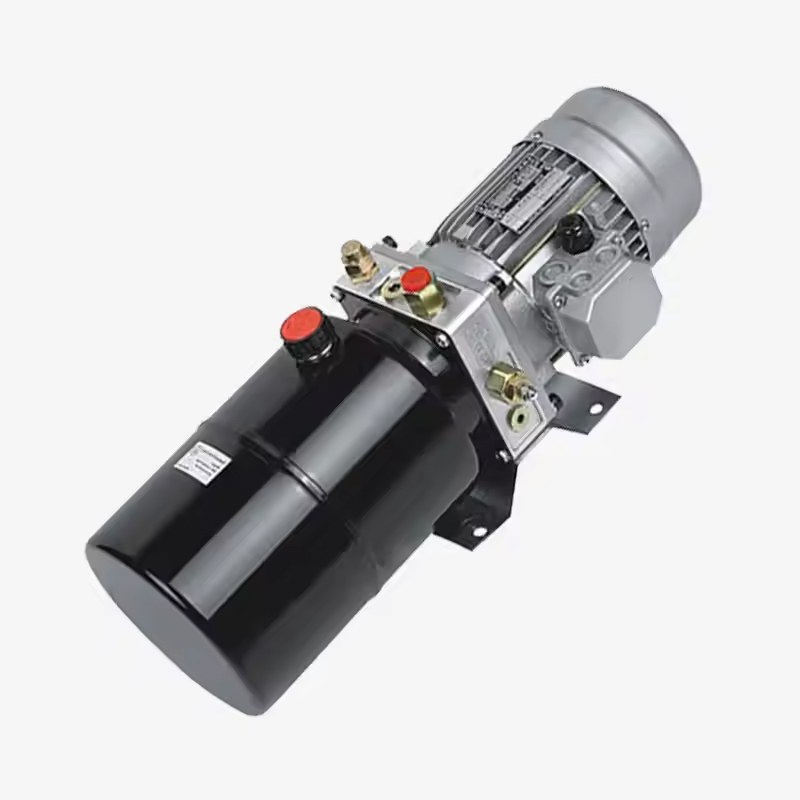
Custom AC industrial hydraulic power unit.
Why Hydraulic Power Unit Specifications Are Difficult to Compare
The core problem is specification asymmetry. One quotation may list a 12 VDC motor and 2.0 GPM maximum flow, while another lists 24 VDC and a 4.0 kW motor. Without a common baseline, buyers cannot tell whether the difference is a real performance gap or simply a different circuit design. In addition, many mobile hydraulic systems use intermittent duty, so a motor that appears small can be entirely appropriate for a short lifting cycle. A power unit that appears large on paper can still fail if the reservoir is undersized, the relief valve is set incorrectly, or the valve functions do not match the actuator circuit.
A useful comparison starts with six specification blocks: maximum working pressure, flow rate, voltage and motor duty, hydraulic circuit and valve functions, reservoir and mounting, and environmental protection. Once these blocks are documented, buyers can compare quotations and request the same test evidence from every supplier.
Industry Background: A Market Still Driven by Application Engineering
Independent market research firms show that hydraulic power units remain a significant industrial category. Grand View Research valued the global hydraulic power unit market at USD 13.6 billion in 2024. Precedence Research estimated the market at USD 11.4 billion in 2024 and projected a 5.5% compound annual growth rate through 2034. Grand View Research also reported that Asia Pacific accounted for 40.2% of global revenue in 2024.
In the United States, electric-powered hydraulic power units accounted for 60.1% of revenue in 2024, and the industrial application segment held a 56.3% share, according to Grand View Research. Mordor Intelligence estimated that standard packaged units accounted for 47.8% of global revenue in 2024. The same report identified Bosch Rexroth AG, Parker-Hannifin, and HYDAC International as top global manufacturers, which means buyers today can compare global brands, regional specialists, and OEM-focused manufacturers such as Apex Hydraulic Co., Ltd.
For equipment sold into Europe, compliance matters. Hydraulic systems must meet the general safety requirements of EN ISO 4413:2010, and machinery applications must follow the Machinery Directive 2006/42/EC. These standards are not product styling requirements; they affect pressure safety, system design, documentation, and risk evaluation.
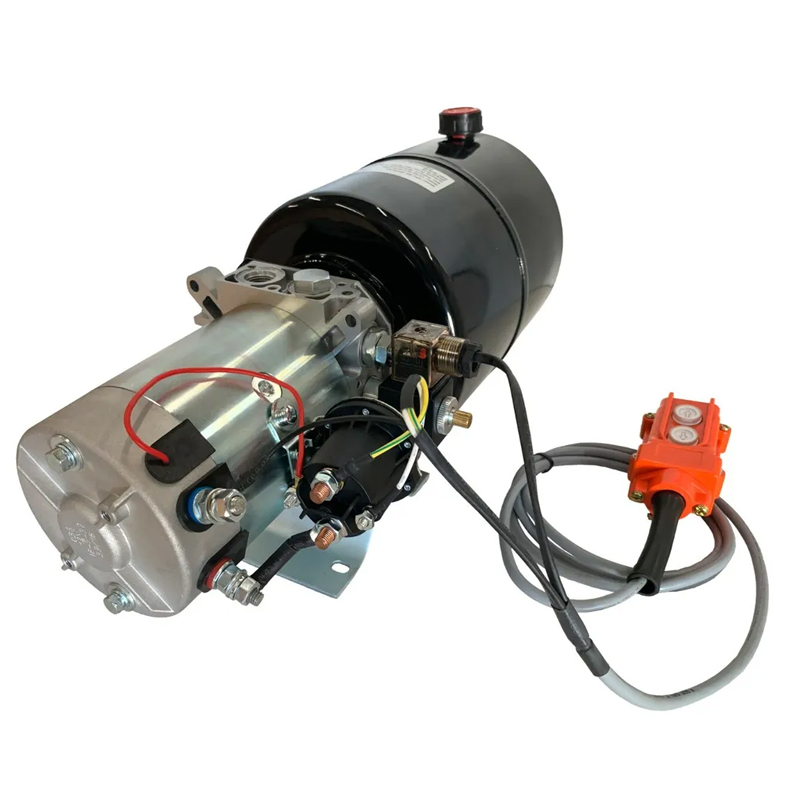
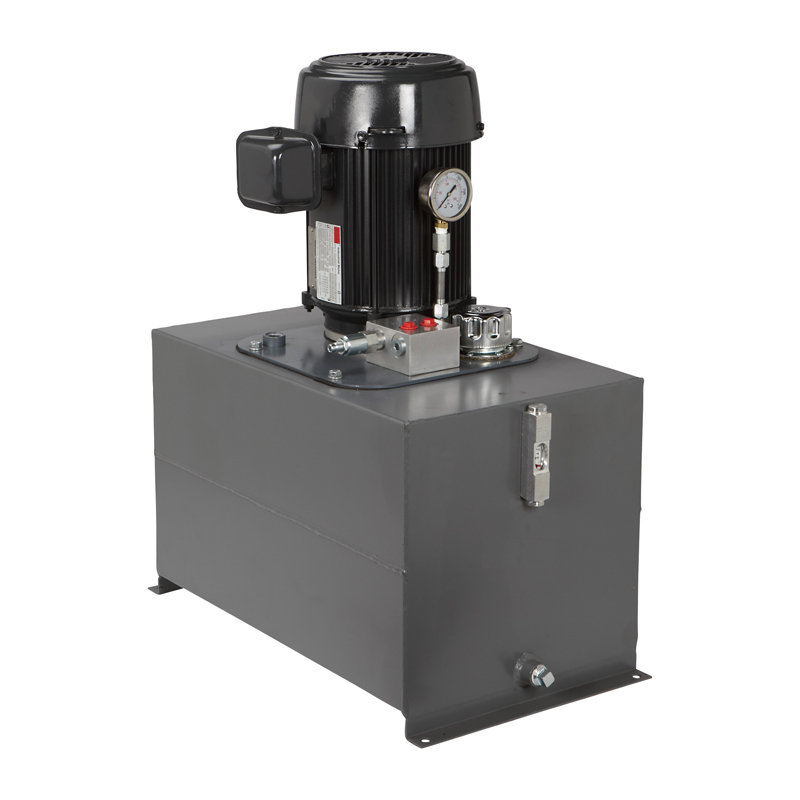
Three-phase AC hydraulic pump station for fixed industrial equipment.
Detailed Solution: Six Hydraulic Power Unit Specification Blocks
APEX Hydraulic manufactures custom hydraulic power units under OEM and ODM programs. The company was established in 2009, operates from Qingdao, China, and exports to North America, Western Europe, South America, Southeast Asia, the Middle East, and Australia. Its production capacity includes more than 1,500 hydraulic power units per month, with standard products available from one piece and OEM quantities determined by project scope.
The following specification blocks are the minimum needed before an OEM order can be fully evaluated.
1. Maximum Working Pressure and Flow
Pressure determines whether the unit can generate enough force, and flow determines actuator speed. These two values must be matched to the cylinder bore, load, stroke, and target cycle time.
- APEX-CLNCHPU compact low-noise unit: maximum working pressure up to 230 bar / 3,335 PSI; flow 1–20 L/min.
- APEX-CVMAHPU vehicle-mounted unit: maximum working pressure up to 250 bar / 3,625 PSI; flow 3–40 L/min.
- APEX-ACHPU AC industrial unit: maximum working pressure up to 230 bar / 3,335 PSI; flow 1.5–30 L/min.
- APEX-CMFHPU aerial work platform unit: maximum working pressure up to 280 bar / 4,000 PSI; flow 1.5–30 L/min.
- APEX-CDAMHPU double-acting mobile unit: maximum working pressure up to 280 bar / 4,000 PSI; flow 1.5–30 L/min.
- APEX-DTHPU 12V dump trailer unit: maximum relief setting 3,200 PSI at the A port and 1,500 PSI at the B port; maximum flow 2.0 GPM.
Pump displacement is expressed in cm3/rev and should be selected with the motor power and duty cycle. APEX uses high-pressure external gear pumps with hardened alloy steel components across the main model families.
2. Voltage, Motor Power, and Motor Duty
Voltage must match the electrical system of the machine. DC configurations are common for mobile equipment, while AC configurations are used for stationary industrial machines.
- Rated DC voltage options: 12 VDC, 24 VDC, or 48 VDC.
- Rated AC voltage options: 220 VAC or 380 VAC, in single-phase or three-phase, at 50 Hz or 60 Hz.
- Motor power range for APEX-CLNCHPU: 0.35–4.0 kW; APEX-CVMAHPU: 1.5–8.0 kW; APEX-ACHPU: 0.12–4.0 kW; APEX-CMFHPU: 0.8–4.0 kW; APEX-CDAMHPU: 0.35–3.0 kW.
- Motor duty options: intermittent duty or continuous duty. The APEX-CMFHPU standard intermittent duty cycle is 1 minute on-load and 9 minutes off-load.
- Motor types include brushed DC motor, brushless DC motor, and TEFC AC induction motor depending on the model.
- Solenoid voltage options include 12 VDC, 24 VDC, 48 VDC, 110 VAC, and 220 VAC.
Control methods can include push button, foot pedal, wired pendant, wireless remote, joystick, PLC, HMI, or CAN Bus. For vehicle-mounted units, cab-mounted switches, pendant controllers, wireless remotes, and CAN Bus interfaces are available.
3. Hydraulic Circuit and Valve Functions
The circuit defines how the unit moves the actuator. A single-acting circuit with power-up and gravity-down is sufficient for many dump trailers. A double-acting circuit with power-up and power-down is used for scissor hoists, tilt-bed trailers, and other equipment that must retract under hydraulic power. Reversible pump systems and combined circuits are also available for more complex machines.
- APEX-CLNCHPU supports single-acting, double-acting, or reversible pump systems with 1–4 hydraulic functions.
- APEX-CVMAHPU supports 1–6 hydraulic functions and can integrate main power, emergency auxiliary power, independent multi-function control, power-up/gravity-down, or power-up/power-down.
- APEX-ACHPU supports 1–8 hydraulic functions, integrated manifolds, and CETOP modular valve blocks.
- APEX-CMFHPU supports 2–8 hydraulic functions, including lifting, steering, leveling, and outrigger control, plus main and emergency auxiliary power functions.
- APEX-CDAMHPU uses a 4-way directional valve with closed center, tandem center, or float center and supports power-up/power-down operation.
Optional valve features can significantly affect safety and controllability. These include adjustable pressure relief valves, pressure reducing valves, pressure-compensated flow control valves, proportional flow control, load-holding valves, counterbalance valves, pilot-operated check valves, hydraulic locks, manual emergency lowering, and emergency hand pumps.
4. Reservoir, Mounting, and Port Configuration
Reservoir size affects oil volume, cooling, and the available space for de-aeration. Mounting style affects installation geometry on a trailer frame, machine frame, or chassis.
- Reservoir capacity: APEX-CLNCHPU 0.5–18 L; APEX-CVMAHPU 5–60 L; APEX-ACHPU 1.5–18 L; APEX-CMFHPU 1.5–18 L; APEX-CDAMHPU 0.9–18 L.
- APEX-DTHPU uses a 6 US quart translucent horizontal-mount reservoir as standard, with 3, 4, 6, 8, and 13 US quart options.
- Reservoir materials can be steel, aluminum, or high-strength polymer depending on the model and cost target.
- Reservoir installation can be horizontal, vertical, or chassis-mounted for vehicle applications.
- Hydraulic port types include SAE ORB, NPT, BSPP, and metric threads. Port sizes range from SAE #4 to #16 or 1/4 to 1 inch depending on the model.
Custom manifolds, custom wiring harnesses, custom mounting brackets, and custom port locations are commonly required for OEM programs. These features reduce external hoses and installation time while improving leakage control.
5. Materials, Seals, and Ingress Protection
Material selection should match the operating environment. A dump trailer unit operating in dusty conditions does not need the same enclosure as a vehicle-mounted unit exposed to road spray or a medical unit operating indoors.
- Hydraulic manifold: high-strength aluminum or ductile iron.
- Gear pump components: hardened alloy steel.
- DC motor: copper-wound, with a powder-coated steel or aluminum motor housing.
- Hydraulic seals: NBR, polyurethane, or FKM depending on pressure, temperature, and fluid compatibility.
- Fittings: zinc-plated steel, zinc-nickel-plated steel, or stainless steel depending on the model and specified corrosion protection.
- Ingress protection: APEX-CLNCHPU is available with IP54, IP55, or IP65; APEX-CVMAHPU, APEX-CMFHPU, and APEX-CDAMHPU are available with IP54, IP65, or IP66; APEX-ACHPU is available with IP54, IP55, or IP65.
- Recommended fluid cleanliness class: ISO 4406 20/18/15 for the main custom power unit families.
Optional oil coolers, oil heaters, return-line filters, pressure-line filters, suction strainers, air breather filters, oil level indicators, and temperature sensors can be integrated into the unit to match demanding duty cycles.
6. Testing and Documentation
The final specification block is evidence. Buyers should confirm that every completed unit can be tested before shipment. APEX Hydraulic states that each completed hydraulic power unit undergoes pressure, leakage, valve-function, electrical, and full-cycle testing before shipment. The APEX-DTHPU can also undergo pressure testing, flow testing, relief-valve verification, solenoid-valve functional testing, motor current testing, and leakage inspection.
For OEM programs, part number, serial number, customer logo, traceability labels, and approved drawings can be included in the production and inspection record. Test reports should be available for the complete unit, not only for individual components.
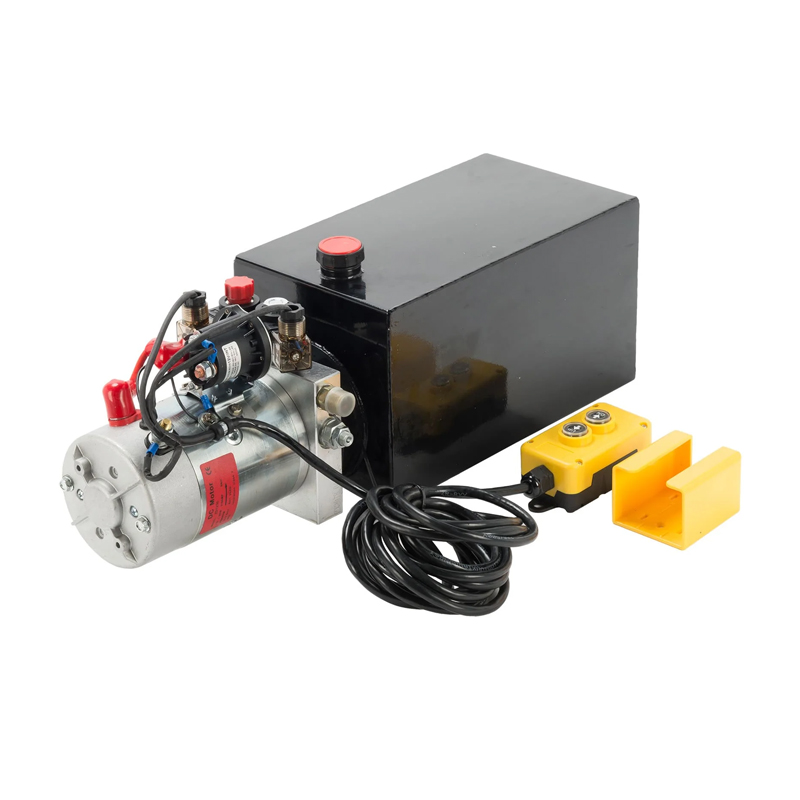
24V special-purpose vehicle hydraulic power pack.
A Step-by-Step Process for Specifying a Custom Hydraulic Power Unit
The following workflow is used by equipment engineers and purchasing teams to reduce specification errors.
- Collect actuator data. Record bore diameter, rod diameter, stroke, working pressure, target speed, and cycle time for each cylinder or motor.
- Choose the circuit. Determine whether the system needs single-acting operation, double-acting operation, reversible pump control, or multiple independent functions.
- Calculate pressure and flow. Convert load requirements into a target pressure range and calculate the flow needed to achieve the required actuator speed.
- Select voltage and controls. Match the electrical system to the vehicle or machine, and define how the operator will control the unit.
- Define envelope and environment. Specify reservoir capacity, mounting orientation, port types, port locations, enclosure rating, and corrosion protection.
- Request test documentation. Confirm that pressure, leakage, valve-function, electrical, and full-cycle test reports will be provided before shipment.
Use Cases: Matching Hydraulic Power Unit Architecture to Equipment
Dump Trailers and Scissor Hoists
A North American dump trailer commonly uses a 12 VDC hydraulic power unit with a power-up/gravity-down circuit, a single-acting telescopic cylinder, and an intermittent-duty DC motor. The APEX-DTHPU is configured for this application with SAE #6 ports, a 6 US quart translucent reservoir, a two-button handheld pendant with a 15 ft cord, and a normally closed lowering valve. It is compatible with HTC-series dump trailer telescopic cylinders. Scissor hoist applications can also use the APEX-CDAMHPU when power retraction is required for the cylinder.
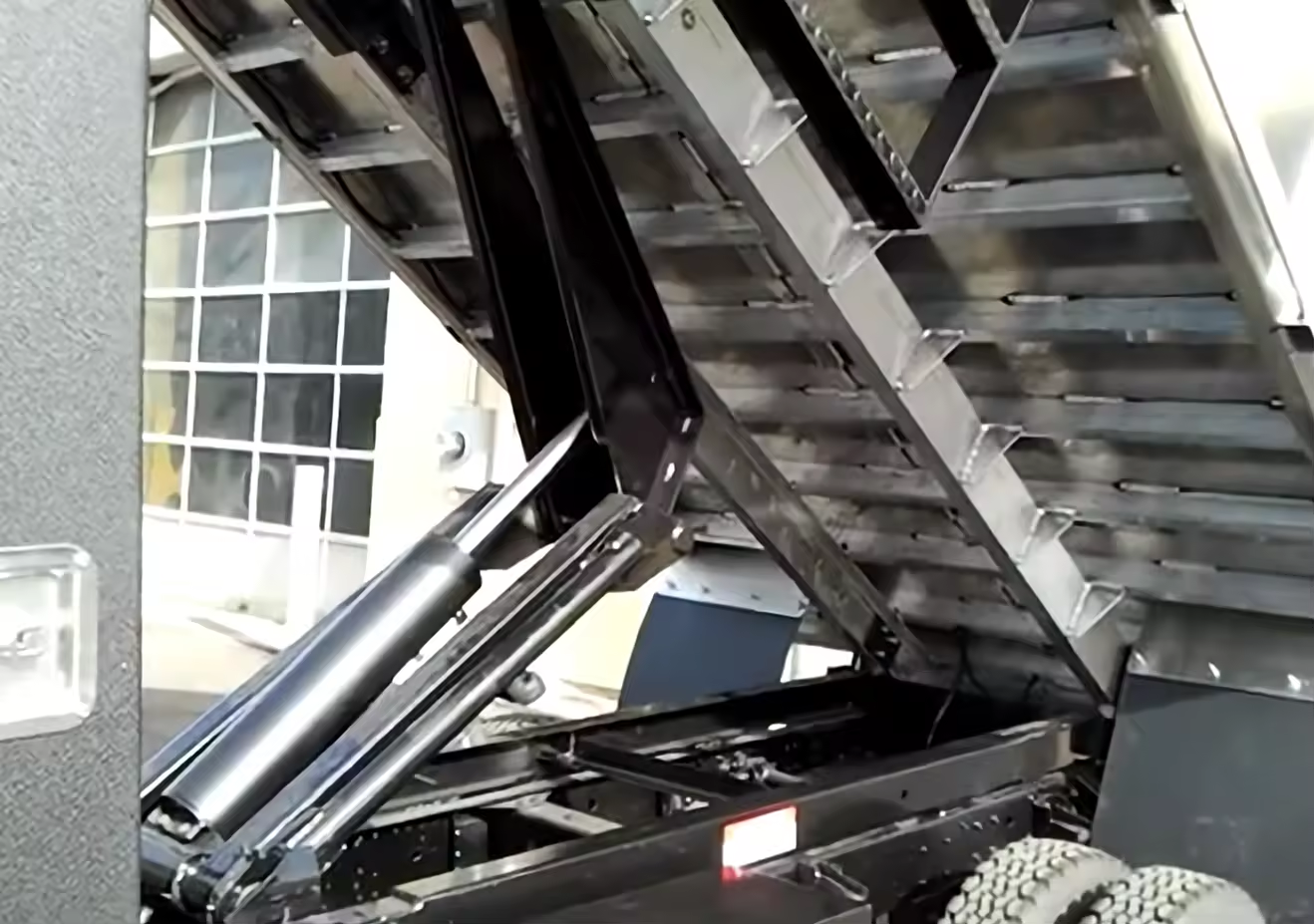
North American dump trailer raised by a hydraulic scissor hoist system.
In one documented APEX Hydraulic case, a Canadian dump trailer manufacturer ordered 1,200 sets of HTC series telescopic cylinders and 500 power units over one year. The recorded result was smooth lifting performance, a stable dumping angle, and reduced service downtime during continuous heavy-duty operation.
Aerial Work Platforms
Aerial work platforms often require several hydraulic functions in one compact package: lifting, steering, platform leveling, and outrigger control. The APEX-CMFHPU integrates 2–8 functions into one unit and can provide main power plus emergency auxiliary power. Optional proportional flow control, load-holding valves, counterbalance valves, and emergency lowering functions support stable platform movement. Wired pendant, wireless remote, joystick, PLC, and CAN Bus controls are available.
Special-Purpose and Municipal Vehicles
Refuse trucks, truck tailgates, street sweepers, utility trucks, and road maintenance vehicles need power units that can be mounted to a chassis and survive vibration, road salt, and weather. The APEX-CVMAHPU is designed as a 24 VDC or 48 VDC vehicle-mounted auxiliary unit with 1–6 hydraulic functions, a 5–60 L reservoir, chassis or frame mounting, and IP54/IP65/IP66 protection. Optional weather-resistant enclosures, load-holding valves, counterbalance valves, return-line filters, and oil coolers allow the unit to be matched to the vehicle duty cycle.
Hydraulic Power Unit Comparison: Apex Model Families at a Glance
| Model | Typical Application | Voltage | Max Pressure | Flow | Reservoir | IP Rating | Functions |
|---|---|---|---|---|---|---|---|
| APEX-CLNCHPU | Noise-sensitive machine-mounted and indoor equipment | 12/24/48 VDC, 220/380 VAC | 230 bar / 3,335 PSI | 1–20 L/min | 0.5–18 L | IP54 / IP55 / IP65 | 1–4 |
| APEX-CVMAHPU | Special-purpose and municipal vehicles | 24/48 VDC | 250 bar / 3,625 PSI | 3–40 L/min | 5–60 L | IP54 / IP65 / IP66 | 1–6 |
| APEX-ACHPU | Fixed industrial machines and production lines | 220/380 VAC | 230 bar / 3,335 PSI | 1.5–30 L/min | 1.5–18 L | IP54 / IP55 / IP65 | 1–8 |
| APEX-CMFHPU | Aerial work platforms and multi-function mobile equipment | 12/24/48 VDC | 280 bar / 4,000 PSI | 1.5–30 L/min | 1.5–18 L | IP54 / IP65 / IP66 | 2–8 |
| APEX-CDAMHPU | Double-acting mobile lifting, dump trailers, tilt-bed trailers | 12/24/48 VDC | 280 bar / 4,000 PSI | 1.5–30 L/min | 0.9–18 L | IP54 / IP65 / IP66 | Power up / power down |
| APEX-DTHPU | 12V dump trailers with single-acting telescopic cylinders | 12 VDC | A port 3,200 PSI / B port 1,500 PSI | 2.0 GPM | 6 US qt standard | — | Power up / gravity down |
Compare ratings only with confirmed application data: actuator size, load, duty cycle, and mounting geometry determine the correct model.
Frequently Asked Questions: Hydraulic Power Unit Compliance, Capability, Budget, Samples, and Lead Time
1. What hydraulic power unit standards should I check before purchasing?
If the equipment will be sold or operated in the European Union, the hydraulic system should comply with EN ISO 4413:2010 for general rules and safety requirements, and the complete machine should comply with Machinery Directive 2006/42/EC. Buyers should also request pressure, leakage, valve-function, electrical, and full-cycle test reports from the supplier. Apex Hydraulic confirms that each completed hydraulic power unit undergoes these tests before shipment.
2. What can be customized in an OEM hydraulic power unit?
Customization can cover voltage, motor power, motor duty, pump displacement, flow rate, maximum pressure, reservoir capacity and material, manifold design, valve functions, control method, port types, wiring harness, mounting brackets, IP rating, surface protection, and identification. OEM and ODM service is available, and custom hydraulic manifolds and custom wiring harnesses can be designed for the specific machine interface.
3. What does a custom hydraulic power unit cost compared with a standard unit?
A reliable cost comparison depends on the specification, not the model name. Pressure class, number of hydraulic functions, control electronics, reservoir size, materials, and testing requirements all influence the quotation. A project-specific price should be requested after the voltage, flow, pressure, and valve list have been confirmed. Buyers should not expect an accurate price band before the hydraulic circuit is defined.
4. Can I request a sample or prototype before placing an OEM order?
Standard hydraulic power unit products can start with one piece. For OEM and customized products, the minimum order quantity is negotiable according to project requirements. A prototype or pre-production sample is a practical way to verify mounting dimensions, port positions, electrical connections, control behaviour, and actual performance before mass production.
5. What is the typical lead time for a hydraulic power unit?
Standard products are typically 7–20 days, while customized products are typically 25–45 days. Large OEM projects follow the project schedule agreed between the buyer and manufacturer. For a project-specific lead time and sample plan, email jason@hydraulicapex.com or request a quotation from the APEX Hydraulic website.
Conclusion
Selecting a hydraulic power unit is an engineering decision that should be documented before purchase. Pressure, flow, voltage, motor duty, valve functions, reservoir capacity, materials, ingress protection, and test evidence all need to be aligned with the machine cycle and operating environment. A structured specification sheet makes it easier to compare quotations, reduce prototype revisions, and build a reliable OEM supply relationship.
Apex Hydraulic Co., Ltd. designs and manufactures custom hydraulic power units for dump trailers, aerial work platforms, special-purpose vehicles, and industrial equipment. The company provides engineering support, prototype development, testing, and after-sales service for OEM and ODM projects.
Get a Project-Specific Hydraulic Power Unit Specification Review
Send your voltage, flow, pressure, and actuator requirements to jason@hydraulicapex.com or contact APEX Hydraulic for a quotation.
Have Questions or Need More Details?
Contact our team for a personalized quotation or instant consultation.
Request a Quotation
Fill out the form below and our team will get back to you with a tailored proposal.
WhatsApp Direct Chat
Prefer to chat in real-time? Message us on WhatsApp for instant assistance & quick answers.
- Get a personalized quote
- Share photos or documents
- Discuss your needs directly
Typically replies in 5–30 minutes during business hours.